
Steinernema glaseri
Steinernema glaseri
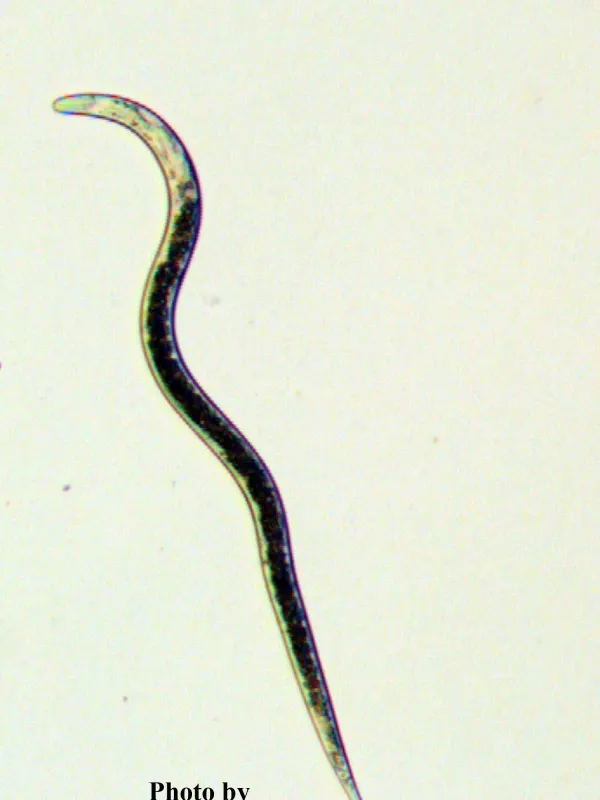
Description
How to identify
Steinernema glaseri is a species of entomopathogenic nematodes within the family Steinernematidae and the order Rhabditida. These microscopic worms serve as natural biological agents that parasitize soil-dwelling insects.
The life cycle involves an egg stage, four larval stages, and an adult stage. The infective juvenile (IJ), or third larval stage, is the crucial form that actively searches for hosts in the soil environment.
The nematode carries symbiotic bacteria of the genus Xenorhabdus in its gut. Upon entering an insect host, the nematode releases these bacteria, which multiply and kill the host via septicemia.
This species is characterized by its superior searching behavior, capable of moving efficiently through soil pores to locate hosts over greater distances compared to other species.
In laboratory and field identification, experts distinguish Steinernema glaseri by its specific interaction with target insect larvae and its survival strategies in varying soil textures.
What it damages
While often used as a beneficial biological control agent, the nematode is specifically effective against pests that damage the subterranean parts of plants, such as root systems.
It targets various coleopteran larvae, particularly scarab beetles, which are notorious for feeding on the roots of turfgrass, ornamental crops, and various vegetable species.
The feeding activity of these insect larvae can destroy root hairs, causing plants to wilt, become yellow, and eventually die due to the inability to absorb water and nutrients.
By effectively suppressing the population density of these pests, Steinernema glaseri protects the crop root zone and prevents significant yield losses in agricultural operations.
Using this biological tool helps maintain the integrity of the soil ecosystem, avoiding the long-term negative effects often associated with the application of synthetic chemical insecticides.
Control measures
Successful pest management with Steinernema glaseri relies heavily on proper environmental conditions and application techniques, as the nematodes are highly susceptible to desiccation and UV light.
Application should be performed during cool, overcast weather or during the evening hours. The soil must be pre-moistened to allow the nematodes to move toward their targets.
Maintaining high soil moisture levels for several days post-application is critical for the survival and host-seeking success of the infective juveniles.
- Optimal soil temperature should be between 15°C and 25°C.
- Avoid applying in direct sunlight or during extreme heat.
- Ensure that irrigation systems are flushed before application to prevent chemical contamination.
Agronomists should monitor soil health and pest populations before and after the release of the nematodes to evaluate the efficacy of the biological intervention.
Taxonomy
- Latin name
- Steinernema glaseri
- Order
- Nematodes
- Family
- Steinernematidae
- EPPO code
- STNRGL
Discussion
No discussions yet — be the first.