
Steinernema feltiae
Steinernema feltiae
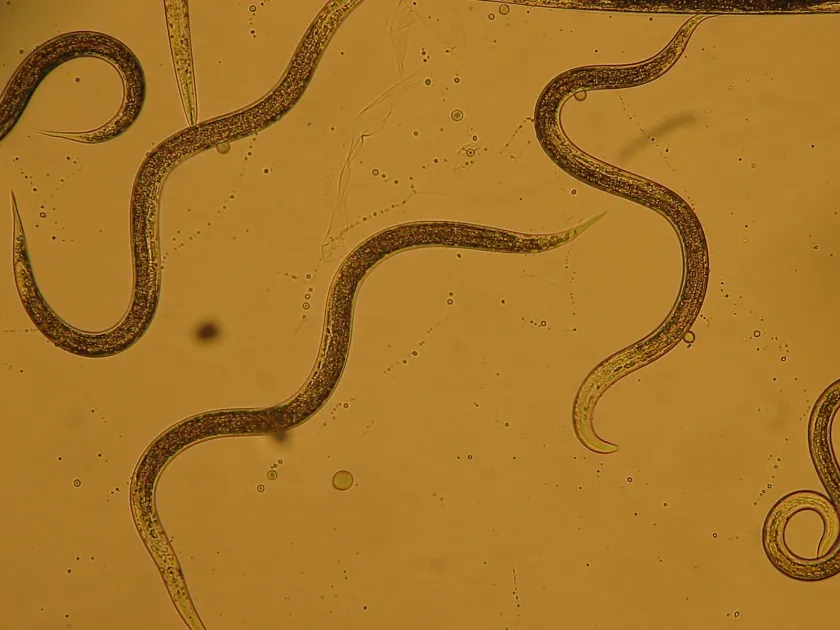
Description
How to identify
Steinernema feltiae is a species of entomopathogenic nematode belonging to the order Rhabditida and the family Steinernematidae.
Unlike parasitic worms that affect plants, these organisms act as specialized natural predators targeting harmful insects.
The life cycle consists of eggs, four larval stages, and adults, with the infective juvenile (IJ) stage being the third larval form.
These infective juveniles actively navigate through the soil using chemical cues and carbon dioxide gradients to locate their hosts.
Once inside, they release symbiotic Xenorhabdus bacteria that induce septicemia, leading to the rapid death of the host insect.
What it damages
Steinernema feltiae is not a plant pest; it is classified as a beneficial organism used in integrated pest management programs.
It primarily targets soil-dwelling larvae, such as sciarid flies (fungus gnats) and certain stages of thrips that pupate in the soil.
By eliminating these larvae, the nematode effectively protects the root systems of various vegetables, herbs, and ornamental plants.
It prevents root damage, which often serves as an entry point for secondary infections caused by soil-borne pathogens and fungi.
This biological solution is a preferred alternative to chemical insecticides in organic and high-standard protected agriculture.
When it appears
The activity and efficacy of Steinernema feltiae are highly dependent on the soil temperature and moisture conditions.
The optimal temperature range for these nematodes to remain active and successfully hunt hosts is between 12°C and 25°C.
If the soil temperature drops below 10°C, the nematodes become inactive, significantly reducing their potential to control pest populations.
Excessive heat above 30°C is equally detrimental, as it can kill the nematodes or cause them to lose their infective capacity.
In greenhouses, maintaining a stable climate allows for year-round application, provided that the soil is kept sufficiently moist.
Signs of infestation
Infected insects typically exhibit a change in body color, turning from pale to a brownish or yellowish hue shortly before death.
Microscopic analysis of the cadaver will reveal the presence of nematode colonies developing within the insect body cavity.
A reduction in the number of adult fungus gnats flying near the crops is the most prominent indicator of successful control.
Plants protected by nematodes usually show improved vigor and lack of root decay compared to untreated, infested samples.
Visual monitoring using yellow sticky traps is a standard method to evaluate the decline of insect populations after treatment.
Control measures
Application is performed by drenching or spraying the soil surface with a nematode suspension, ensuring uniform distribution.
It is crucial to apply the treatment during cloudy conditions or in the evening to avoid the harmful effects of UV radiation.
- Remove fine-mesh filters from sprayers to prevent damaging the nematodes.
- Apply to moist soil to facilitate the movement of larvae toward the pests.
- Keep the soil moisture levels consistent for at least two weeks post-application.
- Do not mix with chemical pesticides that may be toxic to the nematodes.
- Follow dosage instructions based on the density of the pest population.
Regular applications may be necessary in environments with persistent pest pressure to ensure effective and continuous protection.
Taxonomy
- Latin name
- Steinernema feltiae
- Order
- Nematodes
- Family
- Steinernematidae
- EPPO code
- NEAPGL
Discussion
No discussions yet — be the first.