
Steinernema carpocapsae
Steinernema carpocapsae
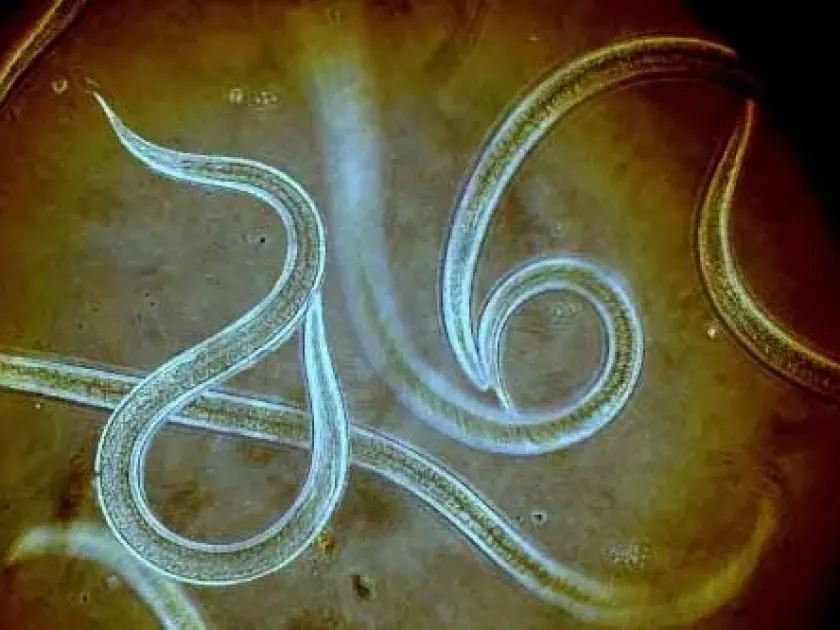
Description
How to identify
Steinernema carpocapsae is an entomopathogenic nematode belonging to the order Rhabditida and the family Steinernematidae. Unlike plant-parasitic nematodes, these are beneficial organisms used in agriculture as biological control agents.
These nematodes spend their infective juvenile stage in the soil. They are highly mobile and use specialized sensory organs to detect chemical cues released by potential insect hosts, such as larvae or adults of various species.
Upon finding a suitable host, the nematodes enter the insect's body through natural openings. They then release symbiotic bacteria of the genus Xenorhabdus, which are the primary cause of the host's rapid death.
The host insect typically dies within 48 hours due to septicemia caused by the symbiotic bacteria. The nematodes then consume the internal tissues, developing and reproducing within the carcass until the food supply is exhausted.
Once the host's body is fully consumed, a new generation of infective juveniles emerges into the environment to locate new hosts. This makes them a self-sustaining and effective tool for integrated pest management.
What it damages
Steinernema carpocapsae does not harm plants. It is exclusively an entomopathogen, meaning its life cycle is tied to the elimination of insects that act as garden or crop pests.
This species is particularly effective against a wide range of pests, including wood-boring insects, cutworms, and various soil-dwelling larvae. It is widely used to control pests that are hard to reach with traditional chemical sprays.
The "damage" inflicted by S. carpocapsae is directed strictly towards harmful insects, effectively reducing their population density. This contributes to the overall health of the garden by preventing pest outbreaks.
Using these nematodes helps maintain the ecological balance of the soil. Unlike chemical pesticides, they do not leave residues, making them perfectly suited for organic farming and sustainable cultivation practices.
By targeting pests at their larval stage, these nematodes prevent physical damage to roots, stems, and fruits. This helps protect the yield from being compromised by insect activity throughout the growing season.
When it appears
The activity level of S. carpocapsae is highly dependent on environmental conditions, particularly soil temperature and moisture. The optimal range for their movement and infection is between 14°C and 25°C.
They are best applied during the peak periods of pest activity when the target insect larvae are present in the soil or on the foliage. Application should be synchronized with the pest life cycle to maximize efficacy.
Moisture is essential for their movement through soil pores. If the soil is too dry, the nematodes become inactive and cannot reach the target host. Regular irrigation is necessary to ensure successful colonization.
Applications should ideally take place in the evening or on cloudy days to protect the nematodes from the lethal effects of ultraviolet radiation. Direct sunlight can kill them before they penetrate the soil.
The duration of protection depends on the initial population density introduced and the presence of suitable hosts for the nematodes to continue their life cycle within the treated area.
Signs of infestation
Identifying the effectiveness of S. carpocapsae is generally based on the decline of the pest population. Since the action is subterranean or hidden within the host, direct observation is not possible in the field.
A tell-tale sign of infection is the physical condition of the dead larvae. Insects killed by these nematodes often exhibit a tan, brown, or slightly reddish color due to the specific bacteria involved in the decomposition.
The absence of typical pest-related injuries, such as chewed roots or boreholes in fruits, indicates successful control. This confirms that the larvae were eliminated before they could feed on the plants.
Monitoring the adult pest population using traps will show a steady decrease in numbers following the treatment. This is the most reliable way to assess the impact of nematode application in a real-world setting.
In a research context, a bioassay using sensitive bait insects can confirm the presence and viability of the nematodes in the treated soil, proving that they are still active and capable of searching for hosts.
Control measures
Successful application of S. carpocapsae requires attention to equipment preparation. It is vital to use water that is free of chlorine and other antimicrobial agents, as these will kill the nematodes upon contact.
The spray solution must be kept well-mixed during application to prevent the nematodes from settling at the bottom of the tank. Using nozzles with an aperture of at least 0.5 mm is recommended to ensure they pass through without mechanical damage.
- Maintain soil moisture at 60-80% capacity.
- Avoid mixing with incompatible pesticides or fertilizers.
- Store products in a refrigerator (+2°C to +8°C).
- Apply immediately after mixing the stock solution.
Cold chain management is crucial. The product should not be exposed to temperatures outside the manufacturer's specified range, as this can severely impact the survival rate of the beneficial organisms.
When implementing these nematodes, consider the timing of other pesticide applications. Fungicides or insecticides applied shortly before or after can inhibit the nematode population, so proper intervals are necessary.
Taxonomy
- Latin name
- Steinernema carpocapsae
- Order
- Nematodes
- Family
- Steinernematidae
- EPPO code
- NEAPCA
Discussion
No discussions yet — be the first.