
Steinernema
Steinernema
Description
How to identify
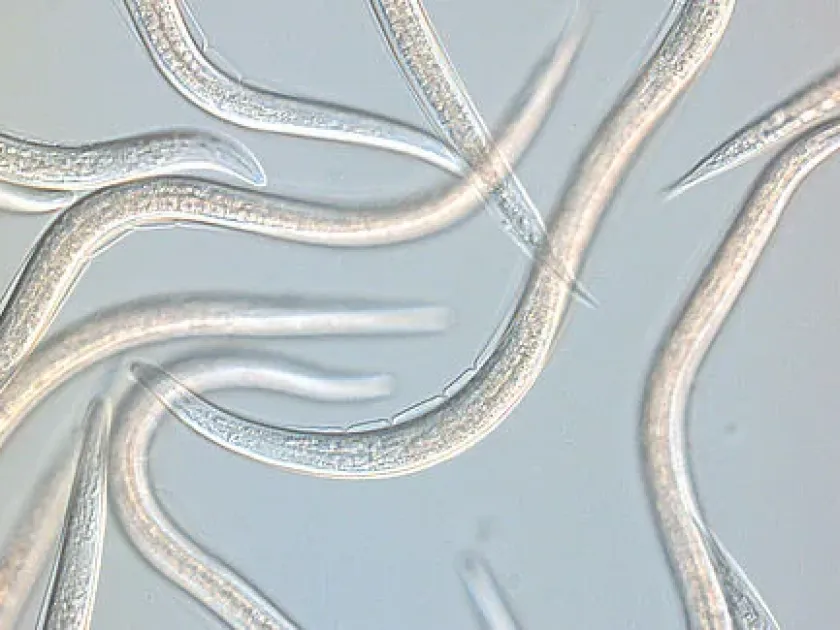
Steinernema belongs to the phylum Nematoda, order Rhabditida, and family Steinernematidae. These are microscopic roundworms that function as obligate entomopathogens, parasitizing insects.
These organisms do not damage plants, classifying them as beneficial agents in agricultural pest management. An adult specimen typically measures between 1 and 2 millimeters in length.
In the soil, they exist as third-stage infective juveniles that actively seek out host insects. They exhibit high sensitivity to chemical and mechanical cues produced by their prey.
A crucial biological feature is their symbiotic relationship with bacteria from the genus Xenorhabdus, which reside in the nematode gut. These bacteria are responsible for the rapid death of the host insect.
The life cycle includes an egg stage, four larval stages, and an adult stage. Upon entering the host, the nematodes release these bacteria, which transform insect tissues into a digestible nutrient source.
What it damages
Unlike phytopathogenic species, Steinernema does not harm crops. Instead, it acts as a powerful natural enemy against various soil-dwelling and concealed insect pests.
Key targets include larvae of the May beetle, cabbage maggot, western corn rootworm, mole cricket, and various weevils. The parasitic process occurs entirely inside the insect body.
Their action is strictly limited to harmful insect populations, making them an essential tool for organic farming and integrated pest management (IPM) strategies.
The nematodes enter the host through natural orifices such as the mouth, anus, or spiracles, allowing them to overcome even thick chitinous exoskeletons.
The success of the application depends on maintaining a sufficient nematode population density in the soil and ensuring adequate moisture levels for movement.
When it appears
Nematode activity is strictly dependent on soil temperature and moisture. The optimal range for effective parasitism is between +12 and +25 degrees Celsius.
During periods of drought or extreme temperatures, nematodes become inactive or die; therefore, applications should be planned during spring or autumn moisture cycles.
Using Steinernema is most effective during the peak flight or egg-laying periods of target pests, when larvae are most susceptible to infection.
In greenhouses, nematode use is possible year-round provided that a stable microclimate is maintained and the substrate is kept consistently moist.
In winter, as soil freezes, nematodes enter a dormant state or perish, meaning applications should only occur once the soil warms sufficiently.
Signs of infestation
A primary indicator of successful Steinernema application is a sharp reduction in pest population levels, usually observable within 7 to 14 days post-treatment.
Insects killed by nematodes often show discoloration, turning brown or tan, as the symbiotic bacteria decompose the internal organs of the host.
The absence of typical root or stem damage in crops serves as evidence that the pest population is being effectively suppressed by the biological agent.
While monitoring the soil for nematode presence is possible, it typically requires laboratory equipment and professional microscopic analysis.
An indirect sign of nematode activity is the improved vigor and health of plants in fields that previously suffered from heavy soil-dwelling pest infestations.
Control measures
To ensure maximum efficiency, it is critical to maintain high soil moisture levels immediately following the application of the biological preparation.
The use of strong chemical insecticides and fungicides should be avoided during or shortly after nematode application, as they can be lethal to the beneficial organisms.
Steinernema products are applied via soil drenching or through drip irrigation systems, ensuring deep penetration into the larval habitats.
- Ensure soil temperatures are above +12 degrees Celsius;
- Maintain soil moisture at 60–80% of field capacity;
- Avoid exposing the working solution to direct ultraviolet light.
For the best results, repeated applications every 2–3 weeks are recommended to cover multiple generations of the target pests.
Taxonomy
- Latin name
- Steinernema
- Order
- Nematodes
- Family
- Steinernematidae
- EPPO code
- STNRSP
Discussion
No discussions yet — be the first.