
Spilomicrus stigmaticolis
Spilomicrus stigmaticolis
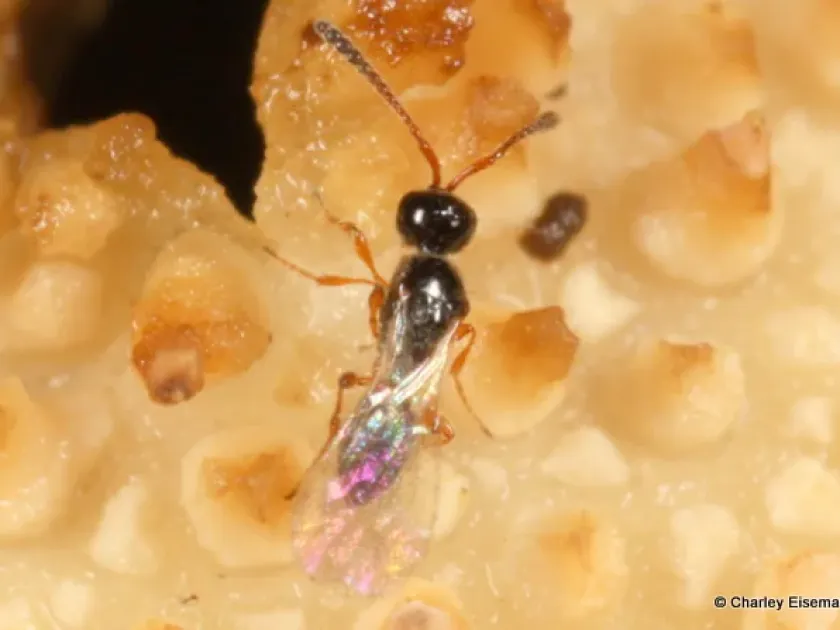
Description
How to identify
Spilomicrus stigmaticolis is a member of the Diapriidae family within the order Hymenoptera. These are tiny parasitic wasps that play a significant role in the biological regulation of dipterous insects, particularly leafminers.
The adult insects are characterized by their small, dark, and often shiny bodies. They possess wings that enable efficient movement throughout the crop canopy to locate hosts for oviposition, demonstrating a highly specialized behavior.
The life cycle involves a complex metamorphosis within the host pupa. The female wasp inserts its eggs directly into the host using an ovipositor, ensuring the subsequent generation of larvae has an immediate nutrient supply to develop.
While often viewed as part of the natural balance, the prevalence of this species in agricultural areas is a direct indicator of high host insect activity, necessitating a careful inspection of the affected vegetation.
Identification often requires expert entomological verification, as these wasps are microscopic and easily overlooked in general field assessments without the use of specialized yellow traps or insect nets.
What it damages
The damage caused is primarily indirect, resulting from the host insects' feeding habits. The larvae of the flies parasited by Spilomicrus stigmaticolis destroy plant tissues, creating tunnels within leaves and stems.
Affected crops include various vegetables and grains sensitive to leafmining pests. Young plants are particularly susceptible, as tissue damage can stunt growth and hinder normal photosynthetic processes, reducing overall vigor.
Yellowing, necrosis, and premature dropping of leaves are common signs of infestation. These physical symptoms are clear indicators that the plant is undergoing significant physiological stress due to larval feeding.
If the population density of the host is not managed, the resulting damage can significantly reduce the marketable quality of the crop. This creates economic losses, especially in high-value vegetable farming systems.
Furthermore, the physical openings created by larvae during their development serve as entry points for secondary bacterial and fungal pathogens, which may lead to plant rot and further yield degradation.
Control measures
Integrated Pest Management (IPM) is essential for controlling the populations associated with this species. Management focuses on reducing the initial population of host insects to prevent secondary outbreaks.
Cultural practices, such as proper crop rotation and the destruction of post-harvest residues, are vital in disrupting the life cycle of leafmining pests, thereby limiting the hosts available for the parasitic wasps.
Chemical intervention should be reserved for scenarios where thresholds are exceeded. Selective insecticides are preferred to protect beneficial insects while effectively targeting the pests responsible for crop damage.
Field monitoring, using yellow sticky cards or visual inspections for mines, helps in determining the optimal timing for control measures. Accurate timing is crucial to minimize the need for repeated pesticide applications.
- Implement diverse crop rotation schedules.
- Properly dispose of crop debris to destroy overwintering sites.
- Use biological control agents where applicable.
- Regularly monitor fields for the presence of leaf damage symptoms.
Taxonomy
- Latin name
- Spilomicrus stigmaticolis
- Order
- Hymenoptera
- Family
- Diapriidae
- EPPO code
- SPLCST
Discussion
No discussions yet — be the first.