
Oblique tiger moth
Spilarctia obliquizonata
Description
How to identify
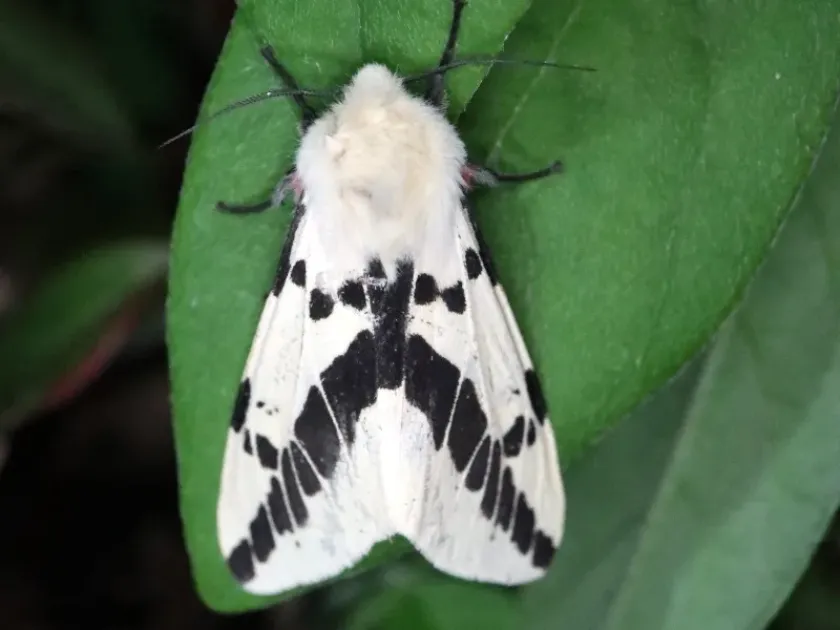
The oblique tiger moth (Spilarctia obliquizonata) belongs to the family Erebidae (subfamily Arctiinae). This moth species is a member of the Lepidoptera order and appears as a medium-sized moth with distinct wing markings in its adult stage.
The larvae, or caterpillars, are characterized by dense hair cover, which is a common defense mechanism for many tiger moths. Their bodies often feature dark coloration with vibrant spots, warning predators of their toxicity or unpleasant taste.
While adults possess functional mouthparts, the primary damage is caused by the larval stage, which has a chewing mouthpart structure. Scientific identification is typically performed by specialists examining adult wing patterns and genital morphology.
This species is part of the Asian entomological fauna and requires precise identification to distinguish it from other closely related members of the Spilarctia genus.
The life cycle encompasses four stages: egg, larva (caterpillar), pupa, and adult. Overwintering usually occurs during the pupal stage, protected within a cocoon in the soil or among organic debris.
What it damages
This pest is highly polyphagous, meaning it feeds on a wide range of botanical species. In agricultural settings, the caterpillars attack both field crops and vegetable varieties.
The most significant damage occurs to the leaf blades, which reduces the plant's photosynthetic capacity. In cases of high population density, larvae can skeletonize leaves, leaving only the primary veins.
Damage is not limited to foliage consumption; the larvae also attack reproductive structures such as buds and young fruits, directly impacting total crop yield.
Seedlings are particularly susceptible to early larval instars, which can consume cotyledons and cause total crop loss. Damaged plants are also highly prone to secondary fungal and bacterial infections.
Economic thresholds vary depending on the host crop, but massive infestations require immediate intervention to preserve both plant vigor and market quality.
Signs of infestation
The initial evidence of an infestation includes the presence of larval excrement (frass) on leaf surfaces or on the ground beneath the host plants.
Irregular holes or scalloped edges on the leaves indicate active feeding by older-stage caterpillars that consume substantial amounts of biomass.
Leaves may appear curled or tied together with fine silk webbing, which larvae use as daytime shelters to avoid heat and predation.
Stunted growth or chlorosis in specific areas of the field serves as an indirect sign of pest activity, signaling nutrient stress caused by foliage loss.
Direct observation during twilight hours or at night is the most reliable way to identify the presence of the caterpillars, as they are nocturnal feeders.
Control measures
Crop rotation is a fundamental management strategy, as it disrupts the life cycle of the moth and prevents the accumulation of pupae in the soil.
Deep fall tillage helps destroy overwintering pupae by exposing them to birds, predators, and harsh environmental conditions, significantly reducing the next season's population.
Biological control using Bacillus thuringiensis-based products is highly effective against young larvae and is considered an environmentally friendly management tool.
Chemical applications using systemic or contact insecticides are justified when population densities exceed economic thresholds, strictly following regional pesticide safety regulations.
Monitoring adult populations with pheromone traps provides critical data for timing control measures and predicting peak periods of egg-laying to maximize treatment efficacy.
Taxonomy
- Latin name
- Spilarctia obliquizonata
- Order
- Lepidoptera (butterflies)
- Family
- Erebidae
- EPPO code
- SPIAOL
Discussion
No discussions yet — be the first.