
Bluegrass billbug
Sphenophorus parvulus
Description
How to identify
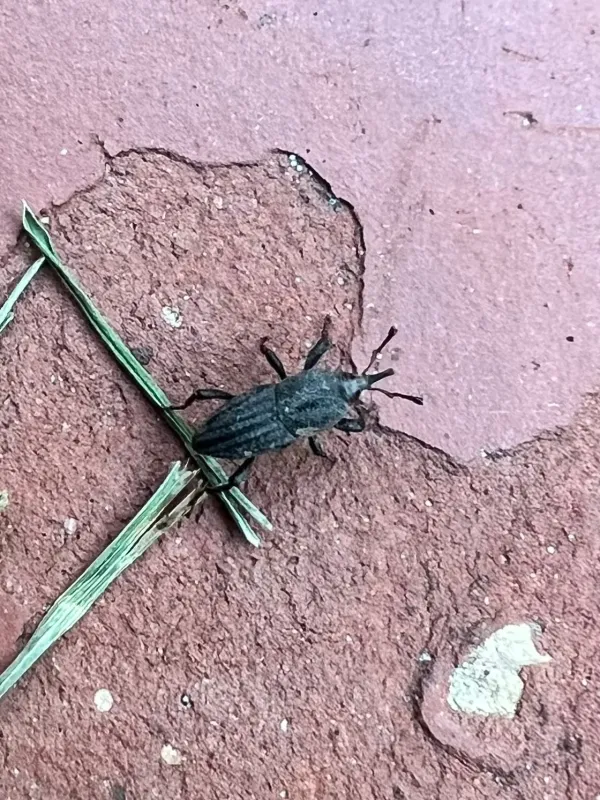
The Bluegrass billbug (Sphenophorus parvulus) is a beetle species belonging to the family Curculionidae (weevils). These insects are recognized by their distinct elongated snout, known as a rostrum, which is characteristic of the genus Sphenophorus.
Adult beetles typically measure between 6 to 8 millimeters in length. Their bodies display a dark, often bluish-black metallic sheen. The wing covers (elytra) are marked with longitudinal ridges or pits, giving the insect a textured appearance.
The larval stage consists of legless, creamy-white grubs with a curved body profile and a hardened, reddish-brown head capsule. These larvae are specialized feeders that thrive within the stems of host plants, where they cause the most significant internal damage.
Pupation typically takes place within the soil or inside the hollowed-out base of the host plant stem. The life cycle is univoltine, meaning there is usually one generation per year, with adults overwintering in protected areas like soil crevices or crop debris.
Activity begins in the spring when rising soil temperatures trigger the emergence of overwintering adults. These beetles then migrate to host plants to feed and lay eggs, marking the start of the infestation period for agricultural crops.
What it damages
The Bluegrass billbug primarily infests a variety of grass species. Key hosts include agricultural crops such as corn, wheat, barley, and oats, as well as turfgrasses like Kentucky bluegrass, which are frequently targeted by this pest.
Adult beetles cause initial damage by feeding on stems and leaves, creating small, recurring patterns of holes. However, the most destructive damage is caused by larvae that bore into the crown and lower stem area of the plant.
As the larvae feed, they tunnel through the plant's internal tissues, effectively destroying the vascular system. This disruption prevents the movement of water and nutrients, leading to stunted growth, wilting, and often the death of the main shoot.
In mature plants, severe larval damage weakens the base of the stem, making the crop highly susceptible to lodging during windy weather. This reduction in structural integrity directly correlates to a significant decrease in grain yield and quality.
Field infestations are often patchy, appearing as distinct areas of yellowing or dying plants. If left unmanaged, billbug populations can build up over time, leading to widespread loss of stand density across the entire field.
Signs of infestation
One of the earliest signs of billbug activity is the presence of parallel rows of small, circular holes in the leaves. This pattern occurs when the adult beetle feeds on the leaf while it is still rolled inside the whorl.
Wilting of the central leaf, often referred to as "flagging," is a major diagnostic sign. This symptom indicates that the larva has successfully girdled the base of the stem, cutting off the supply of water to the upper parts of the plant.
Searching the base of the plant often reveals the presence of "frass"—a sawdust-like material created by the larvae as they chew through the plant tissue. This material accumulates at the soil surface around the infested stem.
When a damaged stem is gently pulled, it often snaps away easily at the crown level. Upon dissecting the stem, one can usually find the cream-colored larvae or the hollowed-out tunnels they have left behind during their feeding phase.
Affected fields may show reduced vigor and thinning of the stand. Early detection is critical, as the symptoms often mirror those of moisture stress or nutrient deficiency, which can lead to misdiagnosis if the base of the stem is not inspected.
Control measures
Cultural control is the first line of defense against the Bluegrass billbug. Crop rotation, specifically moving away from susceptible grass hosts, significantly disrupts the life cycle of the pest by removing its food source.
Sanitation practices, such as the removal of crop residues and the management of grassy weeds around field margins, are essential. These areas provide overwintering sites for adult beetles; eliminating them reduces the population pressure on the next season's crop.
Chemical control involving systemic insecticides is often necessary if monitoring indicates that populations have exceeded economic thresholds. Applications should be timed to target adults before egg-laying occurs, typically in early to mid-spring.
Biological control agents, including various species of parasitic wasps and entomopathogenic fungi, play a natural role in limiting billbug numbers. Maintaining healthy soil biodiversity helps sustain these beneficial organisms in the field.
- Use monitoring traps (pitfall or pheromone traps) to track adult activity.
- Plant resistant varieties that exhibit more robust crown structures.
- Apply preventative systemic seed treatments for early-season protection of young seedlings.
Taxonomy
- Latin name
- Sphenophorus parvulus
- Order
- Coleoptera (beetles)
- Family
- Dryophthoridae
- EPPO code
- SPPHPA
Discussion
No discussions yet — be the first.