
Maize billbug
Sphenophorus maidis
Description
How to identify
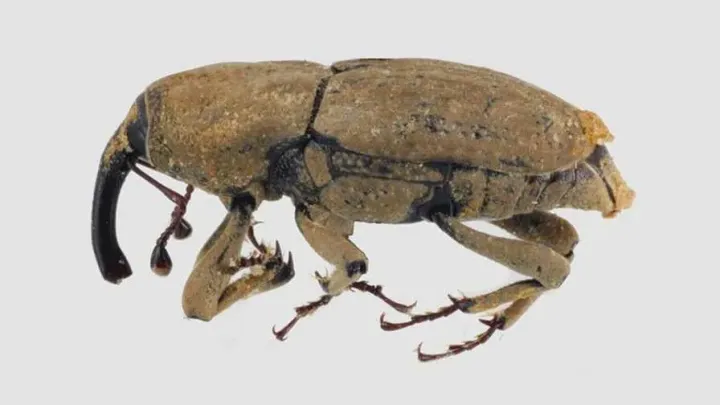
The maize billbug (Sphenophorus maidis) is a destructive insect species belonging to the Curculionidae family of beetles. Adult beetles are recognizable by their elongated snouts and dark, chitinous bodies.
Measuring approximately 10–12 millimeters in length, these beetles possess a rugged exterior with distinct longitudinal ridges on their elytra. Their coloration varies from black to dark reddish-brown.
The larvae are legless, creamy-white grubs with brown head capsules. They are endophagous, meaning they complete their developmental cycle hidden inside the stalks of corn and other grasses.
The lifecycle includes complete metamorphosis: egg, larva, pupa, and adult. The insect typically has one generation per year, with adults overwintering in soil or debris near previous corn fields.
The primary period of adult activity occurs in early spring, when beetles emerge to feed on developing seedling stems before laying eggs.
What it damages
The maize billbug targets corn plants primarily, although it can feed on other wild grasses. Both adults and larvae are responsible for the damage observed in the field.
Adult beetles cause damage by feeding on young stems at the base, creating puncture marks that can result in the plant curling or becoming stunted as it grows.
The larval stage is the most destructive, as they tunnel through the center of the stalk. This feeding behavior severs the plant's vascular tissue, effectively preventing the flow of nutrients and water.
Severe infestations lead to plant lodging, where stalks break under slight wind pressure, or total plant mortality if the feeding reaches the growing point.
This internal damage creates pathways for secondary fungal infections, which further deteriorate the health and yield potential of the crop.
Signs of infestation
An early indicator of maize billbug activity is the presence of parallel rows of holes on the leaves, which become visible as the foliage unfurls after the beetle has fed on the central shoot.
A characteristic sign of larval presence is the yellowing or wilting of the central whorl, commonly referred to as "dead heart" or white-heart, indicating severe internal stem damage.
Upon inspecting the base of the plant, one may notice small entrance holes and accumulations of frass, which resemble sawdust, left behind by the developing larvae.
Affected plants often appear uneven in height within the field and show significant physiological stress compared to neighboring healthy plants.
Splitting the stalk longitudinally near the root line often reveals the presence of larvae or pupae, confirming the billbug as the primary cause of damage.
Control measures
Integrated pest management (IPM) is essential for controlling the maize billbug, with deep fall tillage being a primary method to disturb overwintering sites.
Crop rotation is one of the most effective strategies; rotating corn with non-host crops like soybeans disrupts the lifecycle of the beetle and limits population growth.
Sanitation practices, including the removal of crop residues and the control of perennial grasses around field edges, reduce overwintering populations.
Seed treatments with systemic insecticides provide crucial protection during the early growth stages, effectively preventing adult feeding damage.
- Monitoring field borders using pitfall traps during the spring.
- Adjusting planting dates to avoid the peak emergence of adults.
- Using high-vigor hybrids capable of withstanding early season stress.
Taxonomy
- Latin name
- Sphenophorus maidis
- Order
- Coleoptera (beetles)
- Family
- Dryophthoridae
- EPPO code
- SPPHMA
Discussion
No discussions yet — be the first.