
Sphenophorus
Sphenophorus
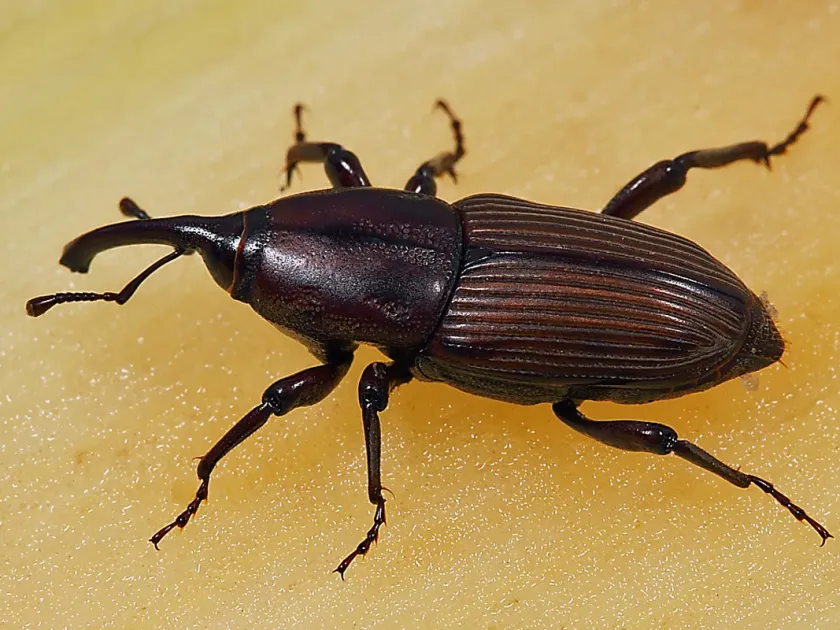
Description
How to identify
Sphenophorus is a genus of beetles commonly known as billbugs, belonging to the family Curculionidae. These insects are easily recognized by their distinct, elongated snout and robust, cylindrical bodies.
The adult billbugs are typically dark brown to black in color, with a hard exoskeleton. Depending on the species, they generally range from 8 to 15 millimeters in length.
The larval stage is characterized by a legless, C-shaped, creamy-white grub with a hard, dark-brown head capsule. They spend their entire developmental period hidden inside plant stalks.
The life cycle usually involves one generation per year. Eggs are deposited inside the plant tissue, and after hatching, the larvae tunnel through the stalks, feeding on the interior tissues.
Pupation occurs within the plant stem, where the insect constructs a chamber out of compacted plant fibers and excrement before emerging as an adult.
What it damages
The primary damage is inflicted by larvae tunneling within the stem, which destroys the vascular system and prevents the proper flow of water and nutrients to the plant foliage.
These pests primarily target corn, sorghum, wheat, rice, and various grasses. Young plants are particularly susceptible and may die shortly after infestation.
Adults also feed on the plant, creating small, distinct holes in the leaves or stalks. While this feeding does not usually kill the plant, it causes significant stress and weakens the structural integrity.
Stunted growth and lodging are common symptoms in fields with high billbug populations, as the compromised stems are unable to support the weight of the plant.
Extensive tunneling by larvae often leads to secondary infections by pathogens, which exacerbate the damage and can result in significant yield losses across the field.
Signs of infestation
The most recognizable sign is the "dead heart" symptom, where the central whorl of a young plant turns yellow and dies, while the older leaves remain green for a time.
When observing leaves, you may find rows of symmetrical, small holes across the leaf surface, created when the adult beetle feeds on the plant while it is still tightly furled.
Upon closer inspection, the base of the stalk may show signs of tissue decay or soft rot, providing a direct entry point for opportunistic pathogens to enter the weakened stem.
Splitting the stem longitudinally will often reveal tunnels packed with sawdust-like frass, which is a definitive indicator of a larval infestation.
Infested plants often exhibit a poor root system, and they can be pulled from the soil with much less effort than healthy, non-infested plants due to the destruction of the crown.
Control measures
Effective management begins with robust crop rotation, which is essential for breaking the pest's cycle and preventing the buildup of overwintering populations in the field.
Deep tillage after harvest can help bury plant residues and destroy the overwintering adults and pupae, significantly reducing the pest pressure for the following season.
Sanitation practices, including the removal of volunteer corn and grassy weeds, are crucial to eliminate alternative food sources for the beetles.
Seed treatment with systemic insecticides is the most effective approach for protecting emerging crops, providing a window of control during the most sensitive growth stages.
- Use of certified, insecticidal-treated seeds.
- Monitoring adult activity using pheromone or pitfall traps.
- Maintaining healthy plant vigor to withstand minor infestations.
- Timely herbicide application to reduce weed hosts around the fields.
Taxonomy
- Latin name
- Sphenophorus
- Order
- Coleoptera (beetles)
- Family
- Dryophthoridae
- EPPO code
- SPPHSP
Discussion
No discussions yet — be the first.