
European fruit lecanium
Sphaerolecanium
Description
How to identify
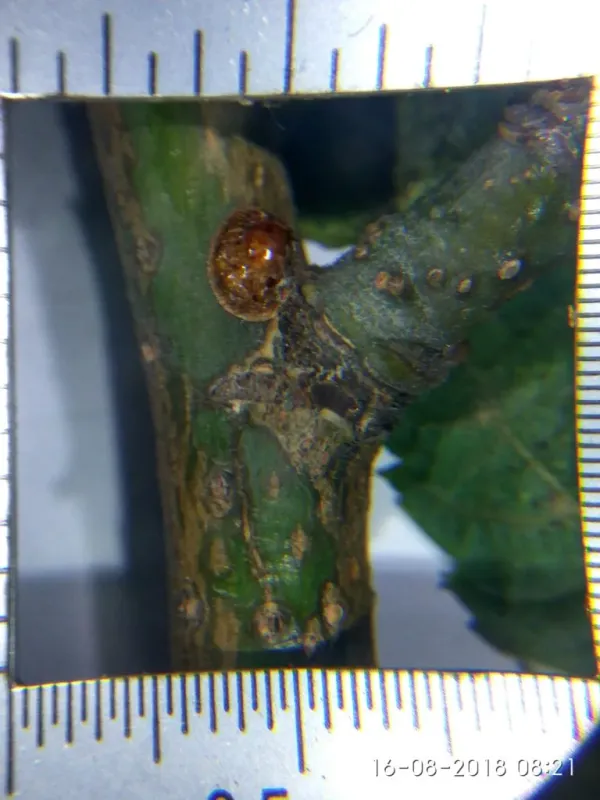
The European fruit lecanium (Sphaerolecanium prunastri) is a scale insect belonging to the Coccidae family. The adult female is characterized by a shiny, dark brown, spherical body that can reach 3-4 mm in diameter.
The nymphs, known as crawlers, are very small, flat, and light brown in color. They are highly mobile during the early stages of their development as they search for suitable feeding sites on the tree branches.
Colonies of these insects often resemble irregular bark growth or dormant buds, which makes them difficult to identify during routine visual inspections of the orchard.
While males exist, they are extremely rare, and reproduction is primarily parthenogenetic. This allows the population to remain stable even without the presence of a mate.
The adult female's body hardens over time, creating a protective dome that shields her eggs and significantly reduces the effectiveness of many surface-applied pesticides.
What it damages
The primary hosts for this pest include stone fruit trees such as plums, apricots, peaches, and blackthorns. It can also occasionally be found on cherries and almonds.
The insects feed by sucking sap from young shoots and branches, which causes severe physiological stress to the tree, leading to stunted growth and branch dieback.
A major indirect impact is the excretion of honeydew, which creates a perfect substrate for sooty mold. This layer of mold blocks sunlight and reduces the leaves' ability to perform photosynthesis.
Heavy infestations result in fruit drop and a significant decline in the overall vigor of the tree, making it much more susceptible to frost damage and secondary diseases.
If left unmanaged, the cumulative damage can lead to the death of the tree within a few growing seasons, particularly in young or stressed orchards.
When it appears
Second-instar nymphs spend the winter tucked into bark crevices or near the base of buds. They become active as soon as the temperature rises in early spring.
The females reach maturity in late spring, around the time of plum tree flowering. They grow rapidly during May and early June while preparing to lay eggs.
The emergence of crawlers occurs in mid-summer, typically in June or July. This is the period when the pest is most vulnerable to chemical treatments before the nymphs settle down.
The species completes only one generation per year, which simplifies control efforts if the timing of the intervention is synchronized with the crawler stage.
By late summer and autumn, the nymphs move to their overwintering locations on the branches to prepare for the dormancy period, completing their annual life cycle.
Signs of infestation
The most distinctive sign of infestation is the presence of hard, round, dark brown or black bumps on the branches that do not come off easily when scraped.
A sticky, shiny residue on the leaves followed by a black, powdery coating (sooty mold) is a clear indicator that the tree is hosting a colony of these insects.
Yellowing, curling, or early wilting of leaves on specific branches is frequently associated with localized feeding damage caused by the scale insect colony.
An unusual concentration of ants on the branches is often a sign of scale infestation, as ants are attracted to the sugary honeydew excreted by the insects.
Reduced shoot growth and an overall sickly appearance of the tree despite adequate irrigation and nutrition should prompt a closer look at the bark of smaller branches.
Control measures
Sanitation is a critical control measure. Pruning and destroying heavily infested branches helps to significantly reduce the pest population density in the orchard.
Dormant oil sprays applied in early spring can effectively suffocate overwintering nymphs, providing a strong start to the season by lowering the initial pest pressure.
Applying systemic insecticides during the crawler emergence phase in early summer ensures that the pests ingest the chemical while they are still exposed.
Encouraging natural predators such as lady beetles and parasitic wasps can help maintain the scale population below the economic threshold in managed orchards.
- Routine pruning of infested wood
- Application of dormant horticultural oils
- Timed applications of systemic insecticides
- Ant control to deny protection to scales
- Regular monitoring of tree vigor
Taxonomy
- Latin name
- Sphaerolecanium
- Order
- Hemiptera (bugs, aphids, leafhoppers)
- Family
- Coccidae
- EPPO code
- SLECSP
Discussion
No discussions yet — be the first.