
Spermatolonchaea
Spermatolonchaea
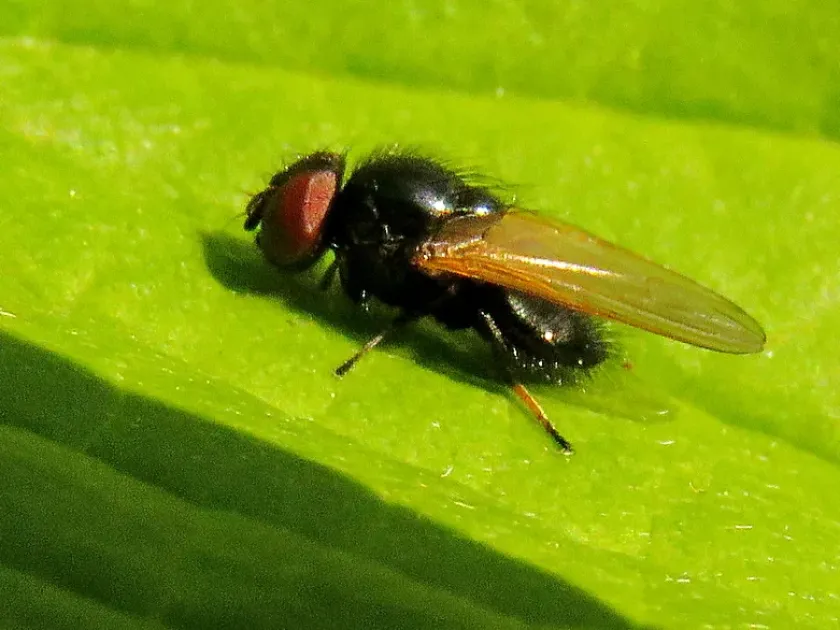
Description
How to identify
Spermatolonchaea belongs to the family Lonchaeidae (lance flies) in the order Diptera. These are small insects that often remain unnoticed due to the secretive lifestyle of the adults.
The adult specimens have a characteristic shiny black body with a metallic sheen. The wings are transparent with well-developed venation typical for members of the lance fly family.
The head is relatively large with prominent compound eyes. The antennae are short and directed forward, serving as a diagnostic feature for this genus.
The larvae of Spermatolonchaea are typical for flies, being legless and white or yellowish. Their body tapers towards the front end, where specialized mouth hooks are located.
Identifying these insects in the field is often difficult because the larvae develop within plant tissues, hidden from direct visual observation.
What it damages
This pest primarily attacks the tissues of various vegetable and ornamental crops. Damage to stems, tubers, and developing fruits poses a significant risk.
Spermatolonchaea larvae are capable of burrowing into succulent plant parts, creating intricate galleries inside. This disrupts normal sap circulation and nutrient uptake of the organs.
As a result of the damage, internal plant tissues begin to decay, especially under high humidity conditions. Secondary infections, such as bacterial rots, often develop in the puncture sites.
Young shoots and buds suffer the most; after being damaged by larvae, they quickly wilt, dry out, or completely die, leading to significant yield losses.
- Stem damage reduces the structural integrity and resistance of plants to lodging.
- Fruit damage makes them unsuitable for storage and commercial sale.
- Overall plant weakening leads to a decrease in the quality of the harvest.
When it appears
The emergence of adult Spermatolonchaea usually coincides with the beginning of the warm season when average daily temperatures exceed 15 degrees Celsius.
The peak activity of the pest is observed in mid-summer, characterized by mass flight of adults and egg-laying into the tissues of suitable host plants.
The development of one generation can take from a few weeks to a month, allowing the pest to complete multiple generations within a single growing season.
In autumn, larvae of the final generations often move into the soil or plant debris for pupation and subsequent overwintering to survive adverse weather conditions.
Monitoring for the presence of the pest is recommended starting from the active growth phase, as plants are most vulnerable to infestation during this period.
Signs of infestation
The first sign of infestation is the appearance of tiny holes on the surface of stems or fruits, from which sap or larval frass may be discharged.
Visible symptoms include yellowing and deformation of young leaves or shoots located above the entry point of the larva. Later, these parts of the plant may droop.
Dissecting the damaged areas reveals tunnels inside the tissue filled with larval excrement. The tissue surrounding the galleries often takes on a dark, necrotic appearance.
A foul smell of rot near the root collar or fruit is a warning signal of deep pest damage and the development of associated microflora.
Stunted development and overall poor performance compared to healthy neighboring plants also serve as indirect confirmation of active Spermatolonchaea reproduction.
Control measures
The foundation of control is crop rotation. Avoid planting susceptible crops on the same plots for more than two consecutive years to interrupt the pest's life cycle.
Deep autumn plowing of the soil helps destroy pupae that have overwintered in the ground, significantly reducing the insect population for the following season.
It is crucial to remove and destroy infested plant debris in a timely manner, as these remain a primary reservoir for infection and breeding sites for larvae.
The use of biological insecticides during early infestation stages shows high efficiency, helping to manage population levels without significant harm to the ecosystem.
Chemical treatments should be applied only when the economic threshold of damage is reached, utilizing broad-spectrum products approved for use on the specific crops.
Taxonomy
- Latin name
- Spermatolonchaea
- Order
- Diptera (flies)
- Family
- Lonchaeidae
- EPPO code
- SPERSP
Discussion
No discussions yet — be the first.