
Lavender moth
Sophronia humerella
Description
How to identify
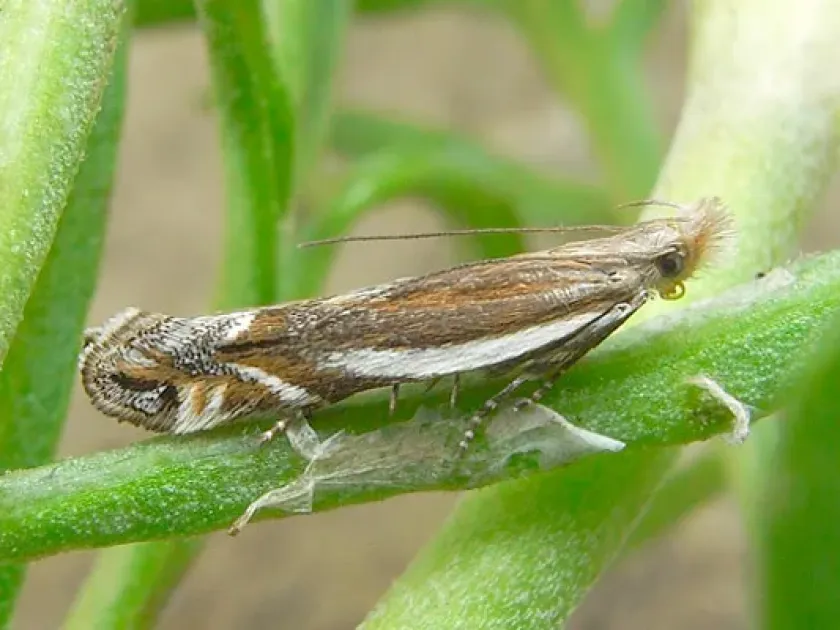
The lavender moth (Sophronia humerella) belongs to the Gelechiidae family, order Lepidoptera. The adult moth is small with grayish-brown forewings, providing excellent camouflage against dry lavender stalks and surrounding vegetation.
Larvae pass through several stages, changing their appearance from light yellow to a greenish hue with a darker longitudinal stripe. They possess well-developed mouthparts designed for feeding on plant tissues within flower spikes.
The life cycle is closely synchronized with the phenology of the host plant. They typically overwinter as pupae in the soil or under debris, emerging as adults in the spring and early summer as temperatures stabilize.
Mating occurs shortly after emergence, and females lay eggs primarily on young shoots and developing flower buds. The larvae hatch and immediately seek shelter within the dense tissues of the lavender plant.
This species is nocturnal, which makes identifying adults difficult during daylight hours. The use of pheromone or light traps is recommended for monitoring populations in commercial lavender fields.
What it damages
Lavender (Lavandula species) is the primary host. The damage caused by the lavender moth larvae is both direct and significant, as they feed on the internal parts of the inflorescences.
By boring into the flower buds and tender stems, the larvae disrupt the plant's reproductive processes, often preventing the lavender from blooming properly or producing viable seeds.
Larval feeding activity involves webbing together buds and small leaves, creating protective nests. This activity causes distorted growth, premature browning, and necrosis of the affected flower spikes.
Beyond physical tissue consumption, the larvae create entry points that facilitate infections by various pathogens, particularly gray mold (Botrytis), which further compromises the crop quality.
The cumulative effect of a heavy infestation is a dramatic reduction in both the aesthetic value of the plants and the yield of essential oil, which is the primary economic driver of lavender production.
Signs of infestation
The most visible sign of an infestation is the presence of silk webbing around the tips of the flower stalks. These webbed clusters often contain frass (excrement) from the feeding larvae.
Affected stems often show signs of stunted growth or curling. If left untreated, the buds within the webbing fail to open, appearing dry, shriveled, and discolored compared to healthy neighboring spikes.
During the larval stage, one can observe the "nesting" behavior where buds are glued together with silk. This is often the first indicator that the plant requires immediate intervention.
In cases of severe infestation, the general vigor of the lavender bush declines. The plants may appear sparse, and the expected uniformity of the field during flowering will be broken by patchy, dead zones.
Monitoring for adults via light traps during dusk indicates the start of the breeding season, allowing growers to time their pest control applications for maximum efficacy.
Control measures
Good agricultural practices are the first line of defense. Post-harvest pruning is highly effective, as it removes the parts of the plant where the larvae and eggs reside, thereby lowering the next generation's pressure.
Tillage between rows in autumn and early spring helps disturb the overwintering pupae, exposing them to environmental factors and natural predators, which significantly reduces local pest populations.
Biological control options include Bacillus thuringiensis sprays, which target the larvae specifically while sparing beneficial insects and bees that are essential for lavender cultivation.
Chemical control should be used sparingly and only when necessary. Ensure that any insecticide applied is compatible with the timing of the lavender harvest to avoid chemical residues in the oil.
- Monitor fields with pheromone traps.
- Maintain optimal plant health through proper fertilization.
- Remove and destroy highly infested plant material.
Taxonomy
- Latin name
- Sophronia humerella
- Order
- Lepidoptera (butterflies)
- Family
- Gelechiidae
- EPPO code
- SOPHHU
Discussion
No discussions yet — be the first.