

Pest · Coleoptera (beetles) · affects Winter wheat, Potato, Field pea
Especially harmful
Otiorhynchus asphaltinus
Otiorhynchus sp.
Description
How to identify
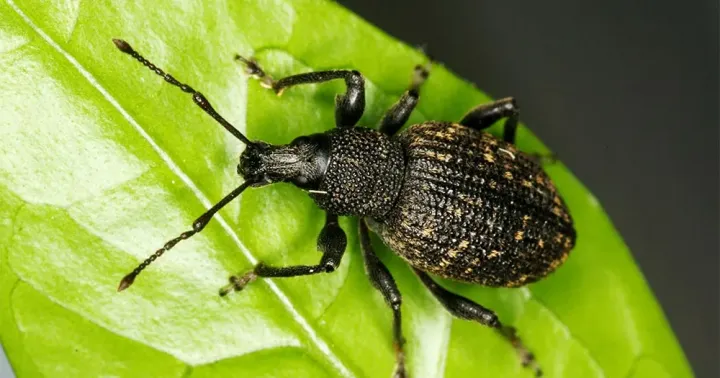
Otiorhynchus asphaltinus, commonly known as a type of root weevil, belongs to the Curculionidae family. Adult beetles measure 8–11 mm in length and feature a distinct black, matte, and pitted surface on their elytra, providing them with a rugged appearance.
These insects are primarily nocturnal. During the day, they remain hidden in the soil, under mulch, or beneath plant debris, which makes early detection quite challenging for gardeners and farmers.
The larval stage is spent entirely underground. The larvae are creamy white, C-shaped, legless grubs with distinct brown head capsules. They are highly active in the root zone and cause significant damage to the plant's foundation.
The species reproduces via parthenogenesis, meaning the population consists almost exclusively of females. This reproductive strategy allows for rapid colonization and high population densities in favorable environments.
Since the adults lack functional wings, they rely on crawling to move between plants, leading to a patchy distribution of the infestation throughout the field or orchard.
What it damages
The pest is a polyphagous insect that attacks a wide array of plants, including fruit trees, berry bushes, grapevines, and various ornamental species. It causes damage during both the larval and adult stages of its life cycle.
Larval damage is generally the most severe. The grubs feed on root hairs and larger roots, stripping the bark and severely weakening the plant. This often results in stunted growth, nutrient deficiency, and total plant collapse.
Adult beetles feed on the foliage by chewing distinct notches along the leaf margins. While this damage is rarely lethal to mature plants, it significantly impairs their photosynthetic capacity and overall vigor.
In nurseries, the presence of these pests can be devastating, as young transplants are highly susceptible to root destruction, leading to high mortality rates before the plants can establish.
Secondary infections, such as root rot, frequently follow larval feeding, further complicating the recovery process for plants that have been compromised by the weevils.
When it appears
Adults emerge from the soil in the spring, typically starting in April or May, as soil temperatures rise. Their peak activity and feeding period continue through early summer.
Egg-laying occurs throughout the summer months. Females deposit hundreds of eggs directly into the soil near the base of host plants, ensuring larvae have immediate access to food upon hatching.
After hatching, the larvae immediately begin feeding on roots. They remain active underground through the summer and autumn, often reaching their most damaging stage before the onset of winter.
The larvae overwinter in the soil at depths of up to 30 cm, where they are protected from extreme frost. They resume feeding in the following spring as soon as the temperature allows.
Pupation occurs in soil chambers during the spring. Depending on local environmental factors, the total life cycle can last one to two years, resulting in overlapping generations.
Signs of infestation
The most recognizable sign of an infestation is the irregular, scalloped notches found along the leaf edges. These are caused by adult beetles feeding at night.
Plants showing signs of water stress, wilting, or yellowing despite adequate soil moisture often indicate severe root damage caused by larvae underground.
When pulling lightly on a suspected plant, if the roots have been stripped away or the plant comes out of the soil with very little resistance, it is a definitive sign of root weevil activity.
- Notched leaf margins on foliage.
- Unexplained wilting and loss of plant vigor.
- Stunted or reduced terminal growth.
- Presence of white, C-shaped grubs in the root ball.
Nighttime inspections using a flashlight can reveal the presence of adult beetles, which is the most reliable way to confirm the pest's presence in a garden or nursery.
Control measures
Cultural control involves regular tillage and soil cultivation in the spring and autumn. This practice exposes larvae to surface conditions, where they can be consumed by birds or perish from desiccation.
Biological control using entomopathogenic nematodes, such as Heterorhabditis or Steinernema species, provides an effective, environmentally friendly way to eliminate larvae from the soil.
Chemical control should be timed to target adults when they emerge from the soil but before they lay eggs. Foliar insecticide applications performed at night are the most effective way to reduce the adult population.
Using sticky barriers or traps on the trunks of trees can help monitor and reduce the migration of adult beetles, especially in orchards and berry plantations.
Maintaining high horticultural standards, including weed control and proper irrigation, helps plants remain resilient against feeding damage and improves their recovery rates.
Content graph
Connections · Otiorhynchus asphaltinus
Most often together:
Marketplace
Products · 1
Biology
Taxonomy
- Latin name
- Otiorhynchus sp.
- Order
- Coleoptera (beetles)
- Family
- Curculionidae
- EPPO code
- OTIOSP
Community
Discussion
No discussions yet — be the first.