
Grain moth
Sitotroga
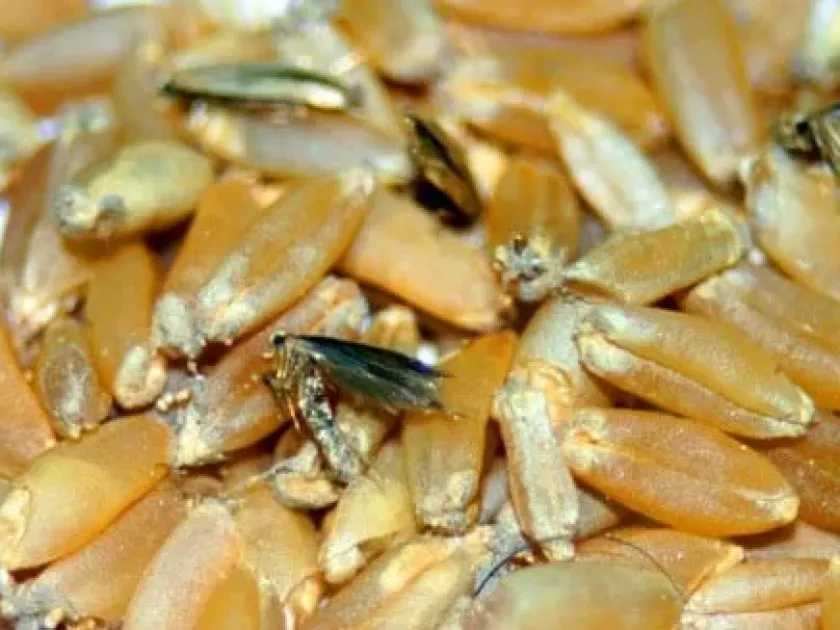
Description
How to identify
The grain moth (Sitotroga cerealella) is a small moth belonging to the Gelechiidae family. Adults typically have a wingspan of 15–19 mm and are characterized by their narrow wings.
The forewings are yellowish-gray or ocher-colored, often featuring small, dark spots. The hindwings are grayish and have a distinctive point at the tip, accompanied by a long fringe.
The larvae are approximately 6–7 mm long when fully grown. They have a pale, creamy body with a noticeable brown head capsule and sparse, short hairs.
Eggs are oval-shaped and undergo a color change from white to bright red as the embryo develops within the grain tissues.
This species is highly adapted to feeding inside kernels, making it difficult to detect during the early stages of infestation.
What it damages
Grain moths primarily infest cereal crops, including wheat, barley, rye, corn, and sorghum. They cause significant economic losses in both field conditions and storage facilities.
In the field, moths lay eggs on ripening ears. Once hatched, larvae bore into the grain kernels to consume the starchy endosperm, which is essential for the grain's development.
In stored grain, infestations usually begin in the top layer of the grain pile, but if left unmanaged, the pest can penetrate deeply into the bulk of the stored product.
Damage is characterized by the total consumption of the grain interior, leaving only the thin outer shell. This renders the grain unsuitable for milling or seeding.
Heavily infested grain may exhibit increased temperatures due to larval activity, which can subsequently lead to secondary fungal growth and spoilage.
When it appears
Within storage facilities, the grain moth can reproduce year-round if temperatures remain above 12°C, making it a persistent threat in heated warehouses.
Optimal conditions for development include a temperature range of 25–30°C and grain moisture content exceeding 14%, which significantly accelerates the lifecycle.
In outdoor environments, the moth is most active during the grain ripening stages in late spring and summer, producing several generations per season.
The duration of the lifecycle from egg to adult can vary from 30 to 45 days, depending heavily on ambient temperature and food source availability.
Larvae are capable of overwintering inside kernels in the field or in unheated storage structures, emerging as adults when favorable temperatures return.
Signs of infestation
The most visible sign of an infestation is the presence of adult moths flying near the surface of stored grain, particularly during twilight or night hours.
Upon close inspection of the kernels, one can identify small, circular exit holes, which are sometimes covered by a thin, papery "cap" created by the larva before pupation.
Infested grain becomes significantly lighter in weight and exhibits a hollow sound when handled or poured, indicating that the internal content has been consumed.
A musty or unpleasant odor often permeates infested grain storage areas, caused by the buildup of larval waste and the associated increase in moisture content.
- Visible webbing on the grain surface.
- Increased moisture levels leading to clumping.
- Presence of larval frass within the grain mass.
Control measures
Effective management begins with rigorous hygiene: thoroughly cleaning bins and warehouses to remove leftover grain particles where the moth could harbor.
Fumigation using phosphine-based products remains the industry standard for eliminating all life stages of the grain moth in sealed storage facilities.
Controlling moisture is critical; maintaining grain moisture content below 13% creates an unfavorable environment that inhibits rapid larval development.
Aeration systems in grain silos are essential for managing temperature, as keeping the grain cool helps suppress the moth's reproductive activity.
Field-level strategies include harvesting promptly and destroying crop residues, which helps break the lifecycle and prevents the pest from migrating into storage.
Taxonomy
- Latin name
- Sitotroga
- Order
- Lepidoptera (butterflies)
- Family
- Gelechiidae
- EPPO code
- SITTSP
Discussion
No discussions yet — be the first.