
Granary weevil
Sitophilus granarius
Description
How to identify
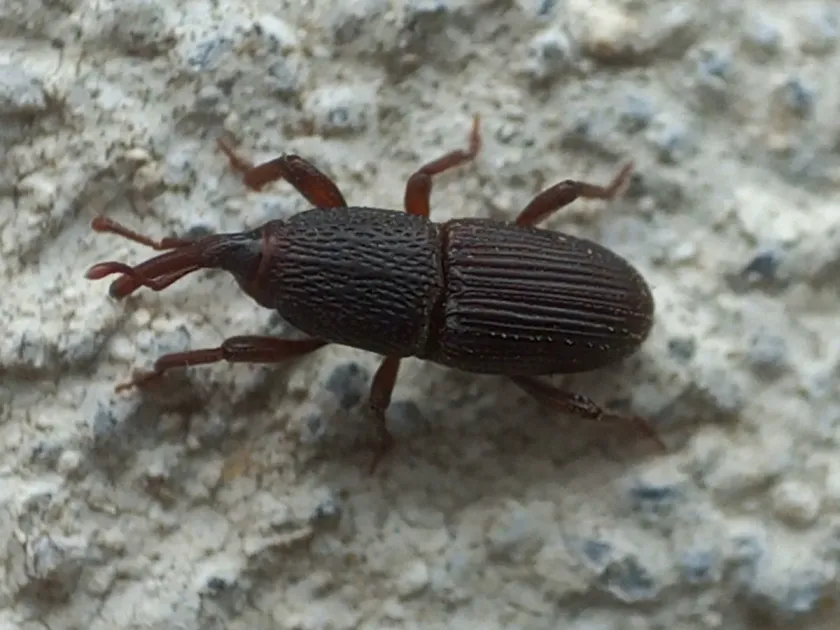
The granary weevil (Sitophilus granarius) is a member of the Coleoptera order and the Curculionidae family. Adult beetles measure about 2.3–3.5 mm and have a distinct snout with a dark brown or black coloration.
This pest has lost the ability to fly as its hind wings are underdeveloped. Despite this, it spreads rapidly across the globe through the movement of infested grain during trade and transport.
The entire lifecycle takes place inside the grain kernel. The female bores a hole in the grain, lays an egg, and seals it with a secretion. The development cycle can last from 30 to 100 days depending on climate conditions.
Optimal conditions for rapid multiplication include temperatures around 25–27 degrees Celsius and grain moisture levels above 14%. Under these circumstances, the population grows exponentially.
The larva is a legless, white grub with powerful mandibles designed for feeding on the endosperm. It remains hidden within the kernel until the pupation stage, which makes early detection difficult.
What it damages
The granary weevil is considered one of the most destructive pests of stored grain worldwide. It attacks a wide range of cereals including wheat, rye, barley, oats, corn, and rice.
Beyond whole grains, this pest can damage processed products such as flour, semolina, pasta, and even legumes when other food sources are unavailable.
The weevil causes direct losses by consuming the inside of the grain. Furthermore, it creates favorable conditions for mold growth due to the moisture increase in the infested storage mass.
In cases of heavy infestation, the grain mass begins to heat up, a phenomenon known as "self-heating," which leads to significant spoilage and loss of seed germination capacity.
The economic impact involves not only the loss of grain volume but also the high costs associated with fumigation and the potential rejection of infested shipments in international trade.
Signs of infestation
The primary sign of an infestation is the presence of small, round exit holes in the grain kernels, where adult weevils have emerged after their development.
A significant amount of grain dust or flour-like residue at the bottom of the bin often indicates that the larvae are actively feeding and destroying the grain from within.
Increased temperature within the grain storage indicates active metabolic processes caused by a pest infestation. Regular monitoring using temperature probes is strongly advised.
Adult weevils can often be spotted on the surface of the grain pile, particularly during the early morning or evening hours, and can be caught using insect traps.
A distinct, musty or sour smell emanating from the grain storage area is often a warning sign that the grain has been compromised and is beginning to decay.
Control measures
Rigorous sanitation of grain storage facilities is the first line of defense. This includes cleaning all bins from old grain residues and performing professional disinfection before filling with new crops.
Drying grain to a moisture content below 12–13% is a highly effective cultural control method, as it significantly inhibits the reproductive capacity of the granary weevil.
Aeration of the grain mass to maintain low temperatures is crucial. Below 10 degrees Celsius, the development of the weevil population is effectively halted.
- Regular prophylactic fumigation of warehouses.
- Consistent sampling and laboratory analysis of grain.
- Controlled use of authorized residual insecticides on surfaces.
If an infestation is detected, the entire warehouse volume must be treated with professional-grade phosphine-based fumigants while maintaining air-tight conditions to ensure the complete elimination of all life stages.
Taxonomy
- Latin name
- Sitophilus granarius
- Order
- Coleoptera (beetles)
- Family
- Dryophthoridae
- EPPO code
- CALAGR
Discussion
No discussions yet — be the first.