
Granary weevil
Sitophilus
Description
How to identify
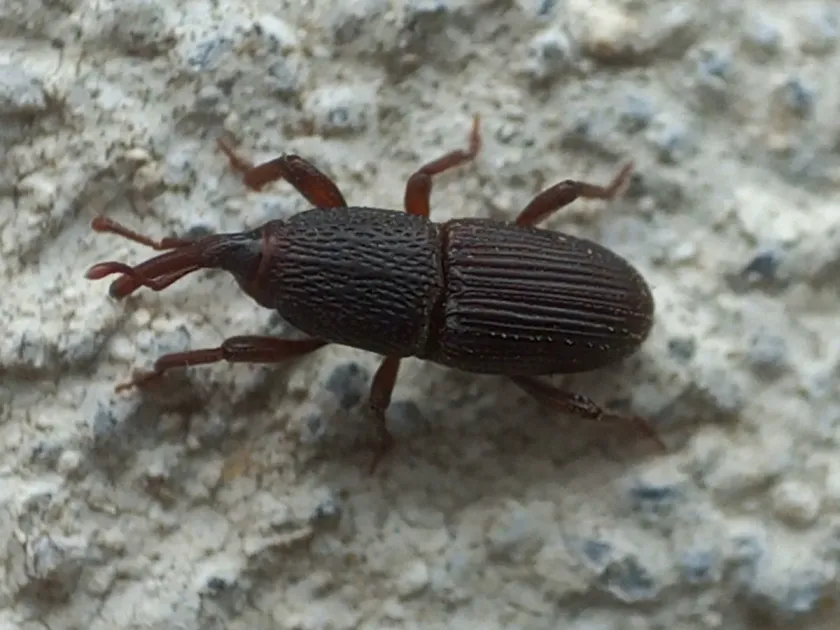
The granary weevil (Sitophilus granarius) is a small beetle, typically measuring between 2.3 and 3.5 mm in length. Its body is dull, ranging in color from reddish-brown to almost black.
The most distinctive feature is its elongated snout (rostrum). Unlike some other related species, the granary weevil has fused elytra and is unable to fly, which limits its spread primarily to human-assisted transport.
The larvae are legless, white, and have a curved, fleshy body. They are rarely seen, as they spend their entire development cycle shielded inside a single grain kernel.
Pupation also occurs inside the grain. The pupa reflects the adult form, gradually darkening from white to brown as the beetle matures before emerging from the kernel.
These insects are highly specialized for indoor life, thriving in grain silos, elevators, and storage facilities where they can find stable food sources and shelter.
What it damages
The granary weevil is a primary pest of stored cereals. It attacks a wide range of crops including wheat, rye, barley, oats, rice, and corn, both in bulk storage and packaged goods.
The larvae are the primary source of damage, as they consume the endosperm and germ from within the kernel. This process hollows out the grain, leaving only the thin outer shell.
Severe infestations result in significant weight loss of the grain, rendering it unsuitable for human consumption or processing into flour.
For seed storage, the damage is even more critical because the embryo is often consumed, completely destroying the germination potential of the seeds.
Furthermore, the physical damage and the moisture produced by the insect population promote the growth of molds and fungi, which can spoil the entire grain mass.
When it appears
The lifecycle of the granary weevil is highly temperature-dependent. They are most active at temperatures ranging from 22°C to 28°C, which allows for rapid reproduction.
A full generation cycle from egg to adult takes approximately 30 to 40 days under optimal conditions. In heated indoor environments, they can breed continuously throughout the year.
Females lay their eggs by boring a small hole into the grain, depositing one egg, and sealing the opening with a gelatinous substance, creating a secure protective environment for the larva.
During colder months or in unheated storage, their metabolism slows down significantly, and the weevils may enter a period of reduced activity or dormancy, but they remain alive.
The primary method of spread is through the movement of infested grain supplies, equipment, or bags from one facility to another, rather than natural dispersal by flight.
Signs of infestation
The most common sign of infestation is the presence of adult beetles crawling on the surface of the grain, especially during warmer periods or when the grain is disturbed.
Infested grain samples often show small, perfectly round exit holes where the new adults emerged from the kernels after completing their development.
A dusty, flour-like residue and an accumulation of insect excrement are typical indicators of a heavily infested grain mass, which may also develop a musty odor.
Temperature monitoring of the grain bulk is essential; localized "hot spots" often indicate an active infestation, as the beetles' metabolic activity generates heat.
Sieving and inspection of grain samples are necessary to detect hidden infestations, as a kernel that appears intact from the outside may be hollowed out inside.
Control measures
Good warehouse hygiene is the first line of defense. This includes cleaning all bins and storage areas, removing spilled grain, and preventing the accumulation of dust and debris.
Aeration and cooling are effective non-chemical strategies. Lowering the grain temperature below 10°C effectively inhibits the development and reproduction of the weevils.
In cases of confirmed heavy infestation, fumigation using phosphine-based products is the standard procedure to eliminate all stages of the pest, including eggs and larvae inside the kernels.
Storing grain in sealed, airtight containers after proper cleaning can protect the product from re-infestation by external pests.
Implementing a regular inspection program using pheromone traps and grain sampling helps in early detection, allowing for quick action before the pest population expands significantly.
Taxonomy
- Latin name
- Sitophilus
- Order
- Coleoptera (beetles)
- Family
- Dryophthoridae
- EPPO code
- SITOSP
Discussion
No discussions yet — be the first.