
Robinia leaf miner
Sinoe robiniella
Description
How to identify
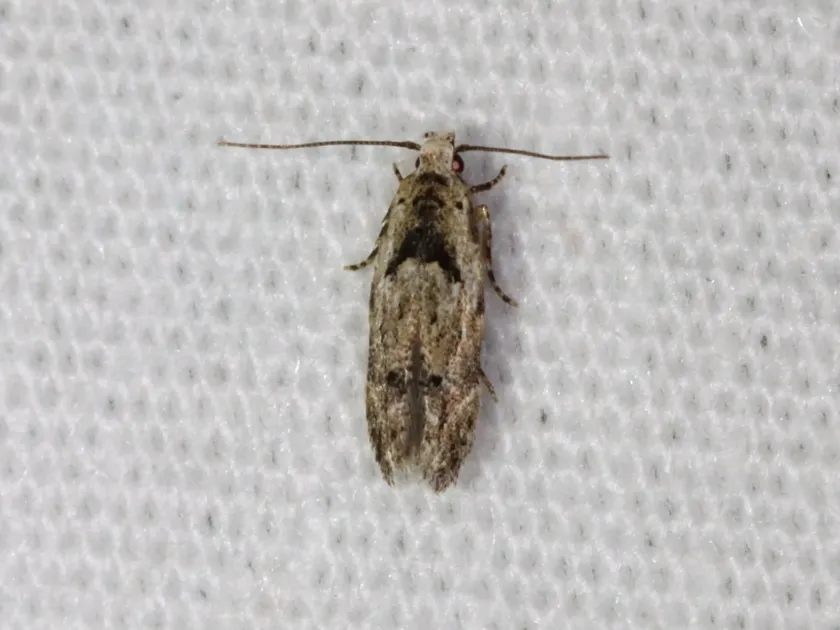
The Robinia leaf miner (Sinoe robiniella, often referenced as Macrosaccus robiniella) is a small moth species belonging to the Gracillariidae family.
The adult moth is tiny, with a wingspan ranging from 6 to 8 mm, characterized by its cryptic coloration that blends perfectly with tree bark.
The biological cycle consists of eggs, larvae (leaf miners), pupae, and adults, with the larvae spending their entire development inside the leaf.
This pest is highly specific to the Black Locust (Robinia pseudoacacia), which has allowed it to spread efficiently across many regions.
Depending on climatic conditions, the moth can complete multiple generations per season, facilitating rapid population growth in favorable habitats.
What it damages
The primary host plant for this species is the black locust tree, which suffers significantly when leaf miner populations reach high levels.
Larvae feed on the mesophyll tissue within the leaves, creating blotch mines that disrupt the tree's photosynthetic capability.
Severe infestations often result in premature leaf drop, which weakens the tree's overall vigor and physiological state during the summer.
In urban environments, aesthetic damage is a major concern as infested trees lose their foliage prematurely, appearing dry and unhealthy.
Continuous attacks over several years can lead to branch dieback and an increased vulnerability to other secondary pests and pathogens.
When it appears
Adult moths emerge in late spring when temperatures rise, signaling the start of the first generation's flight period.
As the season progresses, overlapping generations occur, meaning that active larvae can be found in leaves from early summer through late autumn.
The peak of larval activity usually occurs during the warmest summer months, coinciding with maximum foliage development.
Pupation takes place inside the mines within the leaves, and the last generation overwinters as pupae in fallen foliage on the ground.
Weather conditions significantly influence the synchronization of moth emergence, though the species remains highly resilient in various climates.
Signs of infestation
The most visible sign of infestation is the presence of pale, blotchy mines on the undersides of the leaflets.
As the larvae feed and grow, these mines turn from pale yellow to dark brown, often causing the affected leaflet to curl or fold.
Examining the leaves, one can often see dark frass (excrement) deposited by the larvae within the clear chambers of the mines.
High population densities lead to widespread chlorosis and necrosis of the foliage, making the canopy look scorched during mid-summer.
Early leaf fall is a definitive indicator of a significant robinia leaf miner infestation that needs immediate attention.
Control measures
Systemic insecticides are the most effective chemical method, as they are absorbed by the plant and reach the larvae feeding inside the leaf mines.
Sanitation practices, specifically the removal and destruction of fallen leaves in autumn, are crucial to eliminate overwintering pupae.
Biological control, including the encouragement of parasitic wasps and other natural predators, helps keep leaf miner populations at manageable levels.
Monitoring using pheromone traps can help arborists determine the precise timing for insecticide applications to maximize effectiveness.
Maintaining tree health through proper watering and soil care can improve the resilience of black locusts against periodic leaf miner attacks.
Taxonomy
- Latin name
- Sinoe robiniella
- Order
- Lepidoptera (butterflies)
- Family
- Gelechiidae
- EPPO code
- RECURO
Discussion
No discussions yet — be the first.