
Silvanoprus fagi
Silvanoprus fagi
Description
How to identify
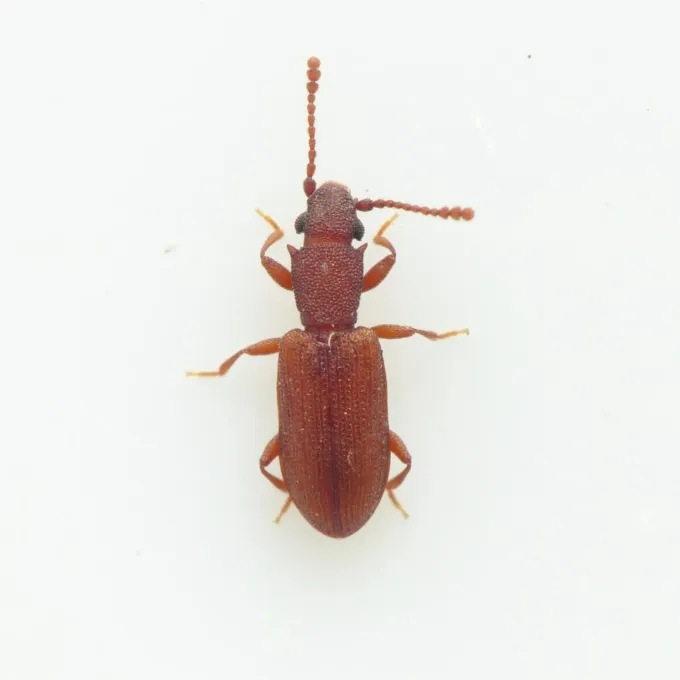
Silvanoprus fagi is a small beetle belonging to the family Silvanidae within the order Coleoptera. Adult insects typically measure between 2 and 3 millimeters in length.
The body is elongated and flattened, an adaptation that allows the beetle to hide in narrow crevices of storage facilities and between grains, making them hard to detect.
Adult beetles possess a reddish-brown color, which provides effective camouflage in grain stores, flour, and processed cereal products where they are commonly found.
The larvae are typically whitish or yellowish, elongated, and feed inside the infested material, often leaving behind only the outer husk of the grain or debris.
Identification is confirmed by examining the pronotum, which features characteristic lateral teeth that distinguish this species from the more common merchant grain beetle.
What it damages
Silvanoprus fagi is a significant pest of stored grain, seeds, and processed plant materials, including flour, bran, and various dried agricultural goods.
The larvae and adults feed on the endosperm of grains, leading to quantitative loss of stored produce and a significant decline in the overall quality of the stock.
Infestation results in the contamination of food products with frass, larval skins, and insect fragments, which renders the produce unfit for human consumption.
When infestation levels become severe, the insect activity leads to grain heating, which in turn facilitates the rapid growth of molds and secondary bacterial infections.
Economic losses arise from both the direct destruction of grain and the increased costs associated with cleaning, fumigation, and the devaluation of affected grain lots.
When it appears
While often found in natural environments under the bark of deciduous trees, the beetle behaves as a typical synanthropic pest within agricultural storehouses.
Its life cycle is heavily dependent on temperature; in heated warehouse conditions, the insect remains active and reproduces throughout the entire year.
The most intensive population growth occurs during the summer months, facilitated by the arrival of new grain harvests, which often carry initial populations from the fields.
Moisture levels are critical; the species thrives when the grain moisture content exceeds 13-14%, as these conditions accelerate the larval developmental cycle.
In colder conditions, activity slows down significantly, yet the beetles exhibit high survival rates in unheated structures by sheltering in deep crevices or inside grain bulk.
Signs of infestation
The primary indication of an infestation is the presence of fine dust, empty grain kernels, and the characteristic sight of beetles moving on the grain surface.
A musty or rancid odor often develops in storage areas where Silvanoprus fagi is present, serving as a warning sign for warehouse managers to conduct an inspection.
Detection is often achieved through the use of probe traps placed in grain bulks or sticky traps located near equipment and structural joints within the warehouse.
In processed products like flour, the presence of the pest is signaled by the clumping of the powder and the appearance of fine webs created by the larvae.
Visual surveys of warehouse flooring, corners, and under pallets are essential, as these areas often serve as reservoirs for the beetle population between harvest cycles.
Control measures
Strict sanitation protocols are the first line of defense, involving the removal of all spilled grain and dust from the storage area prior to storing new produce.
Managing the moisture content of grain stocks is vital; keeping levels consistently below 13% creates an environment unsuitable for rapid beetle reproduction.
In cases of severe infestation, fumigation of storage facilities with approved phosphine-based products is the most reliable method for complete pest eradication.
- Routine monitoring of all grain stocks using insect probes.
- Physical exclusion by sealing cracks and gaps in storage buildings.
- Thermal aeration and cooling of the grain bulk to inhibit activity.
- Use of residual contact insecticides on warehouse surfaces.
Regular inspection of incoming shipments is necessary to prevent the introduction of Silvanoprus fagi into clean, previously disinfected warehouse areas.
Taxonomy
- Latin name
- Silvanoprus fagi
- Order
- Coleoptera (beetles)
- Family
- Silvanidae
- EPPO code
- SILVFA
Discussion
No discussions yet — be the first.