
Square-necked grain beetle
Cathartosilvanus
Description
How to identify
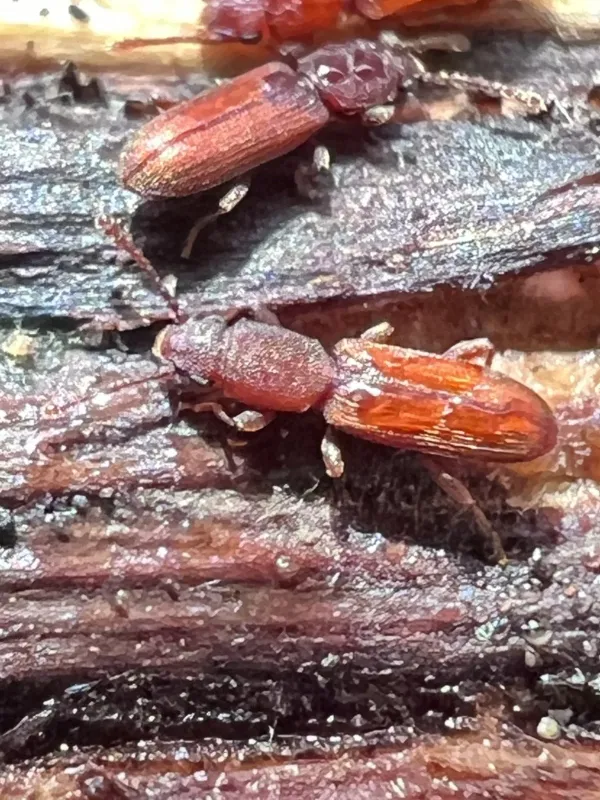
The square-necked grain beetle (Cathartosilvanus opaculus) belongs to the Silvanidae family and is a common inhabitant of grain storage facilities.
These beetles are characterized by their small, flattened bodies, usually measuring between 2 and 3 millimeters in length, enabling them to hide in narrow cracks.
The adults are typically reddish-brown in color, with a pronotum that has distinctive flattened edges, which is a key diagnostic feature for this species.
The antennae are relatively long and terminate in a clear three-segmented club, which helps distinguish them from other storage beetles.
Larvae are small and white, developing within the grain mass or inside debris, where they consume small particles of organic matter.
What it damages
This pest primarily attacks a wide range of stored agricultural products, including cereal grains, oilseeds, and processed flour products.
They feed on the germ and endosperm of the seeds, which significantly reduces the quality of both consumption grain and planting seeds.
Beyond direct consumption, the beetles contaminate the grain with feces and cast skins, which promotes the growth of mold and fungi.
High population densities can cause heating in the grain mass, which further exacerbates the deterioration process and leads to significant economic losses.
The pest is often found in damp areas of silos where grain or processed food residues have accumulated over long periods.
When it appears
In temperature-controlled storage facilities, the beetle can reproduce throughout the year, with multiple generations emerging annually.
The development is fastest at temperatures between 22 and 30 degrees Celsius, which are typical for grain warehouses during the summer months.
Activity levels fluctuate with the seasons, showing a significant increase in spring and summer when temperatures rise and favor colonization.
While their development slows down in cooler winter conditions, adult beetles can survive for extended periods at lower temperatures in unheated structures.
The life cycle is heavily influenced by humidity levels; high-moisture grain provides the best conditions for rapid larval development and population spikes.
Signs of infestation
The most obvious sign of infestation is the observation of small, reddish-brown beetles crawling on the surface of stored grain bags or walls.
Infested grain often shows visual damage, particularly at the germ area, and may feel slightly warm to the touch in localized spots.
A musty or rancid smell in the storage area is often a clear indication of a significant pest presence and associated grain degradation.
Monitoring traps placed in storage areas often capture the beetles, providing an early warning sign before a large-scale infestation occurs.
- Increased presence of grain dust.
- Clumping of grains due to pest residues.
- Changes in seed coloration and luster.
Control measures
Strict sanitation practices, such as removing grain spills and cleaning storage equipment, are essential to prevent infestation by this beetle.
Fumigation of grain stores with approved insecticides is a highly effective way to eliminate existing pest populations in warehouses.
Maintaining a low moisture content in stored grains (below 14%) is a primary preventive measure, as the beetles thrive in moist environments.
Using aeration systems to manage grain temperature is vital to keeping the bulk cool and inhibiting the reproductive capacity of the pests.
Regular inspections and the use of pheromone or sticky traps are recommended to ensure early detection and prompt action against infestations.
Taxonomy
- Latin name
- Cathartosilvanus
- Order
- Coleoptera (beetles)
- Family
- Silvanidae
- EPPO code
- CTHTSP
Discussion
No discussions yet — be the first.