
Monanus
Monanus
Description
How to identify
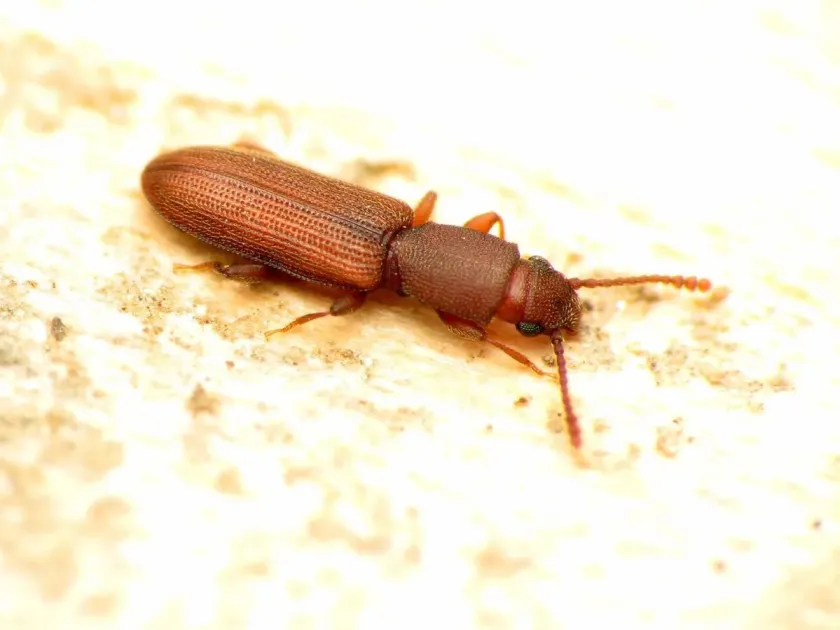
Monanus is a genus of beetles belonging to the family Silvanidae, order Coleoptera. These small insects are characterized by their flattened, elongated body shape, which is highly adapted to life in confined spaces within grain storage facilities.
The adults are generally light to dark brown in color. Their morphology includes clubbed antennae and distinct sensory organs that facilitate navigation through grain bulks and the detection of food sources in complex environments.
The lifecycle consists of complete metamorphosis: egg, larva, pupa, and adult. The developmental duration is highly dependent on ambient temperature and relative humidity levels within the storage unit.
Larvae are typically whitish or pale and possess chewing mouthparts designed to consume dried plant tissues. They often remain hidden deep within the product, making detection during the early stages of infestation challenging.
Adult Monanus beetles are relatively active and can disperse throughout a warehouse quickly, especially when temperatures are within the optimal range of 25 to 30 degrees Celsius.
What it damages
Monanus is primarily known as a pest of stored grain, cereals, flour, and dried fruit. It causes quantitative and qualitative losses by consuming the germ and endosperm of seeds.
Heavy infestations lead to a significant reduction in the weight of stored products. Furthermore, the germination rate of seed stocks is severely impacted when the embryo is destroyed by larval activity.
The presence of these beetles contributes to grain heating, a process triggered by their collective metabolic activity. This rise in temperature promotes the growth of secondary pathogens such as molds and fungi.
Grain contaminated by Monanus becomes unusable for human consumption or animal feed due to the presence of waste products, insect body parts, and the development of musty odors and toxins.
The economic impact involves not only the loss of raw materials but also the costs associated with corrective fumigation, cleaning, and potential rejection of contaminated shipments by quality control authorities.
When it appears
In temperate climates, the primary activity of Monanus is concentrated in the warmer months. However, in climate-controlled storage facilities, they remain active and capable of reproduction throughout the entire year.
Spring and summer temperatures significantly accelerate the development of all life stages, leading to a exponential increase in the population size if prophylactic measures are not taken.
Winter survival is typically achieved by adults sheltering in protected spots such as wall cracks, floor joints, and beneath stored equipment where the temperature remains slightly higher than the ambient environment.
When external conditions are harsh, the insects enter a state of reduced metabolic activity, but they do not enter true diapause, meaning they remain ready to resume feeding as soon as temperatures rise.
Periodic monitoring during the late spring transition is critical, as this is the time when overwintering populations typically initiate their first major breeding cycle of the new season.
Signs of infestation
Visible signs of an infestation include the sighting of adult beetles on the surface of grain bulks or near the vents of storage bins. The presence of fine debris, resembling flour dust, is a common indicator of internal feeding.
An unmistakable sign is the development of a musty or sour smell within the storage facility. This odor often accompanies an increase in grain temperature, which can be verified using a thermal sensor.
Laboratory analysis of grain samples will reveal the presence of eggs or larvae hidden inside individual kernels, which often appear hollowed out or perforated upon closer inspection under a microscope.
The accumulation of shed skins and pupal cases in the crevices of storage equipment provides clear evidence that a stable population has been established within the premises.
In cases of severe infestation, one may observe webbing or clumping of flour and grain particles, caused by the binding of broken plant materials with insect excrement and silk secretions.
Control measures
Effective management begins with strict warehouse hygiene. Removing residual grain and cleaning every corner of the facility reduces the habitat available for Monanus colonization.
Temperature management is a powerful tool; cooling grain to below 10 degrees Celsius stops the reproductive cycle and significantly reduces the survival rate of existing populations.
Fumigation is the most effective way to eliminate existing infestations. This must be carried out using professional-grade phosphine-based products in accordance with all safety protocols and environmental regulations.
Preventative measures include the use of airtight storage containers and the installation of pheromone traps to monitor adult beetle activity, allowing for early detection before a massive outbreak occurs.
- Maintain grain moisture below 13%
- Regular inspections of grain temperature
- Use of contact insecticides for facility surfaces
- Seal cracks and crevices in storage bins
Taxonomy
- Latin name
- Monanus
- Order
- Coleoptera (beetles)
- Family
- Silvanidae
- EPPO code
- MNANSP
Discussion
No discussions yet — be the first.