
Fig fly
Silba ficiperda
Description
How to identify
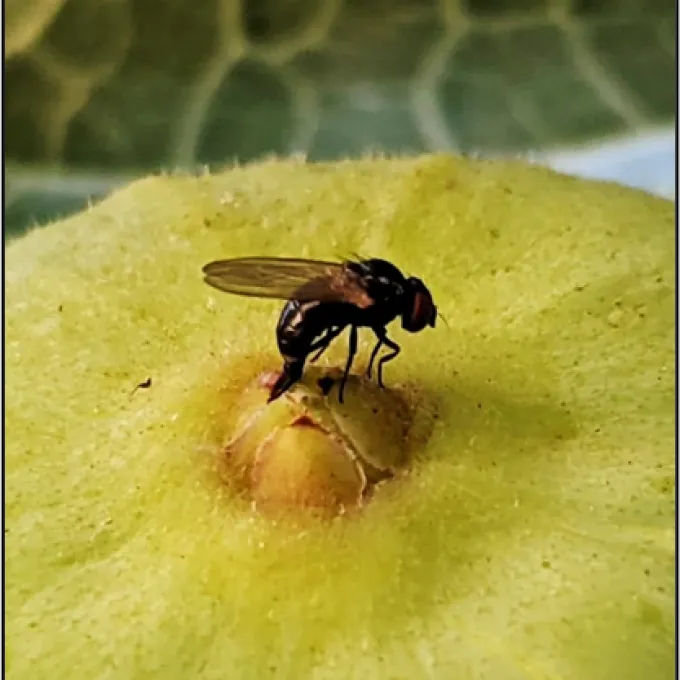
The fig fly, scientifically known as Silba ficiperda, is a member of the Lonchaeidae family within the Diptera order. It is a specialized pest that targets fig fruits across various regions where figs are cultivated.
Adult flies are typically small, with a glossy black or dark metallic coloration and clear wings. They are highly active during the growing season, particularly when fig trees begin to develop their syconia.
The female fly uses its ovipositor to pierce the skin of the fig fruit or enters through the ostiole to deposit eggs directly into the fruit's interior tissue.
Once hatched, the larvae (maggots) feed voraciously on the fig pulp. As they develop, they create extensive tunnels within the fruit, which leads to rapid internal decay and fruit degradation.
Upon completing their larval stage, they exit the fruit to pupate in the soil beneath the canopy, ensuring the next generation is ready to emerge for the following crop cycle.
What it damages
The primary host for Silba ficiperda is the common fig (Ficus carica). This pest causes significant losses in commercial orchards, often rendering the harvest unsuitable for market sales.
The larvae feed on the internal tissues, causing the fruit to become mushy and rot from the inside out. This makes the infested figs completely inedible for fresh consumption or processing.
In addition to direct physical damage, the presence of larvae allows secondary pathogens, such as yeasts, bacteria, and fungi, to invade the fruit, accelerating the fermentation and rotting process.
Heavily infested fruits often deform and lose their structural integrity, which makes them highly unattractive and prone to attracting other pests or unwanted mold growth.
Damage is often cumulative throughout the season, with later generations of the fly causing higher rates of infestation as the density of the fly population increases.
Signs of infestation
One of the earliest signs of infestation is the appearance of small puncture marks or dark spots on the skin of the fig, often accompanied by a sticky residue leaking from the fruit.
Premature fruit drop is a common indicator that the tree is infested. Figs that should be maturing often turn dark and fall to the ground before they reach their full harvest maturity.
When an infested fig is opened, the presence of whitish maggots moving inside the pulp is a definitive sign of Silba ficiperda activity. The interior may look dark, water-soaked, and malodorous.
Affected figs may show a lack of uniform color development or unusual shriveling on the branches, reflecting the internal trauma caused by the larval feeding tunnels.
Farmers often notice a sour or fermentation odor coming from the tree canopy, which indicates that a significant number of fruits have been hollowed out and are beginning to decay.
Control measures
Sanitation is the most critical aspect of control. All dropped and infested fruits must be collected and destroyed immediately to prevent larvae from entering the soil to pupate.
The deployment of bait traps, such as food-based attractants, can help capture adult flies and monitor population levels throughout the critical fruit-ripening periods.
Chemical control measures using appropriate insecticides can be employed, provided that harvest intervals are strictly observed to ensure food safety for the end consumer.
Cultivation practices like deep tilling of the soil under the trees in late autumn or early spring can help expose and destroy pupae, significantly reducing the overwintering population.
Choosing fig varieties with tighter ostioles or thicker skin can serve as a physical barrier, making it more difficult for the female fly to gain entry for oviposition.
Taxonomy
- Latin name
- Silba ficiperda
- Order
- Diptera (flies)
- Family
- Lonchaeidae
- EPPO code
- CAROFI
Discussion
No discussions yet — be the first.