
Fig fruit fly
Silba adipata
Description
How to identify
The Fig fruit fly, scientifically known as Silba adipata, belongs to the Lonchaeidae family, order Diptera. This small insect has a shiny black body, usually about 3–4 mm long, and transparent wings.
Its life cycle is closely synchronized with the phenology of fig development. The female possesses a sharp ovipositor, which allows her to penetrate immature or ripening syconia to lay eggs inside the fruit tissue.
The larvae are typical legless maggots, creamy or whitish in color, reaching 5–6 mm in length. The entire development of the larvae occurs within the tissues of the fruit, where they feed continuously.
Once the feeding stage is completed, the larvae leave the fruit to pupate in the soil beneath the canopy. The pupae are dark brown and barrel-shaped, providing protection while residing in the upper soil layer.
In regions with warm climates, multiple generations can develop in a single season, posing a constant threat to the fig crop throughout the entire maturation period.
What it damages
The primary host for this pest is the common fig (Ficus carica). The fly causes significant economic damage by attacking fruits at various stages, ranging from young development to near-ripe figs.
Infested fruits lose their marketability and decompose rapidly. The activity of the larvae inside the syconium promotes the development of secondary infections, including various molds and bacterial rots.
Mass infestations of the Fig fruit fly can lead to the premature shedding of the entire crop. In severe cases, yield losses can reach 80–90%, making commercial fig cultivation impossible without rigorous pest management.
The damage is not limited to the physical destruction of the pulp; it renders the produce entirely unsuitable for fresh consumption or processing. Infested fruits are essentially contaminated with larvae.
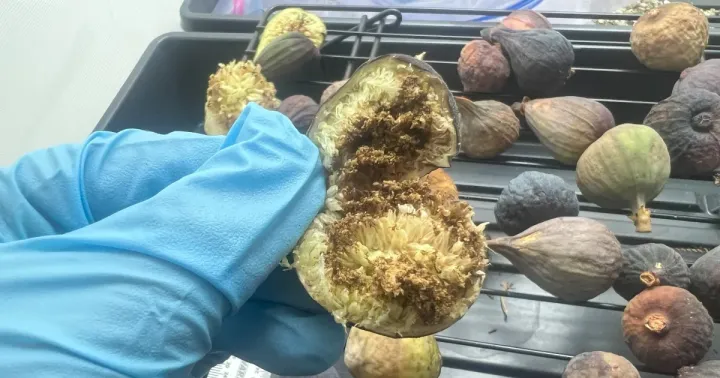
Damage symptoms are often hidden, as the external appearance of the fruit may remain normal while internal tissues are being consumed, making early detection a significant challenge for growers.
Signs of infestation
The first indicator of an infestation is the premature yellowing and dropping of young or unripe fruits. Cutting open such fruit usually reveals larval tunnels and the larvae themselves inside the pulp.
At the entry point created by the female for oviposition, signs of sap leakage or tissue darkening are common. As larvae mature, rot may develop noticeably around the puncture site.
Infested figs often become deformed, soft to the touch, and emit a characteristic fermented odor. In advanced stages of infestation, liquid may leak from the exit holes bored by the larvae.
The presence of large numbers of adult flies swarming around the tree canopy during the ripening period is a strong indicator of a high risk of fruit infestation.
Observations indicate that the earliest and sweetest fig varieties are often the first to be targeted, as they reach the stage of susceptibility earlier in the season than later cultivars.
Control measures
The most crucial method of control is strict sanitary harvesting and the immediate removal of all infested fruit from the orchard. Collected fruit must be buried deep or destroyed by burning to break the pest's cycle.
The use of pheromone traps is highly recommended for monitoring fly population dynamics, allowing growers to make informed decisions regarding the timing of insecticide applications.
To reduce adult populations, targeted insecticide treatments can be applied during peak flight periods. It is essential to strictly follow pre-harvest intervals to ensure no residue persists in the ripening fruit.
Cultural practices include deep cultivation of the soil under the tree canopy in autumn and spring. This practice disrupts the pupation process and destroys a significant portion of the overwintering population.
- Daily collection and disposal of fallen fruit.
- Deployment of yellow sticky traps.
- Regular disinfection of pruning tools.
- Selection of resistant varieties with tougher fruit skins.
Taxonomy
- Latin name
- Silba adipata
- Order
- Diptera (flies)
- Family
- Lonchaeidae
- EPPO code
- CAROAR
Discussion
No discussions yet — be the first.