
Setisquamalonchaea fumosa
Setisquamalonchaea fumosa
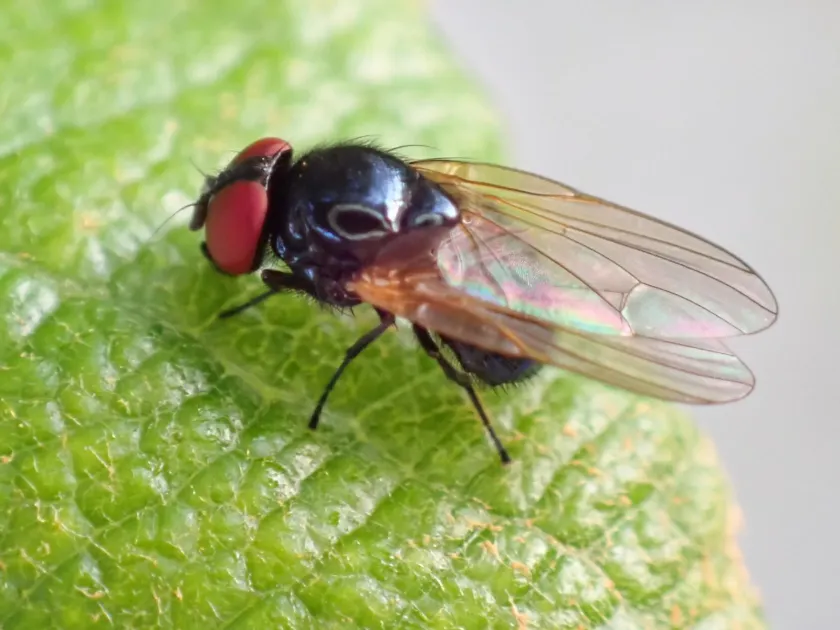
Description
How to identify
Setisquamalonchaea fumosa belongs to the family Lonchaeidae, within the order Diptera. These are small flies that often go unnoticed in agricultural ecosystems until significant damage is observed.
Adult flies typically possess a dark, metallic black or bluish-black body, a feature common among many species in the Lonchaeidae family.
Larvae are cylindrical and lack a distinct head capsule, which is typical for many fly species that inhabit decaying organic matter or damaged plant tissues.
Identification of this species often requires expert examination of the spiracles and mouthparts, as they are morphologically similar to several related species of dipterans.
The species is primarily associated with succulent plant tissues, particularly those already compromised by environmental stress or secondary pest damage.
What it damages
Setisquamalonchaea fumosa is recognized as a pest capable of damaging various vegetable and fruit crops, significantly impacting harvest quality and marketability.
The larvae are the primary damaging stage, as they bore into stems, fruits, or roots, consuming plant tissue and disrupting the plant's structural integrity.
Feeding by these larvae leads to the rapid breakdown of plant tissues, often creating pathways for bacterial and fungal infections to establish within the host.
In post-harvest conditions, the presence of these pests can lead to severe losses, especially if the initial contamination occurred during the late stages of crop development.
The severity of damage is often correlated with the level of prior wounding, making crops susceptible to secondary infestation by this specific fly.
When it appears
Adult activity usually begins in spring when temperatures rise sufficiently to allow emergence from hibernation sites in the soil or plant debris.
The species is capable of completing multiple generations during a single growing season, which allows for rapid population growth under favorable environmental conditions.
Peak abundance is typically recorded during the warmer months, coinciding with the fruit ripening or vigorous growth stages of the host plants.
As autumn approaches, the population begins to decline, and individuals move toward overwintering sites, often entering a state of diapause.
Continuous monitoring throughout the summer is essential to track population dynamics, as the life cycle is closely synchronized with the host plant's phenology.
Signs of infestation
One of the earliest signs of infestation is the presence of small entry holes on the surface of fruits or stems, often accompanied by localized darkening of the tissue.
A foul, decaying odor near the plant is a strong indicator of larval activity, signifying that the internal tissues are undergoing rapid microbial decomposition.
Wilting of foliage or distortion of young shoots can occur if larvae have concentrated their feeding in the plant's vascular or structural zones.
Softened, mushy spots on fruits that yield to pressure are characteristic signs, and dissection of these areas usually reveals the presence of fly larvae.
Observation of small, dark-colored flies hovering around plants during calm, warm parts of the day can indicate an active egg-laying period.
Control measures
The most effective management strategy involves rigorous sanitation, including the prompt removal and destruction of crop residues that could harbor developing larvae.
Controlling primary pests that damage the plant epidermis is crucial, as preventing these initial wounds significantly reduces the risk of infestation by Setisquamalonchaea fumosa.
Chemical control, when necessary, should be based on threshold levels derived from monitoring, targeting the adult stage before egg-laying occurs.
Yellow sticky traps are highly effective for monitoring adult fly populations, allowing for precise timing of integrated pest management interventions.
- Implementation of crop rotation to break the pest's life cycle.
- Balanced fertilization to strengthen plant health and natural resistance.
- Elimination of nearby weeds that may act as alternative hosts for the pest.
Taxonomy
- Latin name
- Setisquamalonchaea fumosa
- Order
- Diptera (flies)
- Family
- Lonchaeidae
- EPPO code
- STQLFU
Discussion
No discussions yet — be the first.