
Scyphophorus
Scyphophorus
Description
How to identify
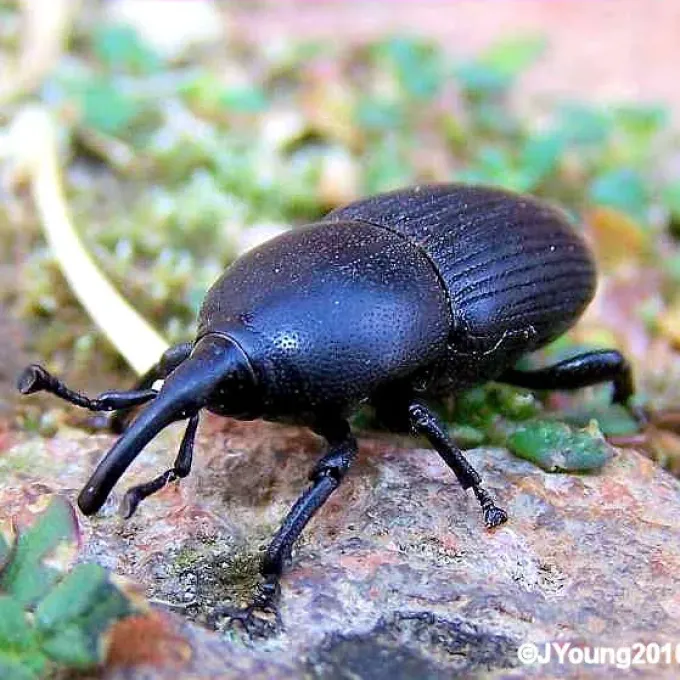
Scyphophorus (specifically Scyphophorus acupunctatus) is a prominent beetle belonging to the weevil family (Curculionidae). The adult is characterized by a long, slender snout, typical of this insect group.
The adult insect is matte black in color, typically measuring between 10 to 15 mm in length. Its elytra (wing covers) display fine pitted grooves that give the beetle a distinct appearance.
The larvae of the agave snout weevil are legless, fleshy grubs with a pale white body and a dark brown head capsule. They lead an entirely concealed life, developing within the tissues of the host plant.
Pupation also occurs within the tunnels carved by the larvae inside the plant core, providing excellent protection from environmental stressors and conventional insecticide contact.
Females oviposit into the succulent tissues of the plant, preferring the base of leaves or young shoots to ensure that the newly hatched larvae have immediate access to food.
What it damages
The primary hosts of this pest include species of the Agavaceae family, most notably Agave sisalana, Agave tequilana, and various ornamental species of Yucca.
Both adults and larvae cause significant damage by boring extensive tunnels into the plant's core and leaf bases, which disrupts the vascular system and nutrient transport.
The resulting damage often facilitates secondary infections, as the open tunnels serve as entry points for bacterial and fungal pathogens that accelerate rot.
Severe infestations inevitably result in the death of the plant, as the core is destroyed and the vascular system is severed, making the plant structurally unstable.
Economic damage is substantial, as it leads to reduced fiber quality or the complete loss of plant stocks, making Scyphophorus a high-priority quarantine pest in many regions.
Signs of infestation
The first observable sign of infestation is a noticeable decline in plant growth, loss of leaf turgor, and yellowing, which typically begins at the center of the rosette.
Small exit or entry holes may appear on the stem or leaf base, often accompanied by the sap oozing out and drying into a sticky, resinous substance on the plant surface.
Upon closer inspection of the plant crown, one may detect signs of active decay, often accompanied by a foul odor caused by the decomposition of internal tissues.
Pressing on the leaf bases reveals a soft, spongy texture, which is a clear indicator that the interior has been hollowed out by the feeding activity of the larvae.
In advanced cases, the internal structure of the plant collapses into a mushy state, rendering the specimen brittle and prone to breaking off at the base under slight pressure.
Control measures
Integrated management begins with strict phytosanitary measures during the movement of plant material to prevent the introduction of the pest to new areas.
Cultural control includes the regular inspection of plantations and the prompt removal and destruction of infested plants to curb the spread of the weevil population.
The use of pheromone-baited traps is essential for monitoring adult population dynamics, allowing growers to time their insecticide applications effectively.
Chemical control focuses on the use of systemic insecticides injected into the plant tissue, as surface sprays are often insufficient to reach the larvae living deep inside.
- Rigorous monitoring of plantation health.
- Use of pheromone traps for early detection.
- Sanitation by removing and burning infested material.
- Application of systemic insecticides for larvae control.
Taxonomy
- Latin name
- Scyphophorus
- Order
- Coleoptera (beetles)
- Family
- Dryophthoridae
- EPPO code
- SCYPSP
Discussion
No discussions yet — be the first.