
Peachtree borer
Sanninoidea
Description
How to identify
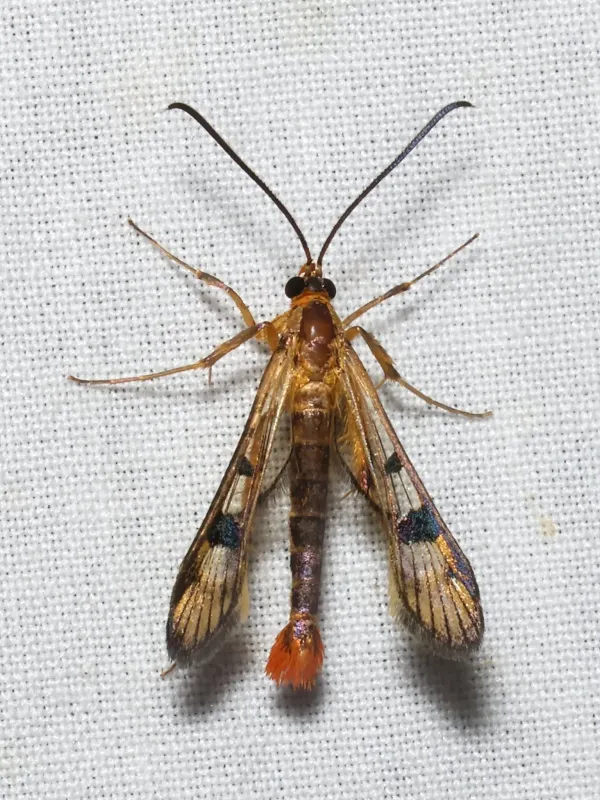
The peachtree borer (Sanninoidea exitiosa) is a moth species belonging to the Sesiidae family. Adults are remarkable for their mimicry of wasps, possessing clear, transparent wings and distinctive bright bands on their abdomen.
Females are generally larger and more robust, characterized by a broad orange band on their abdomen. Males are slender and typically have thinner, yellow or white abdominal stripes.
The larvae are creamy white with a brownish head capsule. When fully grown, they measure approximately 25 to 30 millimeters in length and are the primary source of damage to trees.
The life cycle is intimately tied to the lower trunk and crown area of the tree. This cryptic nature makes the pest difficult to detect until significant damage has occurred.
Unlike many other moths that are nocturnal, the peachtree borer is active during the daylight hours, particularly in sunny conditions.
What it damages
This pest specifically targets stone fruit trees. Peach, nectarine, apricot, plum, and cherry trees are highly susceptible to its infestation.
Larvae bore into the bark, feeding on the cambium layer. This boring activity disrupts the vascular system, preventing the transport of water and nutrients throughout the tree.
In young trees, girdling of the trunk by larvae can be fatal within a few seasons, causing the tree to dry up and die prematurely.
In mature trees, the damage leads to reduced fruit production, stunted growth, and increased susceptibility to secondary fungal diseases and environmental stress.
The entry points created by the borer often result in persistent gumming, which weakens the overall structure and physiological health of the tree.
When it appears
Adult emergence typically begins in late spring, around May or June, and may continue through August depending on the local climate and temperature.
After mating, females deposit their eggs on the bark of the lower trunk or on the soil surface near the base of the host tree.
The larvae hatch and immediately search for cracks in the bark to bore into the inner tissues. Most populations have one generation per year, although some may extend into a two-year cycle.
Larvae overwinter within their tunnels under the bark. As temperatures rise in spring, they resume feeding, growing rapidly before they pupate.
Pupation occurs in cocoons made of silk and wood particles, often found near the base of the trunk, from which the adult moth emerges to start the next cycle.
Signs of infestation
The most conspicuous sign of an infestation is the presence of large amounts of gummy sap oozing from the lower trunk near the soil line.
This gum is usually mixed with larval frass, which resembles sawdust and has a brownish color, accumulating near the entry holes.
Foliage on the infested trees may turn yellow, wilt, or drop prematurely, reflecting the loss of vitality and internal damage to the tree's vascular structure.
The bark near the base may appear loose or sunken. Peeling back the bark in these areas reveals the winding tunnels left behind by the larvae.
The presence of adult moths hovering near the trunks of trees during the day is a clear indication of a significant infestation in the orchard.
Control measures
Management requires an integrated approach to minimize the impact of the borer on orchard productivity.
- Regular inspection of tree trunks for gumming and physical removal of larvae from tunnels.
- Applying white latex paint to the lower trunk to deter egg-laying by females.
- Using pheromone-based mating disruption tools to reduce the overall population in the orchard.
- Applying registered insecticide sprays to the trunk during the peak flight period to target newly hatched larvae before they bore into the bark.
- Ensuring optimal tree health through proper fertilization and watering to help trees withstand minor infestations.
Taxonomy
- Latin name
- Sanninoidea
- Order
- Lepidoptera (butterflies)
- Family
- Sesiidae
- EPPO code
- SANNSP
Discussion
No discussions yet — be the first.