
Caribbean black scale
Saissetia neglecta
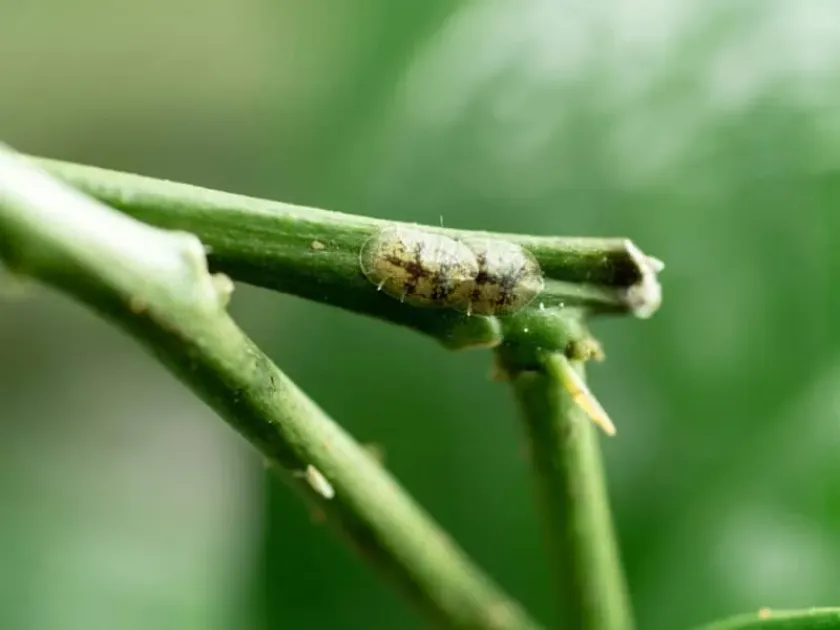
Description
How to identify
The Caribbean black scale (Saissetia neglecta) is a member of the Coccidae family, commonly found infesting citrus trees. Adult females are distinguished by their dark, hemispherical shell with a characteristic H-shaped ridge pattern on the dorsal side.
Adult insects typically measure between 2 to 4 millimeters in length and remain fixed to the host plant surface once they reach maturity. Their bodies are well-adapted for moisture retention and protection against environmental stress.
The life cycle involves an egg stage, several nymphal instars, and the adult stage. The first-instar nymphs, known as crawlers, are the only mobile stage and are responsible for spreading the infestation.
Parthenogenesis is the primary mode of reproduction for this species, allowing a single female to establish a new colony on a healthy plant without the need for a mate.
These insects prefer settling in protected areas such as leaf axils, the underside of leaves, and along tender green stems where they can easily access the phloem.
What it damages
This pest is a significant threat to various citrus species, including lemons, limes, and oranges, causing both aesthetic and physiological damage to orchards.
Beyond citrus, Saissetia neglecta can infest a wide range of tropical and ornamental plants, making it a challenging pest to manage in diverse landscapes.
By constantly extracting plant sap, the scale weakens the plant, which leads to reduced vitality, stunted growth, and diminished photosynthetic capacity.
In cases of severe infestation, the cumulative effect of sap removal can cause defoliation and the death of individual branches, compromising the tree structure.
The plant's energy reserves are diverted from fruit production to repair the damage, which eventually results in lower yields and poor fruit quality for growers.
Signs of infestation
The most noticeable symptom is the presence of sticky honeydew covering the leaves and fruit, which attracts ants and encourages the growth of sooty mold.
Sooty mold manifests as a black, powdery layer on leaves and bark, significantly inhibiting photosynthesis and reducing the overall health of the tree.
Regular monitoring of twigs and leaf undersides reveals the presence of brown, dome-shaped scale insects that appear as small bumps or irregularities on the plant surface.
Increased ant activity around a tree is a classic warning sign of a scale insect infestation, as ants protect the scales from natural predators in exchange for honeydew.
Early stages of infestation may go unnoticed, but the yellowing of leaves or premature fruit drop often indicates that the pest population has reached critical levels.
Control measures
Integrated Pest Management (IPM) strategies are essential for controlling Saissetia neglecta, starting with the early detection of the crawler stage.
Horticultural oils are often used to coat the insects, effectively suffocating them while having minimal impact on beneficial predatory insects in the environment.
Systemic insecticides may be applied when crawlers are most active, ensuring that the chemical is translocated within the plant to provide long-lasting protection.
Biological control, utilizing parasitoid wasps or predatory lady beetles, provides a sustainable way to keep scale populations below economic damage thresholds.
- Prune and dispose of heavily infested branches to reduce the pest load.
- Ensure proper irrigation and fertilization to keep the tree resilient.
- Monitor ant populations and apply barriers if necessary.
- Use localized sprays during the crawler emergence period for maximum efficiency.
Taxonomy
- Latin name
- Saissetia neglecta
- Order
- Hemiptera (bugs, aphids, leafhoppers)
- Family
- Coccidae
- EPPO code
- SAISNE
Discussion
No discussions yet — be the first.