
Cream-spot tiger
Rhyparia
Description
How to identify
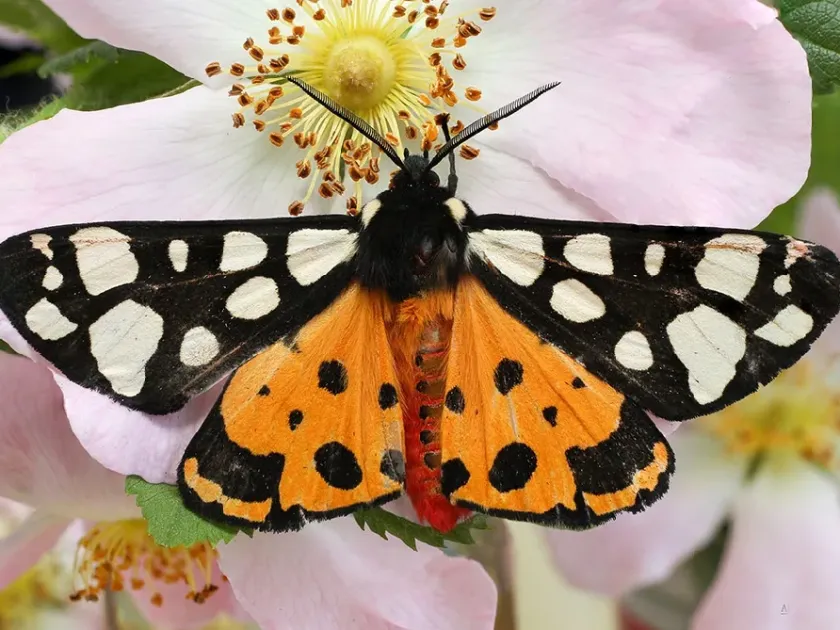
The Cream-spot tiger moth (Rhyparia purpurata) is a member of the Erebidae family. This moth is known for its distinct and vivid coloration, which serves as a warning signal to predators.
The forewings are generally yellowish-brown with irregular dark patches, while the hindwings are vibrant red or orange with bold black spots.
The larvae, known as caterpillars, are covered in dense, long hairs, giving them a fuzzy appearance. These hairs are often darker in color and can cause irritation upon contact.
This species typically undergoes a life cycle consisting of egg, larva, pupa, and adult stages, with the caterpillar stage being the most damaging phase for plants.
Adult moths are primarily nocturnal, often attracted to artificial light sources, while they remain hidden in vegetation during daylight hours.
What it damages
The Cream-spot tiger moth is a generalist feeder (polyphagous), capable of consuming a wide variety of herbaceous plants, shrubs, and even some fruit-bearing crops.
In garden settings, larvae may feed on foliage, buds, and young shoots, potentially causing significant aesthetic and physiological damage to plants.
Early-season feeding by overwintered caterpillars is particularly detrimental as they target developing buds, which can lead to stunted growth or failure to bloom.
Severe infestations result in skeletonized leaves, where only the vascular tissue remains, greatly reducing the plant's photosynthetic capacity.
Weakened plants are subsequently more susceptible to secondary environmental stresses, diseases, and other pest infestations.
When it appears
Adult moths are typically active during the summer months, with flight periods generally peaking between June and July.
The species overwinters in the larval stage, often sheltering within leaf litter, organic debris, or just beneath the soil surface.
Caterpillars emerge from hibernation in the spring as soon as temperatures rise and host plants begin to produce fresh, green growth.
Developmental speed of the larvae is heavily influenced by the ambient temperature and the availability of suitable food sources throughout the growing season.
A second, less intense generation of larvae may appear in late summer or early autumn before the insects enter their final winter dormancy.
Signs of infestation
The most reliable sign of an infestation is the visual observation of the hairy caterpillars feeding on leaves or congregating on stems.
Look for ragged, irregular holes in the leaf blades or entirely missing foliage, which indicates active feeding by the larvae.
Damage to dormant or developing buds is a classic indicator, as the caterpillars often preferentially feed on these nutrient-rich tissues during spring.
Accumulation of frass (caterpillar droppings) on the leaves or the soil surface beneath the infested plant is a clear sign of active pest presence.
Plants showing signs of premature yellowing or wilting without obvious disease symptoms should be checked for the presence of larvae.
Control measures
Cultural control methods such as regular weeding help remove the secondary host plants that support larval development, thereby reducing overall population pressure.
Soil cultivation, including light tilling around the base of plants in the off-season, can disrupt the overwintering pupae and larvae, increasing their exposure to predators.
For home gardens, manual removal of caterpillars is a simple and effective measure if the infestation is localized and manageable in scale.
In agricultural settings, synthetic insecticides may be applied during the early larval stages when the caterpillars are most vulnerable to treatment.
- Biological control using Bacillus thuringiensis (Bt) provides a safe and targeted approach to managing caterpillar populations without harming beneficial insects.
- Monitoring adult populations with light traps helps determine the timing for application of control measures to maximize effectiveness.
- Proper disposal of plant debris and fallen leaves helps eliminate potential overwintering sites for the larvae.
Taxonomy
- Latin name
- Rhyparia
- Order
- Lepidoptera (butterflies)
- Family
- Erebidae
- EPPO code
- RHYPSP
Discussion
No discussions yet — be the first.