
Asiatic palm weevil
Rhynchophorus vulneratus
Description
How to identify
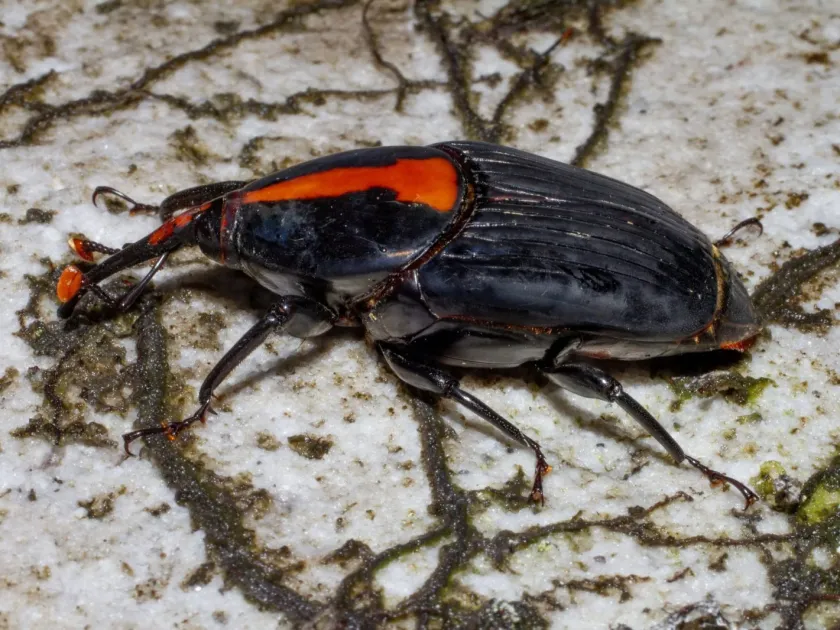
The Asiatic palm weevil (Rhynchophorus vulneratus) is a large beetle belonging to the Curculionidae family. Adults typically measure between 30 and 40 mm in length, featuring a robust body that is usually dark red to black, often with distinct markings on the thorax.
The larvae are legless, fleshy grubs with a cream-colored body and a hard, dark-brown head capsule. They possess strong mandibles adapted for boring into the dense fibrous tissues of palm trunks, where they spend the majority of their development cycle.
The species undergoes complete metamorphosis: egg, larva, pupa, and adult. Females deposit eggs into soft tissues or existing wounds on the palm, initiating an infestation that is often hidden from external view until significant damage is done.
Pupation occurs within a fibrous cocoon constructed by the mature larva inside the host plant. The cocoon provides protection during the transformation into an adult, which lasts approximately 2–3 weeks before the beetle emerges through an exit hole.
It is important to distinguish Rhynchophorus vulneratus from the red palm weevil, as morphological differences are subtle yet critical for accurate identification and specific phytosanitary regulation in different geographic regions.
What it damages
This pest primarily attacks various species of palms. Key host plants include coconut palms, date palms, sago palms, and numerous ornamental varieties grown in tropical and subtropical landscaping or agricultural settings.
The larvae are the destructive stage, feeding internally on the palm's terminal bud and soft tissue. By consuming the meristematic tissue, they prevent new leaf production, which eventually leads to the death of the palm tree.
Extensive tunneling by larvae destroys the internal vascular structure of the trunk, compromising the palm's ability to transport water and nutrients. This results in the progressive chlorosis and wilting of the fronds.
Heavy infestations can cause the structural integrity of the palm trunk to fail, making it hollow and susceptible to collapse under wind loads. This represents a significant risk in public spaces and private gardens.
Infestations also facilitate the entry of secondary pathogens, such as fungi and bacteria, which cause rot. The decaying plant material often emits a strong, unpleasant odor, signaling a terminal stage of the infestation.
Signs of infestation
Initial symptoms of infestation include the wilting and yellowing of young, central fronds. As the terminal bud is consumed, the canopy begins to collapse, often appearing irregular or stunted in growth.
Visible signs include the oozing of a thick, brown, foul-smelling fluid from entry or exit holes on the trunk. This fluid is a mixture of sap and larval excrement (frass), which is pushed out of the tunnels by the feeding larvae.
During the early morning or evening hours, a distinct chewing sound can often be heard coming from the palm trunk. This sound is produced by the larvae rasping the fibrous interior and is a key diagnostic sign for experienced arborists.
The presence of abandoned pupal cocoons on the ground near the base of the palm is a strong indicator of an established and potentially multi-generational infestation within the tree.
Severe infestations manifest as severe crown dieback or the total snapping of the trunk at the upper portion. By the time these external signs are obvious, the tree is usually beyond recovery and serves as a reservoir for further spread.
Control measures
Integrated Pest Management (IPM) for this species relies heavily on pheromone traps, which are essential for monitoring adult populations. These traps help detect early arrivals and can significantly reduce the mating frequency.
Chemical control often involves systemic insecticides injected directly into the palm trunk. This method ensures that the chemical reaches the larval tunnels, providing a more effective result than topical sprays.
Strict sanitation protocols are required to manage the pest. Infected trees should be removed, chipped, and burned or buried deep to destroy all life stages present and prevent the emergence of new adult weevils.
Biological control methods are being researched, including the use of entomopathogenic fungi like Beauveria bassiana. These natural agents can infect larvae inside the trunk, offering an environmentally friendly alternative to chemical pesticides.
Maintaining palm health and minimizing physical wounding are vital preventative measures. Since females are attracted to damaged tissue, clean pruning and avoiding trunk abrasions during harvesting can significantly lower the risk of egg-laying.
Taxonomy
- Latin name
- Rhynchophorus vulneratus
- Order
- Coleoptera (beetles)
- Family
- Dryophthoridae
- EPPO code
- RHYCVU
Discussion
No discussions yet — be the first.