
Red palm weevil
Rhynchophorus ritcheri
Description
How to identify
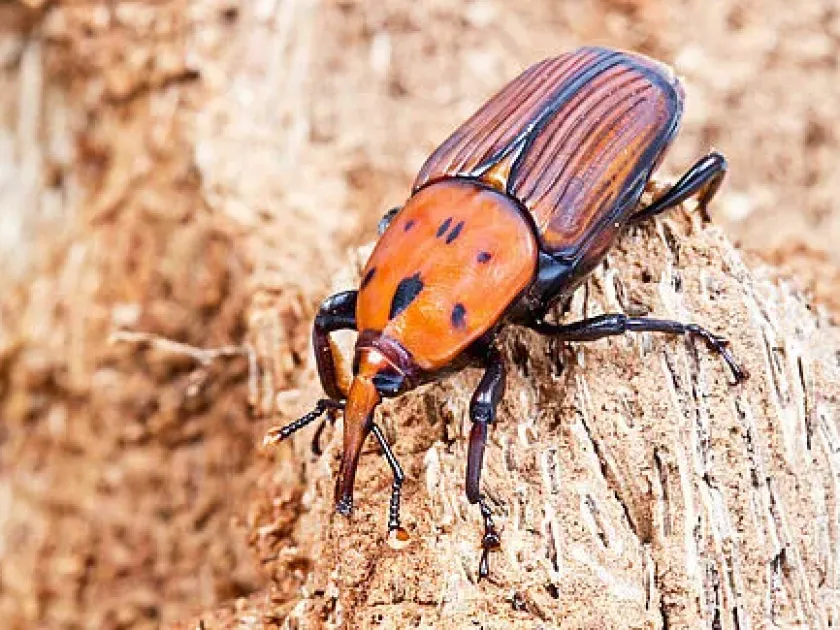
The Red palm weevil Rhynchophorus ferrugineus is a highly destructive beetle belonging to the Curculionidae family. Adults are typically 30–40 mm long, featuring a distinct reddish-brown color with black spots on the pronotum.
The larval stage is the most damaging phase of the insect's life. These larvae are legless, fleshy, and cream-colored with a brown head, living exclusively inside the tree trunk and feeding on the soft fibers.
Equipped with strong flying wings, adult weevils are capable of migrating over long distances, attracted by the specific chemical signals released by injured or stressed palm trees.
The life cycle encompasses four stages: egg, larva, pupa, and adult. In warm climates, the cycle is rapid, allowing for multiple overlapping generations throughout the year.
Females deposit hundreds of eggs into wounds or soft parts of the palm. Because the larvae remain internal for the duration of their development, traditional surface insecticides are largely ineffective.
What it damages
The pest attacks a wide variety of palm species, including Date palms, Coconut palms, and various ornamental species like the Canary Island Date palm, causing severe economic and environmental losses.
Larvae consume the internal tissue of the trunk, creating galleries that disrupt the vascular flow, which prevents the transport of water and nutrients to the crown.
As the internal structure of the tree is hollowed out, the palm loses its structural integrity, leading to the collapse of the tree under its own weight or during strong winds.
Mass infestations often occur within a single palm, and the cumulative damage by hundreds of larvae leads to the rapid death of the tree if left untreated.
The damage is often discovered too late because the exterior of the trunk may appear healthy while the internal structure is already completely compromised.
Signs of infestation
Early symptoms include the presence of viscous brownish fluid oozing from small holes in the trunk, often accompanied by a distinct smell of fermenting plant tissue.
A tell-tale sign is the audible chewing sound made by large larvae moving and feeding inside the tree, which can sometimes be heard using sensitive acoustic devices.
Yellowing and wilting of the central leaves (the spear leaf) indicate that the palm's health has already been compromised by vascular disruption.
As the infestation progresses, the crown of the palm may lose its symmetry and collapse, leading to a condition often described as a flat-topped appearance.
- Yellowing and drying of the central crown leaves.
- Presence of brownish, fermented sap leaking from the trunk.
- Wood shavings and frass found at the base of the palm.
- Sudden collapse of the tree crown.
Control measures
Integrated Pest Management (IPM) is essential. This includes keeping trees free from wounds and avoiding improper pruning practices that create entry points for the weevil.
Systemic insecticides applied via trunk injection are currently considered the most effective way to treat infested trees, ensuring the chemical reaches the feeding larvae inside.
Pheromone traps are critical for monitoring and suppressing adult populations in infested areas, helping to reduce the overall number of mating pairs.
In cases of severe infestation where the crown has collapsed, the tree must be cut down and destroyed immediately to prevent the emergence of a new generation of adults.
Biological controls, such as the application of Beauveria bassiana or specific entomopathogenic nematodes, show promise in reducing larval populations in residential and managed environments.
Taxonomy
- Latin name
- Rhynchophorus ritcheri
- Order
- Coleoptera (beetles)
- Family
- Dryophthoridae
- EPPO code
- RHYCRI
Discussion
No discussions yet — be the first.