
Palm weevil
Rhynchophorus pascha
Description
How to identify
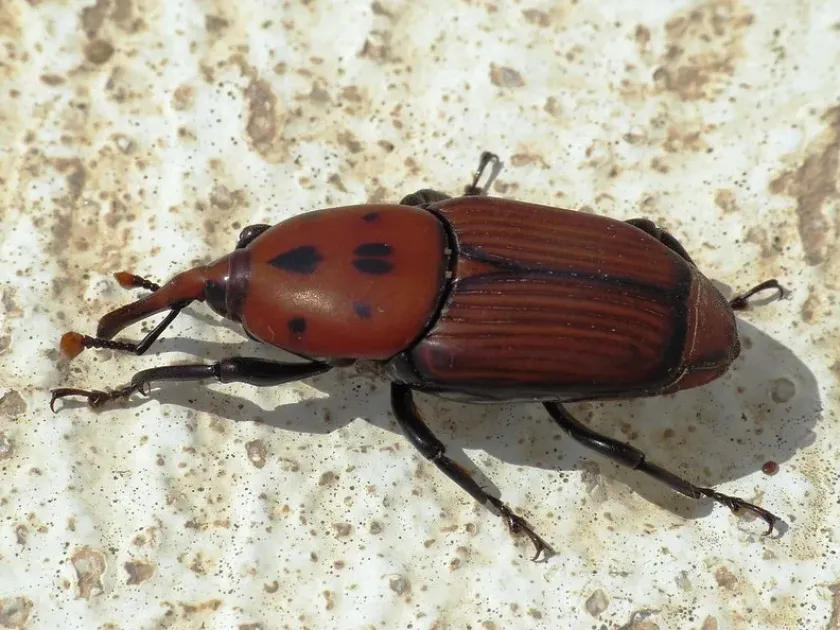
The palm weevil (Rhynchophorus pascha) is a significant pest belonging to the Curculionidae family within the order Coleoptera. Adult beetles are characterized by a long, distinctive rostrum and a robust body, usually ranging from 30 to 45 mm in length.
Their coloration is typically reddish-brown to black, often featuring dark markings on the pronotum. The exoskeleton is extremely hard, providing the insect with substantial protection from predators and environmental stress.
The larval stage consists of a cream-colored, legless grub with a dark, hardened head capsule. These larvae are the most destructive life stage, as they spend their entire time burrowing into the palm tissue.
Pupation occurs within a fibrous cocoon, which the larva meticulously constructs from the plant's own vascular fibers. This cocoon is typically embedded deep within the infested trunk or crown base.
The life cycle involves complete metamorphosis. Given optimal tropical conditions, these weevils can maintain continuous breeding cycles, resulting in rapid population growth and high infestation pressure.
What it damages
Palm weevils primarily target various species of palms, including date palms, coconut palms, and ornamental varieties. They thrive in environments where palms are densely planted.
Larval feeding causes severe damage by tunneling through the soft tissues of the palm's trunk. This structural destruction interrupts nutrient transport, eventually leading to the death of the tree.
Adult beetles contribute to damage by feeding on young leaves, creating jagged holes, and acting as vectors for various plant pathogens that accelerate the decline of the host tree.
Damage is often internal and hidden, which makes early detection extremely difficult. By the time visual symptoms appear on the outside, the internal structural integrity of the palm is often severely compromised.
A severe infestation can cause a palm tree to collapse under its own weight. This makes the palm weevil a major economic threat to plantations and urban landscaping projects.
Signs of infestation
Common symptoms include the accumulation of sawdust-like frass (excrement and fiber) around the base of the tree or at the leaf axils, indicating active larval feeding inside.
Yellowing, drooping, and sudden wilting of the palm fronds are critical indicators that the vascular system of the tree has been disrupted by larval activity.
An audible crunching or chewing sound can sometimes be heard coming from the trunk when the internal infestation is advanced, caused by thousands of larvae feeding simultaneously.
Visible boreholes on the stem, often accompanied by a foul-smelling viscous fluid leaking from the trunk, suggest active decay and secondary bacterial or fungal infection.
In advanced stages of the infestation, the top of the palm may lean or snap off completely, as the core of the trunk has been hollowed out and converted into debris.
Control measures
Managing the palm weevil requires an integrated pest management (IPM) approach that combines mechanical, chemical, and biological strategies.
Sanitation is crucial; heavily infested palms must be promptly cut down, chipped, or burned to prevent the adult weevils from emerging and spreading to healthy trees.
Systemic insecticides are commonly applied to the trunk or through soil drenches to create a toxic environment for larvae attempting to bore into the plant tissue.
Pheromone-baited traps are highly effective for monitoring and mass-trapping adult weevils, which helps to significantly reduce the overall population in a given area.
Regular maintenance, such as pruning, should be performed carefully to avoid wounding the tree, as fresh sap smells attract adult weevils from long distances.
Taxonomy
- Latin name
- Rhynchophorus pascha
- Order
- Coleoptera (beetles)
- Family
- Dryophthoridae
- EPPO code
- RHYCPP
Discussion
No discussions yet — be the first.