
Thirteen-spotted sunflower stalk weevil
Rhodobaenus tredecimpunctatus
Description
How to identify
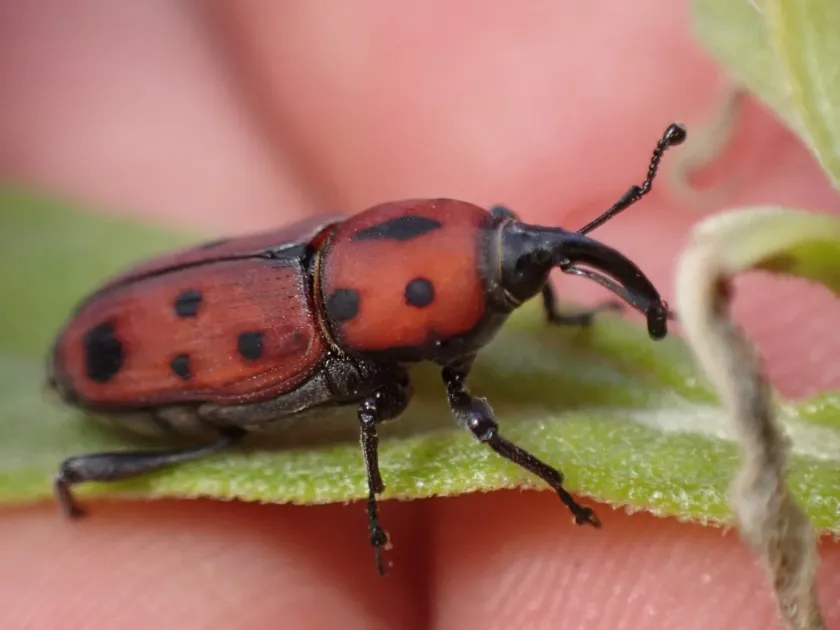
The thirteen-spotted sunflower stalk weevil (Rhodobaenus tredecimpunctatus) is a member of the weevil family (Curculionidae) known for causing damage to the stems of various plants. Its common name is derived from the thirteen black spots located on its reddish-colored wing covers (elytra).
Adult beetles typically measure between 8 and 12 millimeters in length. They possess a long, distinct snout or rostrum, which is essential for boring into the tough vascular tissue of host plants to feed and create chambers for egg-laying.
The larvae are legless, grub-like, and yellowish-white with a darker head capsule. They spend their entire developmental phase inside the stalks, making them difficult to detect during early infestation stages.
The pupal stage also occurs within the stem, following the larval development. This internal life cycle protects the insect from many natural predators and environmental stressors, which makes traditional pest management challenging.
This species is highly adapted to the Asteraceae family. Its ability to complete its lifecycle within the stems of both wild and cultivated plants ensures its survival across diverse agricultural and natural landscapes.
What it damages
The primary host plants for this pest include crops from the sunflower family. Sunflowers are particularly susceptible to heavy infestation, leading to significant physiological stress and structural damage to the crop.
The weevil also utilizes various weeds, such as cocklebur and ragweed, as alternative hosts. These weeds act as reservoirs that maintain pest populations even when commercial sunflowers are not actively being grown in the immediate area.
Feeding larvae tunnel through the central pith of the stem. This disrupts the plant’s ability to transport water and essential nutrients from the roots to the leaves and developing flower heads, causing visible wilting and stunted growth.
The structural integrity of the plant is severely compromised by the larval tunneling. As the season progresses, infected plants often become brittle and are prone to breaking or lodging, especially during high winds or rainstorms.
Additionally, the tunnels bored by the larvae facilitate the entry of opportunistic pathogens, including fungi and bacteria. These secondary infections contribute to stem rot, further reducing the overall yield and quality of the crop.
When it appears
Adult weevils overwinter in protected sites, including plant debris, soil crevices, or under the bark of nearby trees. They emerge in the late spring when temperatures are sufficiently high to resume their life activity.
Upon emergence, adults feed on the foliage of young plants before mating. Females then bore holes into the stems to lay eggs, ensuring that the next generation of larvae is situated directly within their food source.
The larval stage occurs during the peak vegetative growth of the host plant. Throughout the summer, larvae continue to feed and grow, making the damage increasingly severe as the plant matures towards the reproductive stage.
New adults emerge from the stems in late summer or early autumn. These beetles undergo a period of feeding before seeking out overwintering sites for the cold season, thereby completing their annual life cycle.
Strategic timing of field operations, such as removing residues after harvest, is crucial. Eliminating these overwintering environments can significantly reduce the number of adults that will survive until the following spring.
Signs of infestation
One of the earliest signs of infestation is the presence of small, circular holes on the surface of the stem. These are feeding or egg-laying punctures created by the adult beetles and are often accompanied by dark tissue staining.
Plants affected by larval feeding show signs of premature wilting or yellowing. If the plant is failing to respond to irrigation or rainfall, the internal structure of the stalk should be examined for signs of larval tunneling.
Splitting the stem open often reveals a hollowed-out interior filled with frass (insect excrement) and decomposing plant pith. The presence of larvae or pupae within the tunnel confirms the pest's activity.
Lodging (the snapping of stems at the base) is a clear indicator that the plant has been significantly weakened. Checking for hollow stalks in fallen plants is a reliable way to diagnose the cause of the issue.
During the early morning or evening hours, adult weevils may be seen on the upper leaves or stems. Monitoring fields for the presence of these beetles is a proactive way to assess the risk of infestation before major damage occurs.
Control measures
Effective management begins with thorough field sanitation. Deep autumn plowing buries plant residues, which destroys the overwintering habitat for the adult weevils and significantly reduces the following season's population.
Controlling weeds, particularly Asteraceae species, is essential to minimize the pest's alternative food sources. Regular mowing along field borders and ditches can help disrupt the lifecycle of the weevil.
Crop rotation is a fundamental practice. By avoiding the cultivation of sunflowers on the same field for several years, growers can effectively break the lifecycle of the pest and lower the risk of infestation.
In cases of high pest pressure, systemic insecticides may be required. Because larvae are protected inside the stem, contact sprays are often ineffective; systemic chemicals absorbed into the plant tissue are necessary to reach the larvae.
Monitoring and spot treatment of field edges are recommended during the spring migration period. Targeting the incoming adults before they move deep into the field helps maintain lower overall population levels.
Taxonomy
- Latin name
- Rhodobaenus tredecimpunctatus
- Order
- Coleoptera (beetles)
- Family
- Dryophthoridae
- EPPO code
- RHOOTR
Discussion
No discussions yet — be the first.