
European rhinoceros beetle
Rhinoceros unicornis
Description
How to identify
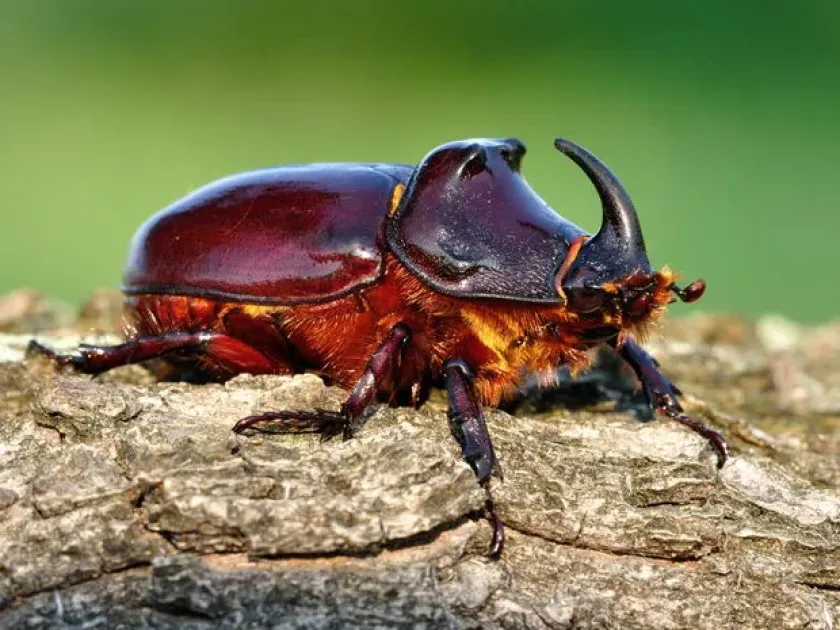
The European rhinoceros beetle (Oryctes nasicornis) is a large beetle of the Scarabaeidae family, known for the male's prominent horn. Adults are glossy dark brown to black and reach up to 40 mm in length.
The larvae, known as grubs, are large, white, and C-shaped. They can grow up to 80 mm long and possess a strong head capsule, adapted for chewing organic materials like decaying wood.
The insect's life cycle is quite long, usually spanning 3 to 4 years. The development involves egg, larva, pupa, and adult stages, with most time spent in the larval stage hidden in organic matter.
Pupation occurs in a cocoons made of wood fibers and soil. This protective shell allows the developing insect to survive until it emerges as a fully formed adult beetle.
As adults, they do not feed, focusing their energy solely on finding a mate. They are nocturnal and are strongly attracted to artificial lights during the warm summer nights.
What it damages
The primary concern regarding this species is the larval stage. Larvae live in decaying plant matter, compost, or old wood, where they primarily consume dead wood material.
However, when food sources become scarce in the soil, larvae may cause damage to the root systems of various ornamental and fruit-bearing plants, such as roses and young trees.
By feeding on roots, larvae can cause severe stress to young plants, leading to wilting, stunted growth, and in some cases, the total death of the sapling.
Adults can occasionally damage young shoots of trees or bark by gnawing on them, but this activity is generally not considered a major threat compared to the damage done by the larvae.
The pest is most problematic in environments where large amounts of mulch, compost, or rotting organic matter are left undisturbed near valuable vegetation.
When it appears
The active flight season for adults typically begins in late spring and peaks during June and July. During this time, they reproduce and search for suitable egg-laying sites.
Females prefer to lay eggs in nutrient-rich, decaying environments like manure heaps, compost piles, or rotten logs, which provide both food and protection for the offspring.
The larvae are active throughout the growing season, feeding continuously as temperatures allow. They migrate deeper into the soil during cold winters to avoid freezing.
The development of the beetle is highly dependent on environmental temperature. In warmer climates, the life cycle may shorten, while cooler regions require a longer period.
Gardeners usually encounter the insects during soil preparation or when clearing out old organic piles in the spring or late autumn.
Signs of infestation
The most common sign of infestation is finding large, white, C-shaped grubs while working in the soil, digging in compost heaps, or cleaning up wood debris.
Young plants or saplings suddenly showing signs of distress or wilting despite proper watering may indicate that their roots have been damaged by larvae.
Large, circular holes found in old wooden posts, tree stumps, or rotting wood are clear indications that rhinoceros beetles have been present and breeding.
Observing adult beetles near outdoor lights during summer evenings is a strong sign that a breeding population is established nearby in the garden.
Piles of frass (larval excrement) or disturbed soil surface in areas of high organic content are indicators of intensive larval activity.
Control measures
The best control strategy is sanitation. Removing rotting stumps, old wood, and excess organic piles significantly reduces the available breeding sites for the beetles.
Regularly turning compost heaps during the spring and autumn will expose larvae to predators and disrupt their development, effectively killing many of them.
Avoid leaving decaying wood or organic refuse in direct contact with the roots of young fruit trees to minimize the chance of root feeding.
Biological control using entomopathogenic nematodes or fungi is an effective way to suppress larval populations without the use of harsh chemicals in the garden.
If chemical intervention is necessary, it should be limited to soil treatments targeting the larvae, always following local regulations to ensure safety for beneficial insects.
Taxonomy
- Latin name
- Rhinoceros unicornis
- Family
- Rhinocerotidae
- EPPO code
- RHNOUN
Discussion
No discussions yet — be the first.