
White rhinoceros
Ceratotherium simum
Description
How to identify
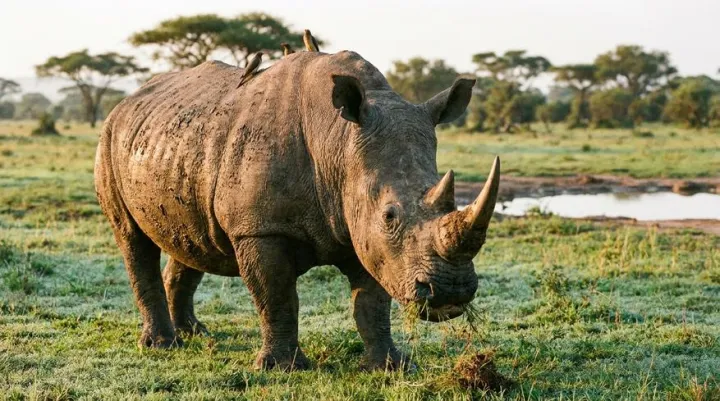
The white rhinoceros (Ceratotherium simum) is a large herbivorous mammal belonging to the Rhinocerotidae family within the order Perissodactyla. It is the largest living species of rhinoceros.
Adult white rhinos are characterized by their massive size, reaching up to 2,500 kg. They possess two horns composed of keratin, which serve as tools for defense and environmental interaction.
The species features a square-shaped, wide mouth adapted for grazing. This anatomy distinguishes them from the browse-feeding black rhinoceros species found in the same regions.
Biologically, they are grazers that inhabit grasslands and savannas. They are highly dependent on access to water sources and consistent growth of forage grasses.
The taxonomic classification places them in the Perissodactyla order, highlighting their evolutionary adaptation as hindgut fermenters efficiently processing tough vegetation.
What it damages
The white rhinoceros is not an agricultural pest. Its feeding habits are strictly focused on wild grasses, and it shows no interest in common human agricultural crops.
Unlike insects or rodents, white rhinos do not consume crops, seeds, or fruits. There is no physiological basis for them to cause direct agricultural damage by consumption.
Occasional damage may be physical, primarily through trampling if a herd passes through a field. However, such events are infrequent and not linked to typical pest behavior.
In agronomy, there are no established thresholds for "control" of this species. The focus in areas where they coexist with farms is solely on peaceful mitigation.
The perceived threat to agriculture is minimal compared to the environmental challenges posed by habitat destruction to the rhino population itself.
Control measures
Protection of agricultural areas from white rhinos relies on non-lethal deterrents. Sturdy fencing is the most effective way to keep these massive animals away from cultivated land.
If conflicts arise, farmers often use natural acoustic or visual deterrents to guide animal movement without causing stress or physical harm to the rhinos.
Land-use planning is the best preventative measure. Ensuring corridors exist for wildlife migration allows rhinos to move safely without crossing sensitive farmland.
Collaboration with local wildlife agencies is essential for any farmer operating in protected zones to ensure compliance with conservation laws.
Harm to a white rhinoceros is strictly prohibited by international wildlife regulations. The species is protected due to its status and ecological importance.
Taxonomy
- Latin name
- Ceratotherium simum
- Family
- Rhinocerotidae
- EPPO code
- KRTTSI
Discussion
No discussions yet — be the first.