
European rhinoceros beetle
Diceros bicornis
Description
How to identify
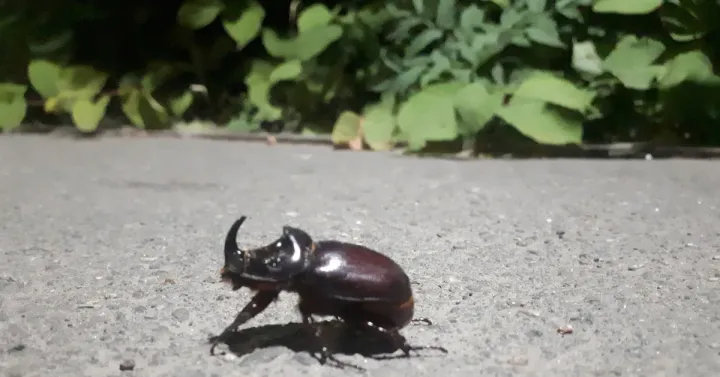
The European rhinoceros beetle (Oryctes nasicornis) belongs to the Scarabaeidae family. Adults are large, robust beetles reaching up to 40 mm, featuring a distinctive dark-brown, shiny exoskeleton.
Males possess a prominent, curved horn on their heads, which is used during mating interactions, while females have a much smaller, less noticeable bump in the same location.
The larvae are C-shaped, creamy-white in color, and can grow up to 110 mm in length. They are heavily adapted for tunneling through organic matter and soil.
Their life cycle is relatively long, often taking 3 to 4 years to complete, with the majority of this time spent in the larval stage feeding on decaying organic materials.
Adult beetles are nocturnal and strong flyers. They are frequently attracted to artificial lights, which is a common way they are noticed in residential and agricultural areas.
What it damages
While adults are largely harmless, the larvae cause significant damage by feeding on the root systems of various plants, including young fruit trees, vines, and nursery stock.
They are particularly problematic in greenhouses or garden beds where high concentrations of organic matter, such as manure or compost, are present.
Feeding damage results in severed roots, which starves the plant of water and nutrients, leading to wilting, stunted growth, and potential death of young seedlings.
The tunnels created by larvae can also disrupt the soil structure around the roots, making plants more susceptible to environmental stress and secondary fungal infections.
Significant infestations can lead to total crop failure in young plantations, especially where soil preparation involved the incorporation of uncomposted organic waste.
##season##The flight period for adult rhinoceros beetles typically occurs from late spring through the end of summer, usually spanning from May to August.
Activity peaks during warm summer evenings when adults emerge to mate and find suitable sites for oviposition, such as rotting logs or compost heaps.
Larvae are present year-round, living within the soil or organic debris, where they continue their development despite seasonal changes in temperature.
Pupation usually happens after the final larval instar, with the new generation of adults emerging in the following spring or summer once the soil warms up.
Consistent warm weather is a critical trigger for the mass emergence of adults, making the early to mid-summer period the time of highest observation.
Signs of infestation
The sudden wilting or yellowing of young plants or trees, despite adequate watering, is often a sign of root damage caused by larvae.
Discovering large, white, C-shaped grubs while digging or working with compost is the most definitive sign of an existing infestation in the area.
The presence of heaps of rotting wood, sawdust, or uncovered manure piles near gardening areas often indicates an ideal environment for breeding.
Seeing adult beetles near garden lights at night provides clear evidence that the insects are present and active in the local ecosystem.
Signs of root destruction or soil disturbance at the base of affected plants often suggest that larvae are actively feeding beneath the surface.
Control measures
The primary control measure is to eliminate breeding sites by clearing rotting wood, stumps, and decomposing organic waste from the vicinity of crops.
Regular cultivation of the soil, such as deep plowing or tilling, can expose and physically destroy larvae, significantly reducing their local population.
Using light traps can effectively capture adult beetles during their peak flight months, thereby reducing the number of eggs laid in the area.
For sensitive nursery environments, the application of specialized soil-applied insecticides or biological control agents (such as nematodes) may be necessary.
Proper sanitation and managing organic waste by ensuring it is well-composted and not left in large piles are the most effective preventive strategies.
Taxonomy
- Latin name
- Diceros bicornis
- Family
- Rhinocerotidae
- EPPO code
- DKRSBI
Discussion
No discussions yet — be the first.