
European rhinoceros beetle
Ceratotherium
Description
How to identify
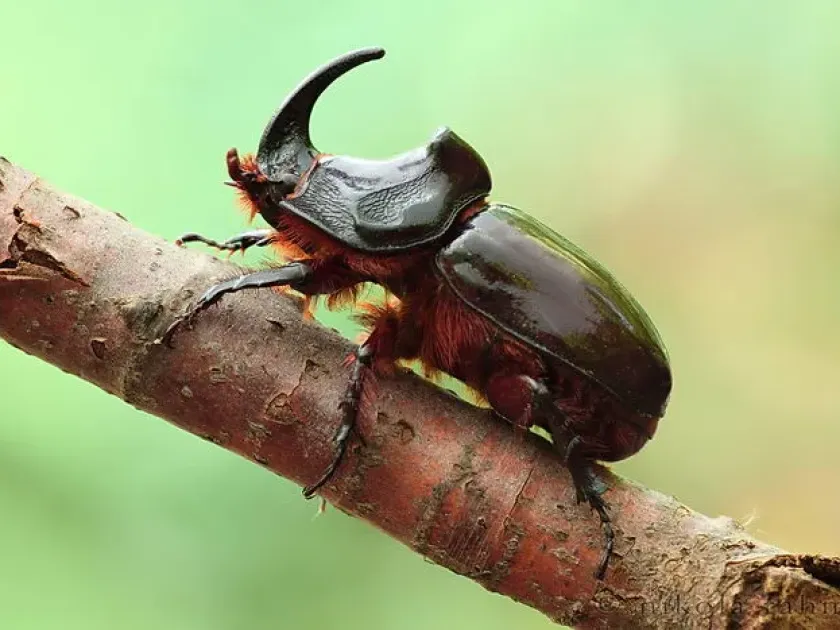
The European rhinoceros beetle (Oryctes nasicornis) belongs to the Scarabaeidae family within the order Coleoptera. Adult beetles are large, measuring between 25 and 40 mm in length.
They are characterized by a dark brown or reddish-chestnut color. Males are distinct due to a prominent, curved horn on the head, which is absent or reduced to a small bump in females.
The larvae are large, reaching up to 80 mm in length. They are C-shaped, creamy-white in color, and possess a strong head capsule with powerful mandibles.
The life cycle of the beetle is notably long, lasting 3 to 4 years, with the vast majority of this time spent as a larva feeding on decaying organic matter.
Beetles are nocturnal by nature, spending their daylight hours hiding in dark, secluded places like soil, rotting wood, or compost piles.
What it damages
Adult rhinoceros beetles do not feed significantly, meaning they cause virtually no direct damage to crops or garden plants during their flying stage.
The larval stage is responsible for the damage. While they prefer decaying wood, they can opportunistically feed on the roots of young trees and seedlings.
In forest nurseries and orchards, high larval density can lead to the destruction of root systems, causing young plants to fail or die from nutritional stress.
Damaged roots are also susceptible to secondary fungal infections, further weakening the plant's structural integrity and overall vigor.
In agricultural settings, their presence is often linked to the improper storage of organic fertilizers or logs, which serve as breeding grounds for the pests.
When it appears
The flight period for adult beetles begins in late May and extends through the middle of July, depending on the climatic zone and temperature.
Eggs are typically deposited in humid, nutrient-rich substrates such as sawdust piles, manure heaps, or decomposing tree stumps.
Larvae are active throughout the growing season, moving deeper into the substrate or soil to avoid freezing temperatures during the winter months.
The life cycle is synchronous, meaning populations often peak in cycles that correspond to the developmental timeline of the previous generations.
Warm and humid weather conditions favor the development of eggs and the survival of early-stage larvae within their chosen habitat.
Signs of infestation
The most common sign of a rhinoceros beetle infestation is finding the large, C-shaped larvae while turning compost or cultivating the soil near trees.
The presence of adult beetles can be detected in summer evenings when they are frequently attracted to porch lights or other artificial illumination.
Plants affected by larval feeding on roots will show signs of sudden wilting, chlorosis, or lack of growth despite normal irrigation and fertilization practices.
Specific signs also include the presence of boreholes or shredded wood remnants in stumps and dead timber found around the property.
- wilting of young tree saplings;
- presence of large C-shaped larvae in soil;
- adults attracted to lights at night;
- hollowed-out wood near rotting stumps.
Control measures
Sanitation is the most effective management strategy; removing rotting logs, sawdust, and neglected compost heaps reduces suitable breeding sites.
Regularly tilling the soil and turning over organic piles exposes larvae to natural predators like birds and exposes them to environmental extremes.
Light traps can be utilized during the peak flight season to capture adult beetles, thereby reducing the probability of new eggs being laid nearby.
If larval infestation is severe, soil-applied insecticides can be used; however, they should be applied only according to label instructions and local regulations.
Utilizing biological control agents such as nematodes or specific entomopathogenic fungi can help manage larval populations in an environmentally friendly manner.
Taxonomy
- Latin name
- Ceratotherium
- Family
- Rhinocerotidae
- EPPO code
- KRTTSP
Discussion
No discussions yet — be the first.