
Western apple maggot
Rhagoletis zephyria
Description
How to identify
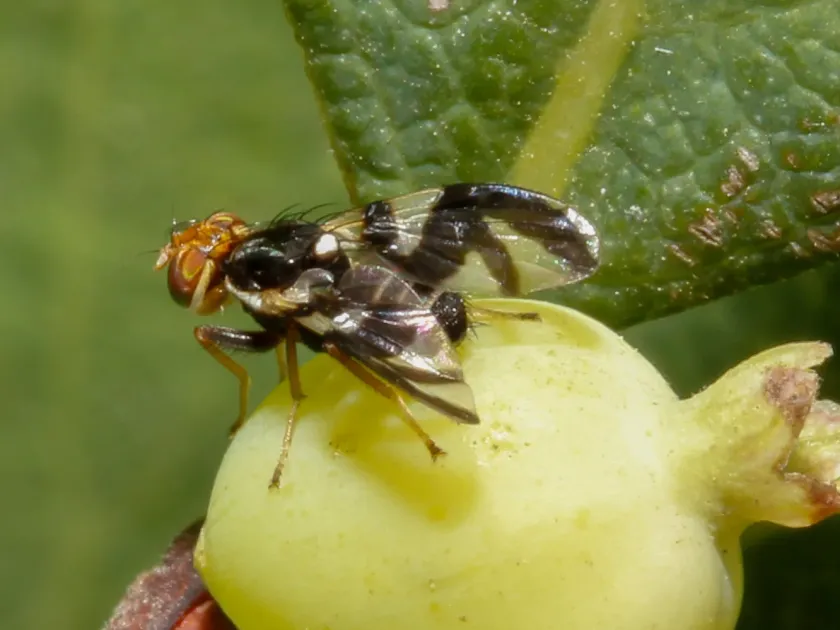
The Western apple maggot (Rhagoletis zephyria) is a small dipteran insect belonging to the Tephritidae family. Adult flies measure approximately 3-5 mm in length and are distinguished by their dark bodies and distinctive dark, band-like patterns on their transparent wings.
These flies exhibit a complex life cycle consisting of four stages: egg, larva, pupa, and adult. They are frequently confused with other fruit fly species, necessitating professional identification in commercial settings.
The larvae are typically maggot-like, white to cream-colored, and lack legs. They possess specialized mouth hooks that allow them to tunnel efficiently through the fruit tissue.
Adult identification is best achieved during the summer months when they actively emerge to mate and lay eggs on suitable host fruits.
The insects overwinter as pupae within the soil, emerging as adults the following summer once temperature and moisture thresholds are reached.
What it damages
The primary hosts for Rhagoletis zephyria include the common snowberry (Symphoricarpos) and various wild apple species, though they can affect commercial crops.
Damage is exclusively caused by the larval stage. As the larvae feed on the fruit pulp, they create irregular, winding tunnels that cause the internal tissue to break down.
This feeding behavior leads to significant quality loss, as the fruit becomes infested with bacteria and fungi, resulting in rapid decay and poor marketability.
Infected fruits frequently show external signs of browning and localized soft spots, which significantly reduces the overall yield of the orchard.
If not properly managed, high infestation rates can result in total crop loss, making early detection and intervention critical for orchard health.
When it appears
The flight period of the adult Western apple maggot typically occurs from mid-summer, starting in late July and continuing through August.
During this window, females actively search for fruit at the optimal stage of ripeness to deposit their eggs just beneath the skin using their sharp ovipositor.
The larvae develop over a period of three to four weeks, depending on ambient temperatures. Once mature, they emerge from the fruit to pupate in the soil.
Development is highly dependent on environmental conditions, with pupae remaining dormant in the soil until the next season's cycle begins.
Monitoring the seasonal emergence is essential for timing protective measures, as the window for effective treatment is limited to the adult flight phase.
Signs of infestation
Visible signs of infestation begin with minute puncture marks on the fruit's surface, where the female has inserted her eggs.
These puncture sites may appear as dark, depressed spots. Over time, the area surrounding the entry point often becomes discolored and soft due to tissue breakdown.
Cutting open an infested apple will reveal extensive brown, meandering tunnels filled with larval waste, which is the most definitive sign of infection.
Premature ripening and fruit drop are common indicators that a larva has already completed its development and exited the fruit to enter the soil.
The presence of adult flies on yellow sticky cards or specifically baited traps confirms the arrival of the pest within the orchard area.
Control measures
Effective management begins with strict orchard sanitation, specifically the immediate collection and removal of all fallen fruit to prevent larval soil entry.
The use of yellow sticky traps provides both a monitoring tool for adult presence and, in lower populations, a means of mass trapping to reduce numbers.
Cultivation of the soil beneath the canopy during late autumn can disrupt the overwintering pupae, exposing them to predators and harsh weather conditions.
Chemical control, if necessary, should be applied during the adult flight period before egg-laying is completed to be most effective.
- Remove wild host plants like snowberry from the orchard perimeter.
- Use attract-and-kill stations for targeted control of adult flies.
- Consult local extension offices for threshold levels and regional management guidelines.
Taxonomy
- Latin name
- Rhagoletis zephyria
- Order
- Diptera (flies)
- Family
- Tephritidae
- EPPO code
- RHAGZE
Discussion
No discussions yet — be the first.