
Nightshade fruit fly
Rhagoletis ramosae
Description
How to identify
The nightshade fruit fly (Rhagoletis ramosae) is a dipteran insect belonging to the Tephritidae family. This pest is a known threat to various Solanaceae crops, characterized by its specific morphology and life cycle aligned with host plant development.
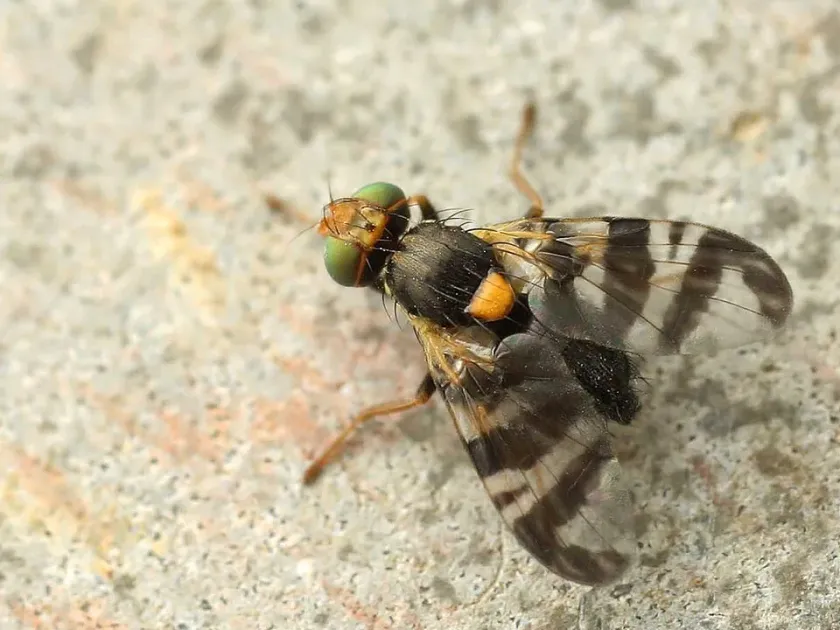
Adult flies are small, typically measuring 4 to 6 millimeters in length. Their wings feature a distinct pattern of dark cross-bands, which is a key identifying trait for species within the Rhagoletis genus. The body color is generally dark with yellowish patterns on the thorax.
Larvae of this species are typical dipteran maggots, white to yellowish in color, reaching about 8 millimeters in length. They lack legs and possess specialized mouth hooks that allow them to feed efficiently within the fruit tissue.
The pupal stage occurs in the soil inside a hardened puparium. These puparia are brownish and barrel-shaped, providing protection against environmental fluctuations, which allows the insect to successfully overwinter in the soil.
The life cycle is closely synchronized with the phenology of host plants. Adults emerge during the fruit-set period, allowing the females to lay eggs directly into the developing fruit, ensuring immediate food access for the emerging larvae.
What it damages
The primary hosts of this pest include commercially and ecologically important plants such as tomatoes, eggplants, and various wild nightshade species. These plants act as both a food source and a breeding ground.
Damage is caused by larvae feeding inside the fruit. The female uses an ovipositor to pierce the fruit's skin and deposit eggs into the pulp. This action alone creates a small wound that can invite pathogens.
As larvae develop, they tunnel through the fruit flesh, causing it to soften and break down. This destruction of the internal structure renders the fruit completely unmarketable and unsuitable for human consumption.
Heavy infestations can lead to premature fruit drop and significant yield losses. The feeding activity disrupts the normal growth and ripening process, leading to deformed or rotting fruit hanging on the plants.
Secondary infections are a major issue following fruit fly damage. Fungi and bacteria enter through the larval feeding tunnels, causing rapid rotting and spoilage of the fruit, which often leads to total crop loss if left unmanaged.
Signs of infestation
The first signs of infestation are often tiny punctures on the fruit surface, which are the sites where the female fly inserted her ovipositor to lay eggs. Small depressed areas may surround these points.
Later in the development process, infested fruits may exhibit uneven coloration or soft patches. These areas indicate internal tissue breakdown due to the movement and feeding of the maggots.
When an infested fruit is opened, one can observe larval tunnels filled with excrement and decaying tissue. The presence of the larvae themselves within the pulp is a definitive indicator of an active infestation.
Premature ripening or color change in fruits that are not yet physiologically mature is a common red flag. Such fruit often appears distorted or lumpy, reflecting the destruction occurring inside the pulp.
Monitoring the population of adult flies using sticky traps is a reliable method for early detection. The number of flies caught on these traps provides valuable data to determine the timing for necessary protective interventions.
Control measures
Cultural control practices are essential. Deep plowing of the soil after harvest is highly recommended to expose puparia to surface predators and harsh weather conditions, effectively reducing the overwintering population.
Strict sanitation measures, such as the prompt removal and disposal of all fallen or infested fruit, are vital. This prevents larvae from leaving the fruit to pupate in the soil, thus breaking the life cycle.
Crop rotation is an effective strategy to reduce pest build-up. By alternating Solanaceae crops with non-host species, the pest's ability to locate a food source in subsequent years is significantly hindered.
Chemical control involving insecticides can be used if timed correctly with the peak emergence of adults. It is crucial to follow all label instructions and pre-harvest intervals to ensure food safety.
- Utilizing biological control agents and natural enemies.
- Deploying yellow sticky traps to capture adult flies.
- Eliminating wild nightshade weeds in the vicinity of the plot.
- Monitoring flight patterns for precise pesticide application.
- Using fine-mesh netting to physically exclude flies from plants.
Taxonomy
- Latin name
- Rhagoletis ramosae
- Order
- Diptera (flies)
- Family
- Tephritidae
- EPPO code
- RHAGRA
Discussion
No discussions yet — be the first.