
Apple maggot
Rhagoletis pomonella
Description
How to identify
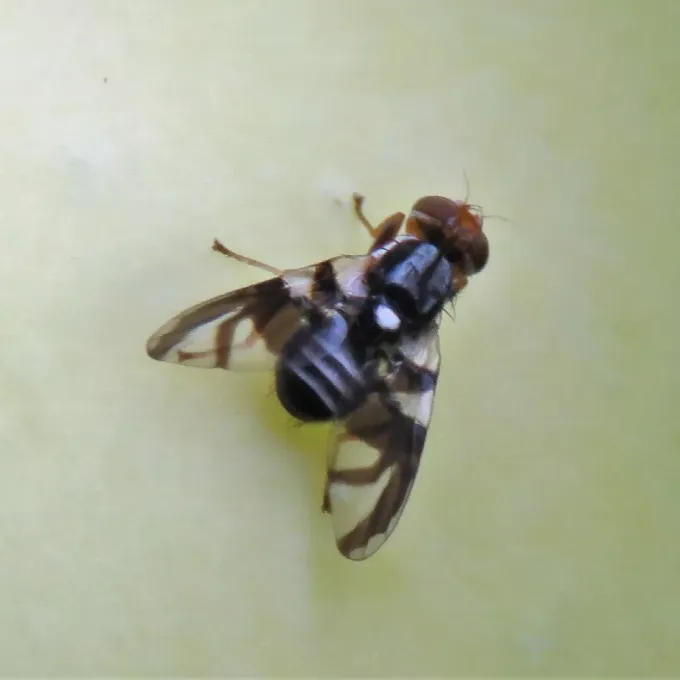
The apple maggot (Rhagoletis pomonella) is a member of the Tephritidae family within the order Diptera. The adult fly is approximately 6 mm long, featuring a black body and distinct dark, band-like patterns on its wings.
Females possess a specialized ovipositor designed to penetrate the skin of fruits. The larvae are creamy-white, legless maggots, typically reaching about 8 mm in length when mature.
They overwinter as pupae in the soil, usually within the top 5 centimeters. These pupae are brown and have a grain-like appearance, which allows them to remain undetected during orchard maintenance.
The life cycle typically consists of one generation per year, although some pupae can remain in the soil for several years in a state of diapause, making long-term control challenging.
Visual identification is effectively achieved through the use of yellow sticky traps, which attract adults, providing an essential tool for monitoring population density during the season.
What it damages
The primary hosts of the apple maggot are apples and hawthorns, though they also occasionally attack pears, cherries, and plums. Early-ripening varieties are generally more susceptible to infestation.
Damage is exclusively caused by the larvae, which tunnel through the fruit flesh, creating winding trails. This feeding behavior causes the fruit to deteriorate rapidly and turn brown.
Affected fruit often develops a lumpy, uneven surface and may drop from the tree prematurely. In severe cases, the entire flesh can turn into a rotten mass.
Infested apples are generally unmarketable, leading to significant economic losses in commercial orchards and poor yield in home gardens.
Internal rot caused by larval tunnels often acts as an entry point for secondary pathogens, including various fungi and bacteria that accelerate the destruction of the harvest.
When it appears
Adult flies typically emerge in early summer, often starting in June. The duration of their activity is closely related to the maturation stages of the fruit.
After mating, females lay eggs just beneath the skin of the developing fruit. Each female is capable of depositing a large number of eggs throughout the season.
Larval development inside the fruit takes anywhere from two to four weeks, depending on the ambient temperature and the host fruit variety.
Upon completing their development, larvae exit the fruit, drop to the ground, and burrow into the soil to pupate before the onset of winter.
Monitoring for adult emergence must be consistent throughout the summer, as environmental factors like rainfall and soil temperature influence the timing of emergence each year.
Signs of infestation
Small, dark, pin-prick indentations on the surface of the fruit indicate where the female has laid eggs beneath the epidermis.
The fruit surface may become distorted or dimpled, providing a clear visual indication that larvae are active within the flesh.
Irregular, reddish streaks or spots on the skin may appear prematurely, suggesting the fruit is ripening unevenly due to infestation.
When the fruit is squeezed, damaged areas feel softer or spongy compared to the firm, healthy parts of the apple.
Heavy fruit drop before the harvest period is a major sign of infestation, especially when the fallen fruits appear hollow or decayed upon inspection.
Control measures
The use of yellow sticky traps or red spheres coated with sticky material is highly effective for both monitoring and trapping adult flies.
Sanitation practices, such as the immediate collection and disposal of fallen fruit, are essential to prevent larvae from exiting and entering the soil to pupate.
Tilling or disturbing the soil beneath trees in late autumn or early spring can expose pupae to predators and adverse weather, reducing the next generation's population.
Application of insecticides should be timed based on trap monitoring to target adult flies before they successfully lay eggs in the fruit.
- Utilize biological control agents that target larvae or pupae in the soil.
- Encourage natural predators such as birds and beneficial insects in the orchard.
- Maintain healthy tree vigor to increase natural resistance and improve overall fruit quality.
Taxonomy
- Latin name
- Rhagoletis pomonella
- Order
- Diptera (flies)
- Family
- Tephritidae
- EPPO code
- RHAGPO
Discussion
No discussions yet — be the first.