
Barberry fly
Rhagoletis meigenii
Description
How to identify
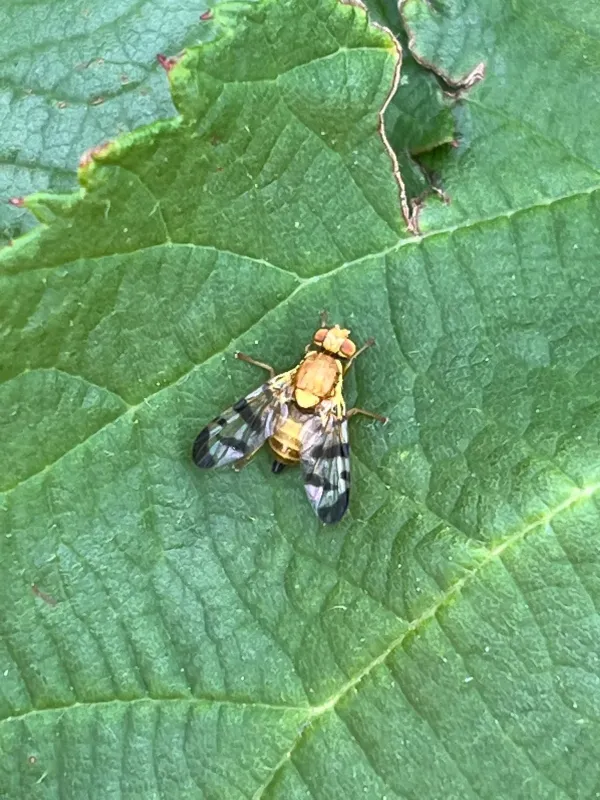
The barberry fly (Rhagoletis meigenii) is a member of the Tephritidae family. The adult fly is small, measuring 3–4 mm, and is characterized by distinct dark banding patterns on its wings.
The body of the adult is primarily black. The larvae are maggot-like, legless, and white or cream-colored, reaching about 5–6 mm in length at maturity.
This species overwinters as a puparium in the soil layer beneath the host plant, emerging during the flowering stage of barberry bushes.
The female uses her ovipositor to pierce the skin of young berries, depositing eggs directly into the developing fruit tissue.
The life cycle is closely synchronized with the growth of the berries, ensuring the larvae have an immediate food source upon hatching.
What it damages
The primary hosts of the barberry fly are shrubs of the Berberis genus. The larvae are highly host-specific, feeding exclusively within the fruit of these plants.
As the larvae feed, they consume the pulp and seeds, which leads to the internal decay of the berry and loss of its structural integrity.
Heavy infestation causes premature shedding of fruit, which significantly impacts the aesthetic value and yield of the barberry hedge or shrub.
Berries damaged by the larvae are prone to secondary infections from fungi and bacteria, which can cause the fruit to rot while still attached to the branches.
In cases of severe outbreaks, the majority of the crop may be lost, making effective pest management essential for gardeners.
Signs of infestation
The most visible sign of infestation is the presence of tiny, dark, pin-prick spots on the surface of the berries, which are the sites of oviposition.
Damaged berries often show signs of premature color change, wilting, or shriveling, despite the bush itself appearing healthy otherwise.
When an infested berry is opened, one or more larvae can be observed feeding on the internal tissues, typically resulting in a hollowed-out appearance.
An unusual amount of early fruit drop is a reliable indicator that the plant is infested, especially if berries appear shriveled on the ground.
- Dark spots on fruit skins.
- Premature ripening or discoloration.
- Deformed or shriveled berries.
- Larvae found inside the fruit.
- Excessive fruit drop.
Control measures
Cultural control involves thorough cultivation of the soil under the bushes to expose and destroy overwintering puparia in the topsoil.
Sanitation is critical; collect and destroy all fallen berries promptly to prevent larvae from completing their life cycle in the soil.
Chemical control with systemic or contact insecticides can be effective if applied during the flight period of the adults, prior to fruit ripening.
Using yellow sticky traps or pheromone baits can help monitor population levels and reduce the number of adults in the vicinity of the host plants.
For home gardens, integrated pest management practices should be followed, prioritizing non-toxic methods before resorting to chemical applications.
Taxonomy
- Latin name
- Rhagoletis meigenii
- Order
- Diptera (flies)
- Family
- Tephritidae
- EPPO code
- CERTME
Discussion
No discussions yet — be the first.