
Western cherry fruit fly
Rhagoletis indifferens
Description
How to identify
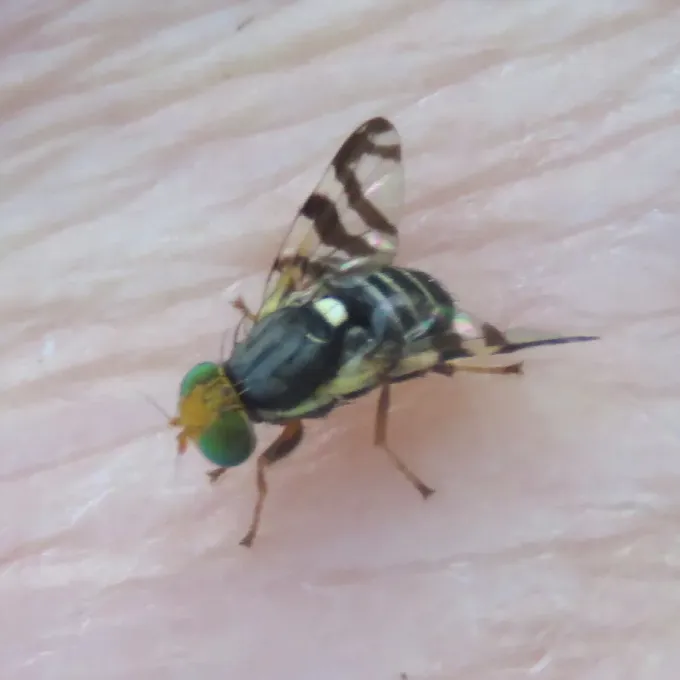
The Western cherry fruit fly (Rhagoletis indifferens) belongs to the Tephritidae family, order Diptera. The adult fly is a small insect, measuring approximately 3–5 mm in length, easily identified by the dark, transverse bands across its wings.
The body of the fly is primarily black with a distinct yellow scutellum on the thorax. The legs and head also exhibit a yellowish-orange coloration, which serves as a key diagnostic feature for this specific species.
Females possess a specialized, needle-like ovipositor used to pierce the skin of developing fruit to lay their eggs. Males are generally smaller and exhibit active patrolling behavior within the canopy to locate mates.
The larvae are typical legless maggots, creamy white in color, typically reaching a length of 4–6 mm when fully grown. They have a tapered front end and a blunt rear, perfectly adapted to feeding inside cherry flesh.
The pupal stage occurs within a puparium, which is the hardened, dark-brown cuticle of the final larval instar. These puparia overwinter in the soil beneath host trees at shallow depths.
What it damages
This pest primarily attacks fruit of the Prunus genus, with a strong preference for sweet and sour cherries. It is considered a significant threat to commercial cherry orchards and home gardens alike.
Beyond cultivated varieties, the Western cherry fruit fly often infests wild cherry trees. These wild hosts serve as an essential reservoir, allowing the pest to persist and migrate into managed agricultural lands.
Infested fruit typically ripens prematurely and drops from the tree. Because the maggots feed internally, the fruit loses its marketability and becomes unfit for consumption or processing.
Larval feeding causes the destruction of fruit tissue, which often leads to the development of secondary bacterial or fungal infections, including brown rot. This results in the fruit becoming mushy, discolored, and watery.
The damage potential is high, as untreated infestations can result in losses exceeding 50-80% of the harvest. Consistent monitoring and preventive actions are therefore vital for economic viability.
When it appears
The life cycle of the Western cherry fruit fly is univoltine, meaning there is one generation per year. However, pupae can remain in soil diapause for up to two years, which helps ensure survival during unfavorable seasons.
Adult emergence typically begins in late spring, triggered by rising soil temperatures. This emergence phase usually coincides with the development of cherry fruit on the trees.
After emergence, adult flies spend approximately one week feeding before mating and beginning the egg-laying process. The entire period of adult activity usually spans about a month depending on local weather.
Once the eggs hatch, larvae feed inside the fruit for 10 to 20 days. Upon reaching maturity, the maggots exit the fruit and drop to the ground to burrow into the soil for pupation.
The remainder of the summer and the entire winter are spent as pupae in the soil. This developmental timing is strictly linked to the phenological stages of the host tree.
Signs of infestation
The earliest signs of infestation are minute dark stippling marks on the skin of the fruit, created by the female's ovipositor during the egg-laying process.
As the larva develops inside, the area around the egg-laying site may appear slightly sunken or dimpled. The fruit skin around these spots can become soft or discolored over time.
If an infested cherry is cut open, one can typically find the maggot inside, along with a tunnel-like cavity in the flesh surrounding the pit. The flesh often appears damaged and watery.
Premature fruit drop is a common indicator of a significant infestation. Fruit found on the ground beneath the tree may also show small exit holes where mature maggots have crawled out.
- Small puncture marks on the fruit skin.
- Sunken or soft spots on developing cherries.
- Premature ripening and darkening of the fruit.
- Presence of white maggots within the cherry pulp.
- Increased fruit drop before the harvest date.
Control measures
The use of yellow sticky traps is a standard practice for both monitoring adult fly populations and reducing the total number of individuals in the orchard during the flight season.
Good orchard sanitation is critical: timely harvesting of all fruit prevents larvae from completing their life cycle and returning to the soil to pupate for the next year.
Cultivation of the soil beneath the canopy in the autumn and early spring can disturb the overwintering pupae, leading to their exposure and eventual death due to predation or weather.
If infestation thresholds are reached, chemical control using systemic or contact insecticides may be necessary. Applications must be carefully timed to target the adults before they oviposit.
Strict quarantine measures should be observed to prevent the transport of infested fruit into non-infested regions. Biological control, including the use of beneficial insects, is an area of ongoing research.
Taxonomy
- Latin name
- Rhagoletis indifferens
- Order
- Diptera (flies)
- Family
- Tephritidae
- EPPO code
- RHAGIN
Discussion
No discussions yet — be the first.