
Cherry fruit fly
Rhagoletis fausta
Description
How to identify
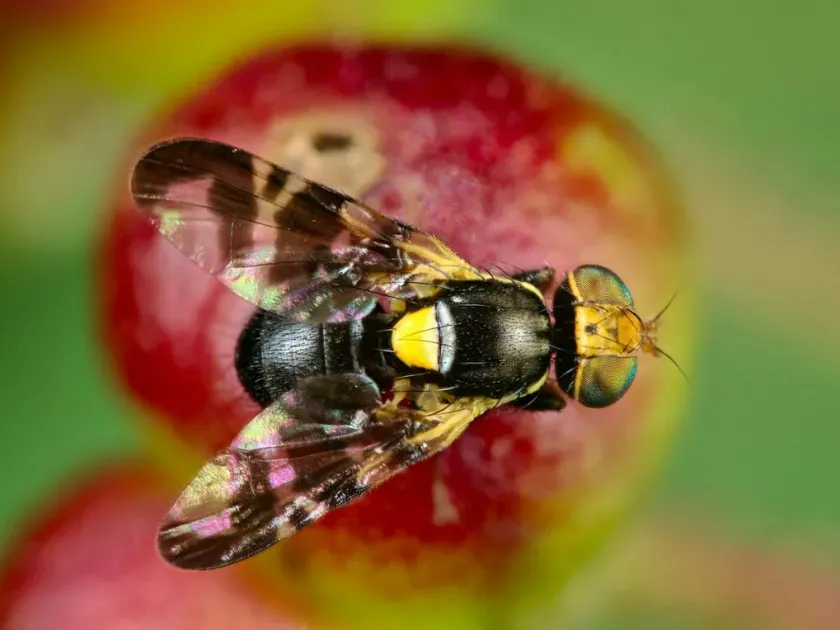
The cherry fruit fly (Rhagoletis fausta) is a significant pest belonging to the Tephritidae family, order Diptera. Adult flies are characterized by a black body measuring approximately 4–5 mm in length and wings featuring distinct dark transverse bands.
The life cycle consists of four distinct stages: egg, larva, pupa, and adult. The insect typically has one generation per year, with pupae overwintering in the soil beneath the host trees until the following spring.
Adults emerge during late spring and early summer, corresponding with the development of cherry fruits. The female is equipped with an ovipositor used to pierce the skin of ripening cherries to lay eggs.
Identification is primarily based on the unique banding patterns on the wings, which distinguish it from other fruit fly species. Monitoring for adults is often done using specialized yellow sticky traps placed in orchard trees.
Understanding the biology of this pest is crucial for effective orchard management, as the timing of the adult emergence is the primary window for chemical or biological intervention.
What it damages
This pest primarily attacks cherries and sweet cherries. The larvae feed directly on the fruit tissue, causing extensive internal damage and rendering the fruit unsuitable for human consumption.
Affected fruits exhibit softened flesh, dimpling, and premature coloration. Eventually, the damaged fruit will shrivel, rot, or drop from the tree, leading to significant yield losses in commercial orchards.
Beyond direct feeding, the larval tunnels allow entry for secondary pathogens, such as fungi, which accelerate the rotting process of the berries while they are still on the tree branches.
The economic impact can be severe, as even low levels of infestation can result in total harvest rejection for fresh market sales. The fruit becomes unmarketable due to the presence of larvae.
Late-maturing varieties are particularly susceptible to damage, as they remain on the tree for a longer duration, providing the flies more time to lay eggs and for larvae to develop.
When it appears
Adult emergence typically occurs when the soil temperature rises sufficiently, usually coinciding with the bloom or early fruit formation stages. This timeframe varies depending on regional climatic conditions.
The period of adult activity lasts for several weeks, during which the flies feed and mate. Females will begin laying eggs once the cherries start to change color from green to yellow or red.
Eggs hatch within a few days, and the larvae burrow into the fruit to feed for approximately two to three weeks. After completing their development, larvae emerge from the fruit to drop into the soil.
Once in the soil, the larvae pupate and remain in a state of diapause throughout the autumn and winter months, awaiting the onset of favorable conditions in the next year.
Precision in tracking the timing of these life stages allows orchardists to deploy targeted pest management strategies effectively before the population reaches damaging levels.
Signs of infestation
The earliest signs of an infestation include minute puncture marks on the skin of the fruit, often surrounded by a small depressed area or a subtle color change.
- Premature fruit softening and dimpling.
- Uneven or premature ripening of the berries.
- Extensive premature fruit drop in the orchard.
- Presence of creamy-white larvae within the fruit flesh upon cutting.
- Increased secondary rot and mold growth on the berries.
Early diagnosis via orchard inspection is vital. Checking the ripening fruit periodically ensures that growers can make informed decisions about applying control measures at the right time.
Control measures
Cultural control involves thorough cultivation of the soil under the tree canopy to disturb pupae, exposing them to environmental factors and natural predators like birds.
Yellow sticky traps are highly effective for monitoring and mass trapping of adults. These should be deployed prior to the expected emergence window to mitigate egg-laying opportunities.
Chemical control focuses on targeting adult flies before they lay eggs. Systemic or contact insecticides must be applied precisely according to the emergence schedule and local regulations.
Sanitation is a key component; collecting and destroying all fallen fruit is necessary to prevent larvae from entering the soil and completing their life cycle for the next season.
In some regions, using biological controls or fine-mesh exclusion netting on trees can provide a non-chemical alternative to manage populations effectively in small-scale orchards.
Taxonomy
- Latin name
- Rhagoletis fausta
- Order
- Diptera (flies)
- Family
- Tephritidae
- EPPO code
- RHAGFA
Discussion
No discussions yet — be the first.