
Eastern cherry fruit fly
Rhagoletis cingulata
Description
How to identify
The Eastern cherry fruit fly (Rhagoletis cingulata) is a member of the Tephritidae family, also known as the fruit fly family, within the order Diptera.
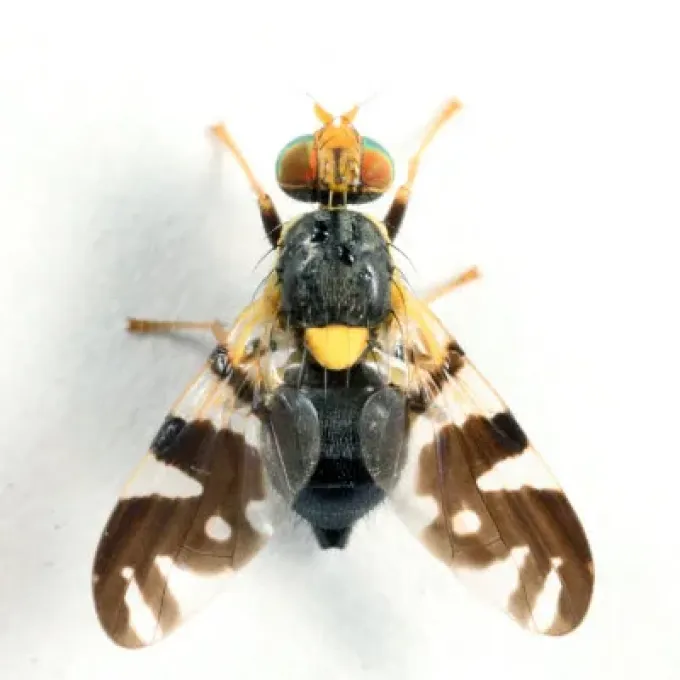
Adult flies are approximately 4-5 mm in length and are easily recognized by the distinct, dark banded patterns present on their wings.
The body of the fly is generally dark, featuring a yellow scutellum and yellowish-brown legs, which serves as a standard diagnostic characteristic.
The larvae are typical dipteran maggots, cylindrical and tapered, creamy-white in color, reaching about 6-7 mm when fully mature.
The species is highly specialized, specifically targeting fruit trees in the Rosaceae family, particularly cherries and wild black cherries.
What it damages
The primary hosts for this pest include both sweet and sour cherries, with the insects causing significant damage to the developing fruit crop.
Females deposit eggs directly under the skin of ripening cherries, which subsequently hatch into larvae that feed extensively on the fruit flesh.
As larvae consume the fruit, they create internal galleries that eventually lead to the decay and collapse of the berry structure.
Affected cherries lose their marketability, appearing shriveled, discolored, and soft, often becoming secondary hosts for molds and bacteria.
Severe infestations can result in total crop loss, making it a serious economic concern for both commercial orchards and home gardeners.
When it appears
This species overwinters in the soil as a puparium, remaining dormant until environmental conditions trigger the emergence of adults in late spring.
Adult emergence typically begins when cherries start to show color changes, roughly coinciding with the period of warm temperatures in late May or June.
Upon emergence, adults require a period of about 7-10 days for sexual maturation and supplementary feeding before they begin mating and oviposition.
The egg-laying period is extended, allowing the fly to infest fruits at various stages of ripeness throughout the early to mid-summer season.
After completing their development inside the fruit, the larvae exit the cherries and drop to the soil, where they pupate and remain until the next season.
Signs of infestation
The most common sign of infestation is the presence of tiny, pin-prick punctures on the surface of the cherry skin where eggs were laid.
As the larvae grow, the affected cherries often develop localized soft spots or irregular indentations, indicating the internal tunnel formation.
Infested fruit may show premature coloring or shriveling, often dropping from the tree long before the normal harvest time has arrived.
When the fruit is cut open, one may observe internal tissue breakdown, larval presence, and tunnels filled with frass, rendering the fruit inedible.
Monitoring using yellow sticky traps hung in the canopy often reveals the presence of adult flies before visible damage appears on the fruit.
Control measures
Utilizing yellow sticky traps is a primary method for monitoring population levels and can provide some degree of trapping efficacy in small gardens.
Chemical control involving systemic or contact insecticides is often necessary if trap counts exceed the established economic threshold for the region.
Rigorous sanitation practices, such as removing fallen fruit from the orchard floor, are critical to prevent larvae from successfully pupating in the soil.
Tilling the soil under the canopy in late autumn or early spring can physically damage overwintering pupae and increase their exposure to predators.
Planting early-maturing cherry cultivars can help escape peak fly activity, reducing the need for aggressive chemical interventions during the harvest season.
Taxonomy
- Latin name
- Rhagoletis cingulata
- Order
- Diptera (flies)
- Family
- Tephritidae
- EPPO code
- RHAGCI
Discussion
No discussions yet — be the first.