
Barberry fruit fly
Rhagoletis berberidis
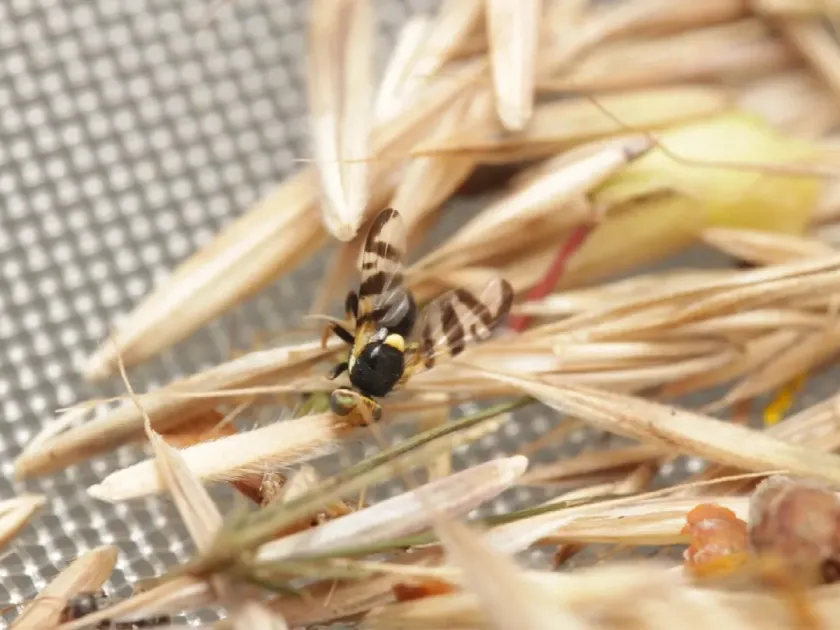
Description
How to identify
The Barberry fruit fly (Rhagoletis berberidis) is a Dipteran insect belonging to the Tephritidae family, known for its specific impact on the fruits of barberry plants.
Adult flies are small, usually about 3–4 mm long, with a characteristic pattern of dark, transverse bands on their transparent wings, a key feature for identification.
The larvae are typical fruit fly larvae: cylindrical, legless, and creamy-white in color, usually reaching up to 6 mm before they exit the fruit to pupate.
The eyes of the adult often exhibit a metallic sheen, and the overall body color is generally dark brown or black, blending in with the foliage of the host plant.
Understanding the life cycle is crucial, as the fly spends the winter in the soil in a pupal stage, emerging as an adult in synchronization with the berry ripening process.
What it damages
This pest exclusively targets various species of the genus Berberis, causing significant damage to both wild and ornamental berry crops.
The larvae bore into the developing berries, feeding on the interior pulp, which results in the berries turning soft, discolored, and falling prematurely.
Infested berries lose their marketability and nutritional value, making them entirely unsuitable for processing or fresh consumption by birds and humans.
In high-density infestations, the loss of harvest can reach extreme levels, making the control of this insect essential for professional growers and gardeners.
Additionally, the damaged fruit serves as a gateway for opportunistic fungi and secondary pests, leading to further decay of the entire cluster of berries.
When it appears
Adult flies emerge during the summer months, specifically targeting the period when berries start to swell and change color, indicating the onset of maturation.
Egg-laying is a precise process where the female uses her ovipositor to insert eggs beneath the skin of the berry, ensuring the offspring have immediate access to food.
The larval stage lasts for several weeks as the insect feeds on the fruit. Once fully developed, the larva exits the berry and drops to the ground.
The pupation occurs in the upper few centimeters of the soil, where the insect remains dormant through the autumn and winter months until the next season.
There is typically one generation per year, but the synchronized emergence of adults can create a massive pressure on the fruit crop over a short period.
Signs of infestation
The first signs of infestation are often subtle, characterized by small puncture marks on the skin of the berries left by the females during oviposition.
- Premature color change or darkening of the berries.
- Softening of the fruit surface and visible shrinking or wrinkling.
- Internal tunnels and decay visible when splitting open the berries.
- Early fruit drop resulting in a carpet of fallen berries under the canopy.
The most definitive sign is finding the larvae inside the berries, which confirms the presence of the Rhagoletis berberidis infestation.
Control measures
Effective control strategies require timing insecticide applications to coincide with the flight period of adults, preventing eggs from being laid in the first place.
Cultural practices, such as clearing fallen fruit from the ground, are vital to stop larvae from entering the soil and completing their life cycle.
Deep cultivation of the soil around the base of the shrubs in late autumn or early spring helps to expose pupae to frost and predators, reducing the population.
Installing yellow sticky traps near the bushes is a successful method for monitoring adult flight activity and physically reducing the number of flies in the area.
Maintaining healthy, well-pruned bushes and ensuring adequate spacing can reduce the microclimate suitability for the fruit fly, helping to minimize the impact of the pest.
Taxonomy
- Latin name
- Rhagoletis berberidis
- Order
- Diptera (flies)
- Family
- Tephritidae
- EPPO code
- RHAGBE
Discussion
No discussions yet — be the first.