
Rose hip fly
Rhagoletis basiola
Description
How to identify
The rose hip fly (Rhagoletis basiola) is a member of the Tephritidae family, also known as fruit flies. This pest is specifically adapted to infest the developing fruit of various rose species, including wild rose hips.
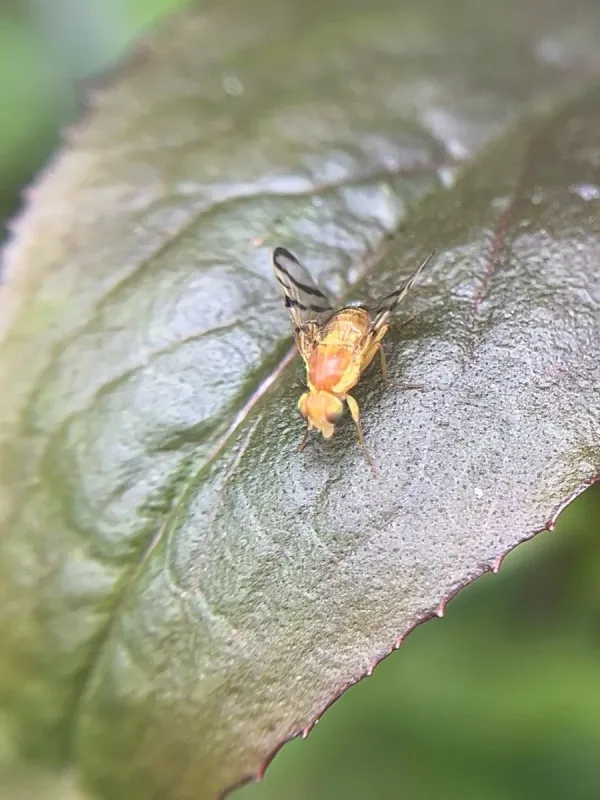
Adult flies are relatively small, measuring approximately 4 to 5 mm in length. Their most distinct feature is the pattern of dark, transverse bands across their transparent wings, which serves as a key identification mark.
The body of the adult is primarily black, often with a yellowish scutellum. The larvae are legless, maggot-like creatures, usually white or creamy in color, reaching about 7 mm at the final larval stage.
The insect typically completes one generation per year. The overwintering stage occurs as a pupa, buried in the soil under the host bushes at a shallow depth of a few centimeters.
Adults emerge in early to mid-summer, coinciding with the flowering phase of the host plants. They are most active during warm, calm weather, which favors mating and subsequent egg-laying.
What it damages
The damage is primarily caused by the larvae, which burrow into the developing rose hips. By feeding on the internal tissues and seeds, they destroy the interior of the fruit completely.
Infested rose hips often lose their marketability and nutritional value. For producers of medicinal herbs, even moderate infestations can result in significant financial losses due to the degradation of the raw product.
The feeding activity creates entry points for various secondary pathogens, including fungi and bacteria, which cause the fruit to rot quickly and drop prematurely from the bush.
In high-density populations, the rose hip fly can cause up to 90% of the crop to become unharvestable. The cumulative effect of destroyed internal structures and secondary rot makes the fruit unsuitable for human consumption or processing.
The loss of fruit also affects the reproductive cycle of the plant, as the seeds are either consumed by the larvae or the fruit falls too early for natural seed dispersal.
Signs of infestation
Early infestation signs include tiny puncture marks on the skin of the developing rose hips. These are the oviposition sites where the female fly has deposited her eggs.
As the larvae grow, the affected areas show visible dark spots and surface discoloration. The fruit may appear misshapen, wrinkled, or stunted compared to healthy specimens nearby.
Internally, the presence of the pest is confirmed by winding tunnels and the accumulation of waste products left by the larvae. The internal flesh becomes discolored and soft.
Premature fruit drop is a strong indicator of an active infestation. If fruit that should still be green and firm falls to the ground, it is a clear sign that larvae have been feeding inside.
During the final stages of the infestation, one might notice small exit holes on the surface of the rose hip, indicating that the mature larvae have left the fruit to pupate in the soil.
Control measures
Cultural control is highly effective for this pest. Deep cultivation or tilling of the soil around the base of the bushes in autumn or early spring helps destroy overwintering pupae by exposing them to frost or predators.
Sanitation is crucial; all infested or fallen fruit must be collected and disposed of immediately. By removing the fruit before the larvae exit, the population for the following year can be significantly reduced.
Chemical control involving insecticides can be applied during the adult flight period. Treatments are most effective when timed precisely to occur before the females lay their eggs inside the fruit.
Yellow sticky traps are recommended for monitoring population levels and catching adult flies. This non-toxic method helps determine the exact time for more intensive control measures if necessary.
- Autumn soil cultivation to destroy pupae.
- Consistent collection and destruction of fallen fruit.
- Targeted insecticide applications during adult flight.
- Monitoring with yellow sticky traps.
Taxonomy
- Latin name
- Rhagoletis basiola
- Order
- Diptera (flies)
- Family
- Tephritidae
- EPPO code
- RHAGBS
Discussion
No discussions yet — be the first.