
Rose hip fruit fly
Rhagoletis alternata
Description
How to identify
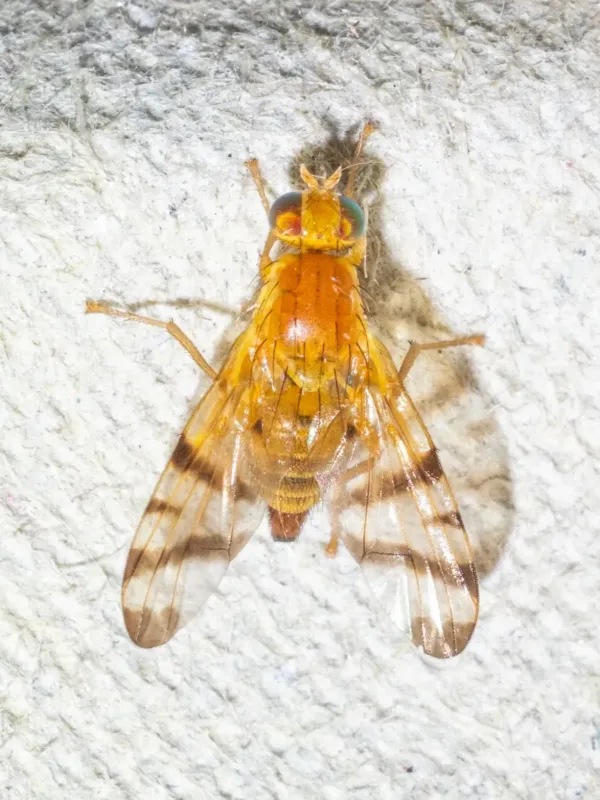
The Rose hip fruit fly, scientifically known as Rhagoletis alternata, is a member of the Tephritidae family. The adult fly is relatively small and can be identified by the distinct dark banding patterns on its transparent wings and a yellowish-brown body coloration.
The larvae are legless, yellowish-white maggots that reach about 5-7 mm in length. They reside inside the developing rose hips, feeding on the interior tissues and seeds, which makes them difficult to spot during the early stages of infestation.
The biological development of this pest is closely synced with the maturation of its host plants. Adults emerge during the flowering and fruit-setting periods, marking the beginning of their mating and egg-laying season.
Pupation takes place in the soil under the host plants, where the insect remains throughout the winter. This subterranean stage is crucial for its survival during cold months, allowing it to re-emerge as an adult the following spring.
Agronomists often use yellow sticky traps for monitoring purposes. These traps attract adult flies and are an essential tool for timing control measures to coincide with the pest's emergence.
What it damages
The primary hosts for this fly include various species of wild roses and garden varieties. The larvae cause direct damage by consuming the seeds and destroying the inner pulp of the fruit, rendering them unusable.
Damage is characterized by the premature abscission of infested hips, which leads to a significant loss of harvest. Additionally, damaged fruits are highly susceptible to secondary infections, such as mold and various fungal pathogens.
Infested rose hips often show visible deformation and loss of their natural color. When larvae have been active for a period, the internal flesh turns into a darkened, decayed mass, which affects the overall quality of the crop.
In high-density infestations, the Rose hip fruit fly can destroy nearly the entire production of hips on a plantation. This poses a major threat to commercial growers who rely on high-quality rose hip yields for botanical or culinary products.
The negative impact on production is compounded by the need for labor-intensive cleaning and the discarding of infected fruits, which adds to the operational costs for gardeners and farmers alike.
When it appears
Adult flies typically begin their active season in early to mid-summer, depending on regional temperature and soil warmth. They spend the initial phase feeding on nectar and plant juices to gain energy for reproduction.
Females use their ovipositors to insert eggs directly into the skin of young, ripening hips. After a brief incubation period, the larvae emerge and immediately begin feeding on the fruit tissue.
The larval stage lasts approximately one month, during which they feed extensively. Once fully developed, they exit the rose hip, fall to the ground, and burrow into the soil to pupate for the remainder of the year.
Environmental factors like humidity and heat significantly influence their breeding cycles. Prolonged warm weather can extend the fly's period of activity, making management more complex for those using chemical control.
By autumn, all larval activity ceases as the insects enter diapause in the soil, ensuring they are well-prepared to survive the winter and repeat the cycle in the following season.
Signs of infestation
The first signs of infestation include tiny, puncture-like wounds or dark spots on the skin of the rose hips. These points of entry often develop slight depressions as the tissue underneath starts to decay.
- Soft, discolored patches on the fruit surface.
- Premature yellowing or shriveling of the hips.
- Internal tunneling visible when the fruit is sliced open.
- Presence of larval frass near the puncture site.
- Sudden, mass dropping of fruits from the bush.
When an infested hip is sliced open, one or more white maggots are typically found within. The surrounding tissue is usually darkened and soft, indicating active internal damage caused by the feeding larvae.
Monitoring the foliage for the presence of adult flies is another sign for agronomists to begin protective interventions. Any sign of adults suggests that egg-laying is likely underway or imminent.
Plants heavily infested for multiple years will show reduced vitality, and the soil beneath them may contain a high number of pupae, creating a continuous source of infestation for future years.
Control measures
Cultural control is a primary defense, involving the deep cultivation of soil around the plant base in late autumn or early spring. This helps to expose and destroy overwintering pupae or make them accessible to birds.
The regular collection and proper destruction of all fallen hips is critical. These must not be left on the ground or placed in open compost, as larvae can complete their lifecycle even in plucked fruits.
Chemical intervention involving systemic insecticides is effective when applied at the onset of adult fly activity. Treatment must be timed carefully to prevent the females from laying eggs in the first place.
Yellow sticky traps are recommended for both monitoring and mass trapping of adults. Reducing the adult population mechanically significantly decreases the number of eggs laid on the crop.
Biological control methods, such as the use of entomopathogenic nematodes in the soil, offer an environmentally friendly alternative to chemical pesticides, particularly for home gardens and organic production systems.
Taxonomy
- Latin name
- Rhagoletis alternata
- Order
- Diptera (flies)
- Family
- Tephritidae
- EPPO code
- RHAGAL
Discussion
No discussions yet — be the first.