
Fruit flies
Rhagoletis
Description
How to identify
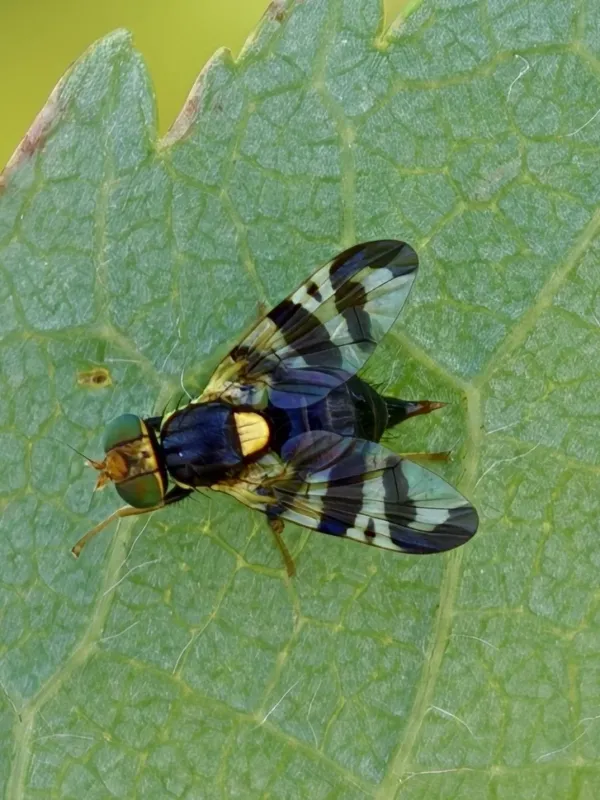
The genus Rhagoletis belongs to the Tephritidae family, also known as fruit flies. These insects are distinguished by their patterned wings, which often feature dark, distinct bands used for communication and camouflage.
Adult flies typically measure between 3 to 6 millimeters in length. Their bodies vary in color from black to dark brown, often with yellow markings on the thorax, depending on the specific species, such as the cherry fruit fly or the apple maggot.
The larvae, or maggots, are legless and creamy-white in color, characterized by a tapered, cylindrical body. They undergo three larval stages before reaching the pupation phase in the soil.
The life cycle involves complete metamorphosis: egg, larva, pupa, and adult. They spend the winter as pupae within protective cocoons buried in the soil under the host tree canopy.
In spring, emerging adults crawl to the surface as soil temperatures rise. This emergence is usually synchronized with the host plant's fruit development stages, which is critical for their survival.
What it damages
Rhagoletis flies are major agricultural pests, targeting a wide range of fruit and nut trees. Primary hosts include cherries, apples, pears, walnuts, and some ornamental shrubs, with specific species often specializing in one type of host.
The primary damage is caused by larvae feeding on the fruit flesh. They bore tunnels throughout the fruit, causing tissue breakdown, rapid decay, and premature ripening or fruit drop.
Infested fruit is often visually marred by small exit holes and sunken spots, making it entirely unmarketable. A heavy infestation can lead to the loss of nearly the entire crop if control measures are not implemented.
Furthermore, the oviposition punctures made by females provide entry points for secondary pathogens, such as fungi and bacteria, leading to rot that can spread throughout the harvested batch.
The economic impact of this pest is severe, as consumers and processors have zero tolerance for the presence of larvae in produce, necessitating strict quality control protocols in commercial fruit farming.
When it appears
The emergence of adults typically begins in late spring or early summer, triggered by the warming of the soil. This initiates the mating season, followed shortly by the search for suitable fruit for egg-laying.
Females insert their eggs just beneath the skin of developing fruits. The incubation period lasts for about one week, after which larvae hatch and immediately begin feeding on the internal tissues.
Larval development within the fruit usually spans two to four weeks. Once fully grown, the larvae exit the fruit, drop to the ground, and burrow into the soil to pupate for the remainder of the season or winter.
Most species are univoltine, meaning they produce one generation per year. However, some individuals may undergo a prolonged diapause, staying in the soil for two or more years to ensure species survival.
Monitoring the flight activity is essential for timing interventions. Sticky traps are typically placed in orchards to detect the first presence of adults before they begin egg-laying activities.
Signs of infestation
The earliest sign of an infestation is the appearance of small, dark, or discolored punctures on the surface of developing fruit, indicating where the female has laid her eggs.
As the larvae feed, the fruit may develop soft, sunken areas that become mushy to the touch. Cutting open the fruit will reveal internal tunneling and brown, decaying flesh.
- Premature yellowing and dropping of fruit (windfalls).
- Visible exit holes on the fruit surface left by mature larvae.
- Loss of firmness and distinct textural changes in the infested produce.
Orchard managers often use yellow sticky traps supplemented with ammonium acetate or other attractants to identify the peak flight periods and evaluate the need for localized or orchard-wide treatments.
Control measures
Effective management of Rhagoletis requires an Integrated Pest Management (IPM) strategy that combines cultural practices, physical monitoring, and chemical controls to suppress population growth.
Cultural methods are vital, including the strict removal and destruction of all fallen fruit to prevent larvae from completing their life cycle in the soil. Tilling the soil under the tree canopy in late autumn can expose pupae to freezing temperatures and predation.
Chemical control relies on targeting the adult flies during the short window between emergence and egg-laying. Systemic and contact insecticides are used according to precise monitoring data to maximize efficacy.
Trapping techniques, including the use of mass-trapping systems with attractants, can help reduce the adult fly population in smaller orchards or organic farms without relying heavily on broad-spectrum sprays.
The strategic combination of trap-based monitoring and timely insecticide applications ensures that the fruit remains protected throughout the vulnerable growth period while minimizing the overall chemical footprint.
Taxonomy
- Latin name
- Rhagoletis
- Order
- Diptera (flies)
- Family
- Tephritidae
- EPPO code
- RHAGSP
Discussion
No discussions yet — be the first.