
New Guinea sugarcane weevil
Rhabdoscelus obscurus
Description
How to identify
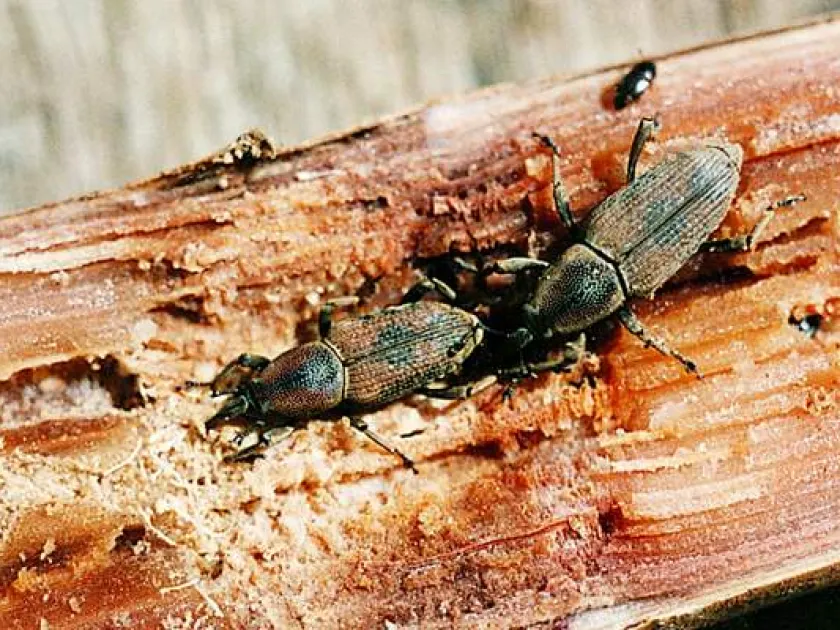
The New Guinea sugarcane weevil (Rhabdoscelus obscurus) is a significant pest within the Curculionidae family, order Coleoptera. Adult weevils are typically 12–15 mm long, featuring a reddish-brown to almost black exoskeleton with dark, mottled markings on their wing covers.
Larvae are legless, creamy-white grubs with a distinct brown head capsule. As they grow, they reach up to 20 mm in length and consume plant tissue voraciously. Before pupating, they construct a characteristic cocoon made from shredded plant fibers.
Adults are primarily nocturnal, hiding in leaf sheaths or debris during the day to avoid desiccation and predation. They are strong fliers, which allows them to colonize new fields effectively throughout the growing season.
The life cycle of this species is highly adapted to tropical environments, where consistent warmth and high humidity facilitate rapid development. In such conditions, the pest can complete several overlapping generations annually.
Female weevils deposit eggs into small punctures made in the stalks of the host plant. The fecundity of a single female is quite high, often numbering in the hundreds of eggs, which contributes to quick population explosions in favorable conditions.
What it damages
The primary host crop is sugarcane, though the weevil is also a known pest of various palm species, including coconut and sago palms. It poses a severe threat to both agricultural and ornamental plantations.
Damage is caused mainly by larvae boring into the stalks. They create complex tunnel systems that disrupt the plant's vascular tissue, preventing the transport of water and essential nutrients to the leaves and developing stem tissues.
Physical damage to the stems weakens the plant structure significantly, leading to lodging, where the cane falls over. This renders the crop difficult to harvest and significantly reduces both yield volume and sugar content.
Secondary infections are a major consequence of weevil activity. The galleries bored by larvae provide entry points for bacteria and fungi, which can lead to rapid decay of the internal stalk tissues and exacerbate total yield loss.
In palms, the pest is particularly dangerous if it attacks the apical meristem (the growing point). Destruction of this tissue results in the death of the plant, which is an irreparable loss for palm oil or coconut plantations.
Signs of infestation
A key diagnostic sign of infestation is the presence of frass (a mixture of excrement and shredded plant fibers) pushed out from small holes in the stalk. This material is usually visible at the base or along the stem of the plant.
Visible symptoms in sugarcane include yellowing and premature wilting of leaves, especially the central spindle. Eventually, the entire plant may show signs of severe stress or stunted growth compared to healthy neighboring crops.
Internal examination of suspected stalks reveals longitudinal galleries and, frequently, the presence of larvae or pupal cocoons inside the hollowed-out tissue. The structural integrity of the stalk is compromised, often feeling spongy or brittle.
A foul, fermented odor is frequently associated with heavily infested plants, signaling the presence of decaying plant matter caused by bacterial invasion following the mechanical damage inflicted by the weevil.
Adult sightings are common during the night or early morning hours in the leaf bases. Finding adults is a definitive indicator of an active population that requires immediate management intervention.
Control measures
Cultural control is the cornerstone of management. This includes the complete removal and destruction of crop residues after harvest, as these leftovers serve as the primary reservoir for weevil populations to survive and reproduce.
Pheromone-based trapping systems are highly effective for monitoring adult populations. These traps can also serve as a mass-trapping tool to suppress the number of breeding adults in a given area.
Chemical control is difficult because the larvae are protected deep within the plant tissues. Insecticides are most effective when applied during the peak flight period of adult weevils to prevent new egg-laying cycles.
Biological control methods, such as the use of entomopathogenic fungi like Beauveria bassiana, have shown promising results in suppressing weevil populations. These biological agents can penetrate the plant tissue and infect larvae directly.
Stringent quarantine regulations regarding the movement of vegetative planting material are essential to prevent the spread of the pest to new regions. Phytosanitary inspections are a critical component of global sugarcane security.
Taxonomy
- Latin name
- Rhabdoscelus obscurus
- Order
- Coleoptera (beetles)
- Family
- Dryophthoridae
- EPPO code
- SPPHOB
Discussion
No discussions yet — be the first.