
Lesser bud moth
Recurvaria leucatella
Description
How to identify
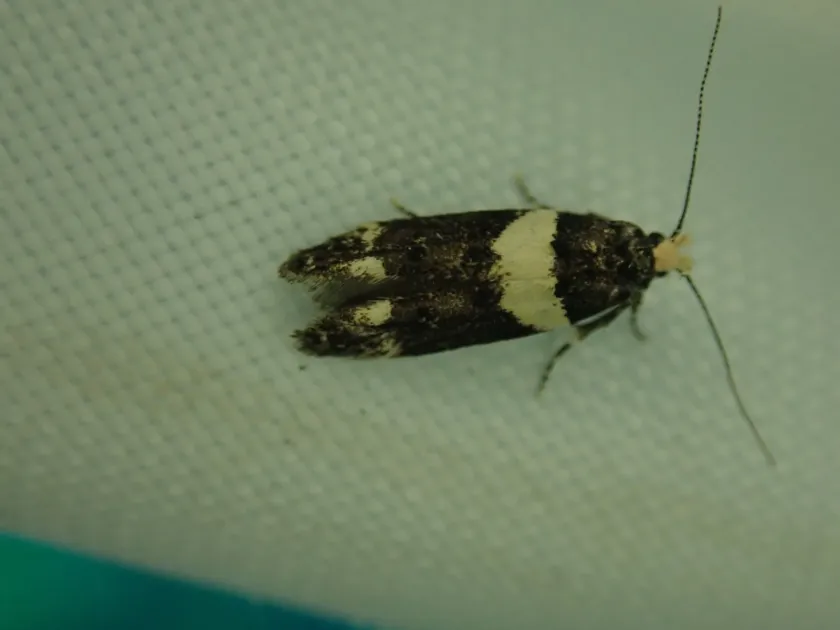
The Lesser bud moth (Recurvaria leucatella) is a small moth belonging to the Gelechiidae family. Its wingspan typically ranges between 12 to 14 mm. The forewings are characterized by a mottled grey-brown pattern with darker crossbands and pale spots, providing excellent camouflage against tree bark.
The larvae are typically reddish-brown with a dark head and reach a length of about 8–10 mm. When ready to pupate, they spin dense white cocoons within the shelter of leaves or inside bark crevices, where they undergo metamorphosis into adults.
What it damages
This pest primarily infests various fruit trees within the Rosaceae family. Common hosts include apple, pear, plum, cherry, and hawthorn trees. The larvae are the primary cause of damage, acting as specialized defoliators and bud feeders.
By feeding on developing buds, blossoms, and young foliage, the larvae directly disrupt the tree's reproductive capacity. This can lead to reduced fruit set, weakened tree health, and significant economic losses in commercial fruit production if left unchecked.
When it appears
The species completes one generation per year in temperate climates. Larvae in their second or third instar enter hibernation during the winter. They typically overwinter in silk cocoons concealed in bark crevices, pruning scars, or branch forks.
In spring, as trees begin to break dormancy, the larvae emerge to feed on opening buds. The adult flight period generally occurs in mid-summer, during which mating takes place and eggs are laid on the host plants to initiate the next life cycle.
Signs of infestation
The first indicator of an infestation is the failure of buds to open properly, leading to withering and drying of the clusters. As the season progresses, the larvae bind leaves together with silk, creating small, protected shelters for feeding.
- Dried, shriveled flower buds that fail to develop into blossoms.
- Distinctive silk webbing binding young leaves at the branch tips.
- Visible skeletonization of leaves caused by larval feeding.
- Premature drop of small, damaged fruitlets during late spring.
Control measures
Effective management begins with strict orchard hygiene, such as removing and destroying infested shoots and leaves containing larval nests. This mechanical control is highly effective for localized infestations in smaller gardens or home orchards.
Winter maintenance, including cleaning loose bark from trunks, helps remove overwintering sites. Additionally, monitoring the population using pheromone traps during the flight period allows for precise timing of any necessary pesticide applications.
If chemical control is deemed necessary, insecticides should be applied during the early bud burst stage when larvae are most active and vulnerable. Systemic insecticides are often preferred to reach larvae feeding within rolled leaves or protected bud clusters.
Taxonomy
- Latin name
- Recurvaria leucatella
- Order
- Lepidoptera (butterflies)
- Family
- Gelechiidae
- EPPO code
- RECULE
Discussion
No discussions yet — be the first.