
Isabella moth
Pyrrharctia isabella
Description
How to identify
The Isabella moth (Pyrrharctia isabella) is a member of the Erebidae family of moths. The adult stage is a medium-sized moth with yellowish-brown wings marked with darker spots.
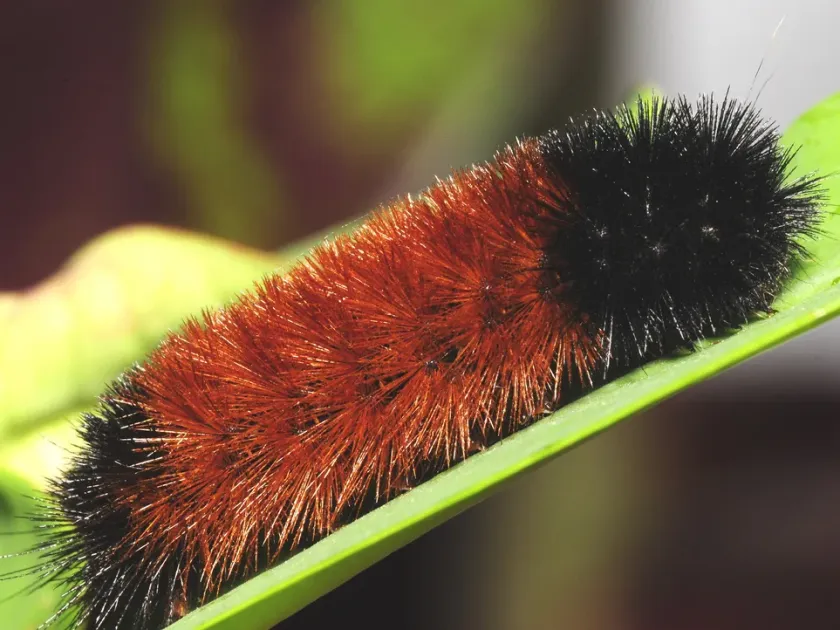
The larval stage is widely known as the "woolly bear" caterpillar due to its thick coat of bristly hairs. The coloration of these hairs changes as the larva molts, shifting from black at the ends to a rusty-orange center.
The life cycle undergoes complete metamorphosis, including egg, larva, pupa, and adult stages. The species overwinters as a mature larva, typically seeking shelter in leaf litter or debris.
This species is highly adapted to cold environments. Their ability to produce cryoprotectants allows the caterpillars to survive freezing temperatures during the winter months.
Adult moths are active during the warmer seasons. Females deposit clusters of eggs on the undersides of host plant leaves to provide an immediate food source for hatching larvae.
What it damages
As a generalist herbivore, the Isabella moth feeds on a wide variety of plant species, including various weeds, vegetables, and ornamental plants found in gardens and agricultural settings.
While they often feed on wild herbaceous plants, population outbreaks can lead to significant feeding on cultivated crops if high densities occur near fields.
Early-instar larvae typically engage in skeletonizing leaves, feeding on the softer tissues, while later instars consume entire leaf blades, leaving only the primary veins behind.
Severe infestations can lead to widespread defoliation, which hampers the plant's ability to photosynthesize, ultimately reducing plant health, vigor, and overall yield potential.
Feeding damage also compromises the structural integrity of the leaves, creating entry points for secondary pathogens like fungi and bacteria, which can further weaken the plant.
Signs of infestation
The most common indicator of presence is the observation of the distinct, fuzzy orange-and-black caterpillars traversing surfaces or feeding on plant foliage during the late summer and autumn.
Noticeable feeding damage, characterized by irregular holes and chewed leaf margins, serves as a primary visual sign of caterpillar activity within the canopy or on low-growing vegetation.
The presence of caterpillar frass (excrement) on leaves or the ground beneath infested plants is a reliable sign of active feeding and is often easier to spot than the larvae themselves.
During the fall migration, individuals are frequently seen in high numbers on pathways, fences, or stems, as they actively search for secure overwintering sites.
Visible stress symptoms, such as premature yellowing of leaves or partial dieback of foliage, can occur when the density of the larval population becomes particularly high.
Control measures
Cultural management is the most effective approach; this includes regular weed control in and around fields to eliminate primary host plants that harbor the developing larvae.
Autumn tillage or soil cultivation disrupts the overwintering sites of the caterpillars, exposing them to environmental stresses and natural predators, which significantly reduces the surviving population.
Manual removal of caterpillars is a feasible method for small gardens, although gloves are recommended because the stiff bristles can cause skin irritation in some individuals.
Biological controls, such as sprays containing Bacillus thuringiensis, are highly effective against younger larvae and are preferred to maintain the balance of beneficial insect populations.
In cases of significant economic impact, targeted chemical insecticides may be used as a last resort, provided they are applied according to legal guidelines for specific crops.
Taxonomy
- Latin name
- Pyrrharctia isabella
- Order
- Lepidoptera (butterflies)
- Family
- Erebidae
- EPPO code
- DIAIIS
Discussion
No discussions yet — be the first.