
Black Mint Moth
Pyrausta nigrata
Description
How to identify
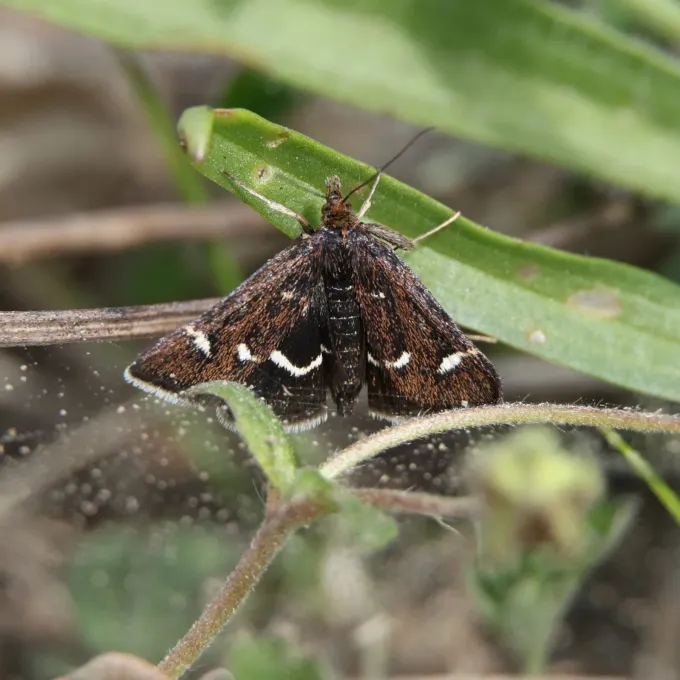
The Black Mint Moth Pyrausta nigrata is a small moth belonging to the family Crambidae, known for its dark, inconspicuous appearance.
Adult moths typically have a wingspan of 18–22 mm, with wings colored in a deep, uniform blackish-brown hue.
The larvae are small caterpillars, often displaying variable coloration from greyish to greenish-brown with distinct dark spots along their bodies.
The pupal stage is passed within a robust, silken cocoon constructed among leaf litter or in the top layer of soil near the host plant.
Adults are typically active during the day, displaying flight patterns characteristic of the Pyrausta genus across open fields and meadows.
What it damages
The primary hosts for this species include members of the Lamiaceae family, particularly species of Thymus (thyme).
Caterpillars cause damage by feeding on the leaf tissue, often leading to severe skeletonization if populations are high.
Herb crops used for essential oil extraction are particularly vulnerable, as the moth activity can significantly reduce plant vigor and yield.
Damage to the vegetative parts of the plant restricts the plant's ability to photosynthesize effectively, stunting overall growth.
In addition to direct feeding, the resulting wounds can facilitate the entry of pathogens, leading to further decay of the host plants.
When it appears
The flight period of the adult moths generally spans from late spring through the summer months, typically May to August.
The species overwinters as a larva in a cocoon, buried within the soil or protected by dense vegetation debris near the host.
Developmental rates are heavily influenced by ambient temperature, with warmer summers potentially allowing for multiple generations.
Larval activity coincides with the most vigorous growth phase of host herbs, making them susceptible to damage during early summer.
Monitoring for the first flight of adults in late spring is a crucial step for timing potential intervention strategies.
Signs of infestation
The most immediate sign of infestation is the presence of irregular holes in the leaves or entirely skeletonized leaf surfaces.
Caterpillars often use silk to bind leaves together, creating small, protected retreats where they can feed undisturbed.
The accumulation of frass (larval droppings) on the leaves or the soil surface beneath the plant is a clear indicator of active feeding.
Wilting of terminal shoots or yellowing of the foliage can be observed in cases of more severe larval density and stress on the plant.
- Holes in leaves with skeletonized patches.
- Silk webbing between adjacent leaves.
- Visible larvae hidden within spun foliage.
Control measures
Cultural control practices, such as deep soil cultivation in the autumn, can help disrupt the overwintering sites of the larvae.
Sanitation of the growing area by removing infested plant debris at the end of the season reduces the risk of population buildup.
Biological control options, including the use of Bacillus thuringiensis sprays, are effective against early-instar larvae.
In commercial operations, monitoring via pheromone or light traps allows for precise timing of selective insecticide applications.
Maintaining healthy plant growth through balanced fertilization can help herbs withstand minor damage without requiring chemical intervention.
Taxonomy
- Latin name
- Pyrausta nigrata
- Order
- Lepidoptera (butterflies)
- Family
- Crambidae
- EPPO code
- PYRUNI
Discussion
No discussions yet — be the first.